Cardamom — from India

Cardamom

Native to one corner of southern India, priced every morning by public auction, and now grown mostly somewhere else.

Made since
Recorded since antiquity; described botanically in 1811
Region
Cardamom Hills, Kerala, India
Market trend
↑ 172.9%

What cardamom is

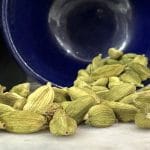
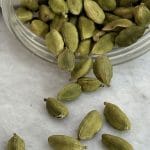
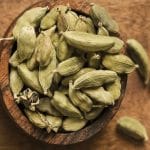
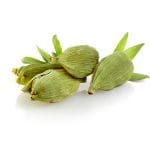
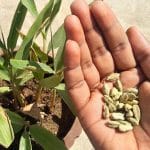
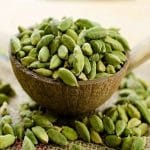
Cardamom is a fruit, not a seed or a bark. The plant produces a small three-sided green capsule, between 0.8 and 1.5 cm long, holding fifteen to twenty hard dark seeds. The capsule is picked just before it ripens, because a capsule left to mature splits open and the seeds are lost.

The aroma is in the seed, not the pod. The seed carries between 2 and 10 per cent essential oil, and the two compounds that dominate it are cineole and alpha-terpinyl acetate. The pod is a container, and a good one: it is why the trade ships cardamom whole and why ground cardamom goes flat so quickly.

Where it is from, and where it is grown

These are two different answers, which is the whole reason this record exists.

Kew’s Plants of the World Online gives the native range of Elettaria cardamomum as south-west India, and nowhere else. Everywhere else it grows, it was carried: Kew lists Bangladesh, Cambodia, Costa Rica, the Lesser Sunda Islands, Reunion, Sumatra, Thailand, Trinidad and Tobago, and Vietnam as introductions.

Today the largest producers are India, Indonesia and Guatemala, which between them accounted for 85 per cent of the 138,888 tonnes reported to the United Nations in 2022. Guatemala, which had no cardamom at all until it was introduced there, now exports nearly its entire crop, because domestic consumption is negligible.

The auction

Most spices have no public price. Cardamom does, and this is the most unusual thing about the trade.

In Kerala, licensed auctioneers hold sales on most working days, and the Spices Board of India — a government body — publishes each session’s results: the number of lots, the quantity that arrived, the quantity that sold, the maximum price and the average price per kilogram.

On 14 September 2026, to take one ordinary day, the Idukki District Traditional Cardamom Producer Company sold 56,039 kg of 56,991 kg offered, at a maximum of Rs 3,600 per kg and an average of Rs 3,181.77. A second auctioneer at Kumily sold 91,743 kg the same day. Roughly 148 tonnes changed hands between two houses in one session.

That is why so many people search for the cardamom price on any given morning, and why it is a real number rather than an estimate.

Green and black are not the same plant

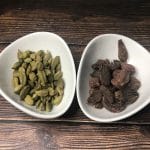
Green cardamom is Elettaria cardamomum. Black cardamom belongs to a different genus, Amomum. They are related, both in the ginger family, and they are not substitutes for one another.

Green is the milder of the two, with the resinous, faintly citric note most people mean by cardamom. Black is smoky, because it is commonly dried over open fire, and its oil is lower in quantity but much higher in cineole — up to 70 per cent — which is what gives it that cooling, almost medicinal edge. Swapping one for the other in a recipe changes the dish rather than adjusting it.

Curing, and the white pods

After picking, capsules are cleaned and dried, either in the sun or in a heated curing chamber. Some cardamom is then bleached to a creamy white in the fumes of burning sulphur — an old practice, done for appearance, and the reason very pale pods turn up beside green ones on the same shelf.

Husked seeds sold without the pod are called decorticated cardamom. They are convenient and they do not keep.

Buying it

Three things are worth knowing. Buy whole pods, because the pod is what preserves the oil. Treat pre-ground cardamom as a short-life product, not a pantry staple. And be aware that grinding pods and seeds together — rather than seeds alone — lowers both the quality and the price, which is precisely why cheap ground cardamom is cheap.

A long record

The earliest references to cardamom appear in Sumerian records and in Ayurvedic texts. The English name comes through Latin from the Greek kardamomon, which joins the words for cress and for a spice of uncertain identity. It reached Europe in the middle of the sixteenth century. By the mid-1800s Ceylon was a significant exporter, its cardamom bought chiefly by Canada. The species was formally described in 1811, in the Transactions of the Linnean Society of London.

Quick facts

  • Kew records the native range as south-west India and nowhere else; everywhere else it grows, it was carried.
  • Each capsule holds 15 to 20 seeds, and the aroma is in the seed, not the pod.
  • It is the third most expensive spice in the world, after saffron and vanilla.
  • The price is set by public auction in Kerala and published the same day by the Spices Board of India.
  • On 14 September 2026 two Kerala auction houses sold about 148 tonnes between them.
  • Guatemala consumes almost none of what it grows and exports nearly the whole crop.
  • Grinding pods and seeds together lowers both the quality and the price.
  • Black cardamom is a different genus, Amomum, and is not a substitute for green.

Market price trend

Export unit value per kilogram, 2016 to 2025.

$26.51/kg ↑ 172.9%
$28.12$20.35$12.58$4.82201620222025

Range $6.42 – $26.51 · 7 data points · some figures estimated by the reporting agency · awaiting a newer release

See the figures
PeriodUSD per kg
2025 26.51 *
2024 17.53 *
2023 7.00
2022 7.88 *
2021 17.57 *
2020 17.56
2016 6.42

Derived from official international trade statistics: reported trade value divided by reported net weight. A unit value is a trade-weighted average across all shipments in the period, not the price of any single sale.

Specifications

Botanical nameElettaria cardamomum (L.) Maton
FamilyZingiberaceae
OrderZingiberales
Native rangeSouth-west India
First describedTransactions of the Linnean Society of London, volume 10, page 254, in 1811
Part usedThe dried fruit capsule and the seeds inside it
Seeds per capsule15 to 20
Capsule length0.8 to 1.5 cm
Plant height1.5 to 6 metres
Essential oil content2 to 10 per cent of the seed
Principal aroma compoundsCineole and alpha-terpinyl acetate
HarvestCapsules are clipped from the stem just before maturity
CuringDried in the sun or in a heated curing chamber
Price rankThird most expensive spice, after saffron and vanilla
World production 2022138,888 tonnes, reported jointly with nutmeg and mace
Leading producersIndia, Indonesia and Guatemala, together 85 per cent
Price discoveryDaily public auction in Kerala, published by the Spices Board of India
Black cardamomA separate genus, Amomum, with up to 70 per cent cineole

How it got here

  1. Antiquity The earliest known references to cardamom appear in Sumerian records and in Ayurvedic texts.
  2. Mid-16th century Cardamom reaches Europe.
  3. 1811 The species is formally described as Elettaria cardamomum in the Transactions of the Linnean Society of London.
  4. Mid-1800s Ceylon becomes a significant exporter, its cardamom bought chiefly by Canada.
  5. 2022 World production reaches 138,888 tonnes, with India, Indonesia and Guatemala accounting for 85 per cent of it.
  6. 2026 Daily auctions in Kerala continue to set the reference price, with about 148 tonnes sold by two houses on 14 September alone.

Frequently asked

Why is cardamom so expensive?

It is the third most expensive spice after saffron and vanilla. The capsules have to be clipped by hand just before they ripen, because a ripe capsule splits and sheds its seeds, and the picking window is short. The plant also takes several years to come into full bearing.

Where does most cardamom come from?

India, Indonesia and Guatemala together produced about 85 per cent of the 138,888 tonnes reported in 2022. But produced is not the same as from: Kew records the plant's native range as south-west India alone, and every other growing country received it as an introduction.

What is the difference between green and black cardamom?

They are different plants. Green cardamom is Elettaria cardamomum. Black cardamom belongs to the genus Amomum, is usually dried over open fire, and is smoky rather than sweet. Its oil can be up to 70 per cent cineole, which is why it tastes cooling and almost medicinal. One will not stand in for the other.

How is the price of cardamom decided?

By open auction. Licensed auctioneers in Kerala hold sales on most working days, and the Spices Board of India publishes each session's lots, quantities, maximum price and average price per kilogram the same day. Very few spices have a public price of this kind.

Does cardamom grow wild?

Capsules are sometimes gathered from wild plants in the moist forests of southern India, but almost all cardamom in trade is cultivated. Outside its native south-west Indian range the plant does not occur naturally at all.

Should I buy pods or ground cardamom?

Pods. The pod protects the essential oil, which is why the trade ships cardamom whole. Ground cardamom loses its aroma quickly, and grinding pods and seeds together rather than seeds alone lowers both the quality and the price.

Why is some cardamom almost white?

It has been bleached to a creamy colour in the fumes of burning sulphur. This is an old practice done for appearance, not a sign of a different variety or a better grade.

How many seeds are in a cardamom pod?

Between fifteen and twenty, dark reddish-brown to almost black, packed in a capsule 0.8 to 1.5 cm long. The seeds hold the oil; the pod holds the seeds.

Work it out

References

Checked against these
  1. Academic or research
    Elettaria cardamomum (L.) Maton Plants of the World Online, Royal Botanic Gardens, Kew · 2026

    The accepted botanical name, the family, and the native range of south-west India

  2. Government or official register
    Spices Board of India Ministry of Commerce and Industry, Government of India · 2026

    The daily cardamom auction results, including lots, quantities and prices per kilogram

  3. Press or publication
    Cardamom Encyclopaedia Britannica · 2026

    The physical description, the essential oil content, and the curing and bleaching practices

  4. Press or publication
    Cardamom Wikipedia · 2026

    World production figures for 2022 and the ranking as the third most expensive spice

  5. Other
    Cardamom Wikidata · 2026

    The record as a whole

Further reading

Reviews

No reviews yet — be the first to add one.

Write a review
Your rating

Questions & answers

No questions yet. Ask the first one.

Ask a question