If you open your spice cabinet right now, reach for that bottle labeled “Pure Cinnamon,” and take a deep breath, what do you smell? If it hits your nose with an aggressive, fiery punch—reminiscent of cheap holiday candles or red-hot candies—you are almost certainly not smelling true cinnamon.
For centuries, Ceylon cinnamon (Cinnamomum verum, which translates literally from botanical Latin as “true cinnamon”) was one of the most guarded and prized agricultural treasures on earth. Sourced almost exclusively from the lush coastal estates of Sri Lanka, its delicate sweetness captivated ancient spice traders. Today, however, the global market tells a vastly different story. Upwards of 90% of the cinnamon sold in supermarkets across North America and Europe is not Ceylon at all. It is cassia—a cheaper, coarser bark harvested from related trees grown primarily in Indonesia, Vietnam, and China.
Understanding the difference between Ceylon and cassia is not merely a matter of culinary snobbery. It directly impacts your cooking, your wallet, and potentially your liver health. Because counterfeit and mislabeled products are rampant, you cannot simply trust what is printed on the front of a glass jar.
Knowing how to identify ceylon cinnamon requires tuning in to your own senses: your eyes, your fingers, your nose, and a clear understanding of the economics behind the spice trade. Here is an authentic sourcing guide on what true Ceylon looks like, why labels routinely deceive, and the six unmistakable physical signs to look for.

how to identify ceylon cinnamon
Why You Cannot Trust the Label
Before diving into physical inspection, we must address an uncomfortable truth in the spice aisle: a product label claiming “Ceylon Cinnamon” is not a legal guarantee of purity.
Food fraud in the spice sector is exceptionally lucrative. Because whole Ceylon bark commands wholesale prices three to four times higher than Indonesian Korintje or Vietnamese Saigon cassia, adulteration is widespread. Ground cinnamon is routinely blended with low-grade cassia, exhausted bark from essential oil distillation, or even spent wood dust to stretch margins.
Worse still, regulatory oversight at retail checkpoints is notoriously porous. In analytical testing of commercial spice lines, researchers frequently discover ground products labeled as pure Ceylon containing alarming levels of coumarin—a naturally occurring chemical compound with documented hepatotoxic (liver-damaging) properties.
While authentic Sri Lankan quills contain barely detectable traces of coumarin (often under 20 to 50 milligrams per kilogram, or roughly0.004%), routine screenings documented in the cinnamon record have shown rogue retail market samples testing up to an astonishing 3,262 mg/kg. That is more than enough to blow past the European Food Safety Authority’s (EFSA) Tolerable Daily Intake (TDI) of 0.1 mg per kilogram of body weight in less than a teaspoon.
If you rely strictly on a pretty craft-paper label or a generic “Organic” badge, you are operating on blind faith. To know what you are truly putting into your morning oatmeal or baking projects, you need to buy whole quills whenever possible and inspect them against the following six physical benchmarks.
Six Physical Signs to Identify True Ceylon Cinnamon
1. The Structure: Multiple Concentric Layers (The “Cigar” Look)
The single fastest giveaway of genuine Ceylon cinnamon is how the quill is rolled.
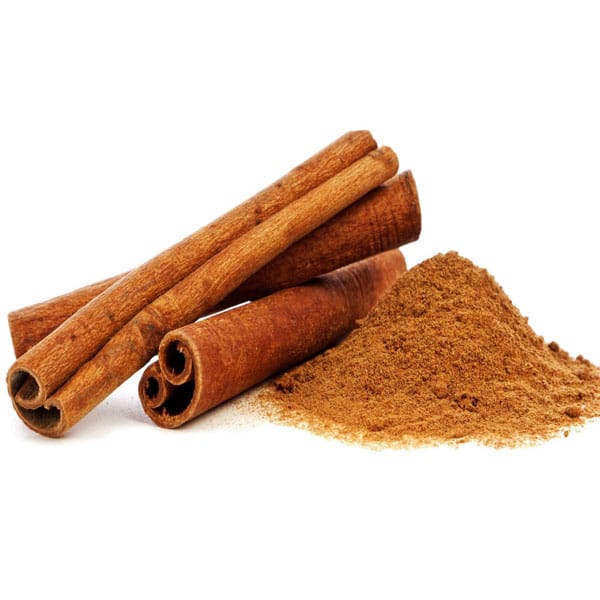
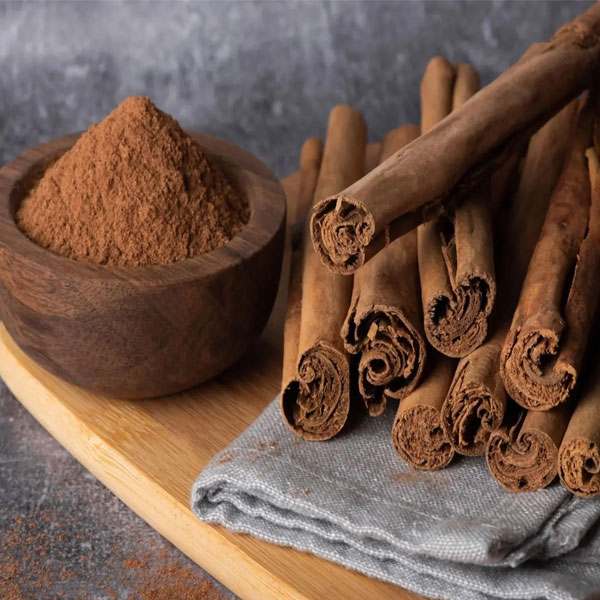
True Ceylon cinnamon looks like a hand-rolled cigar. When the artisan peelers in Sri Lanka process the harvest, they strip the paper-thin inner bark and painstakingly pack multiple concentric layers into a single cylinder. When you look at the cross-section end of a Ceylon stick, you will see a dense, compact spiral formed by dozen or more paper-like shavings fitted snugly inside one another.
Cassia, on the other hand, curls inward from both outer edges during drying, forming a hollow, single-layered scroll or an open “C” shape. If your cinnamon stick is hollow in the middle like a wooden straw, it is almost certainly cassia.
2. Bark Thickness: Wafer-Thin Shavings vs. Tree Bark
Take a caliper or simply look closely at the edge of the quill:
Ceylon Cinnamon: The individual layers are wafer-thin—frequently less than 0.5 mm thick. They resemble delicate dried parchment. The Sri Lankan craft of peeling requires specialized brass knives called keththa to scrape away the coarse, rough outer bark completely before shaving only the tender, fragrant inner cambium layer.
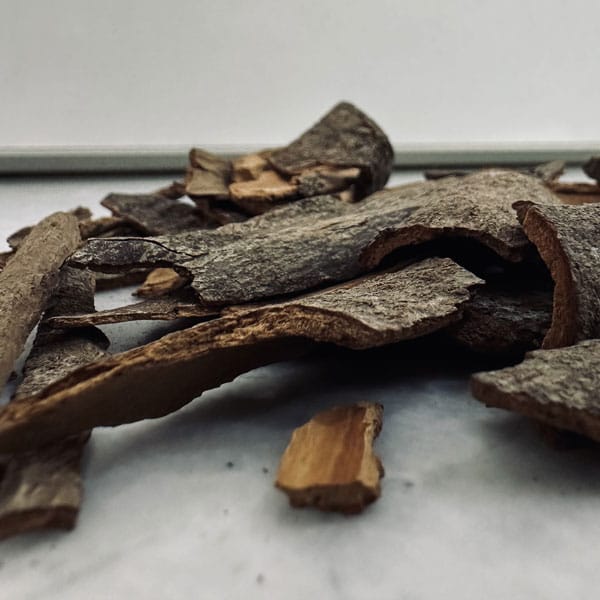
Cassia Bark: Cassia uses the full thickness of the tree bark. The walls of a cassia quill are thick, rugged, and dense, often measuring anywhere from 1.5 mm to upwards of 3 mm across. It looks like a curved chunk of raw firewood because, structurally, that is practically what it is.
how to identify ceylon cinnamon
3. Color Tone: Soft Golden Tan vs. Dark Reddish-Brown
Color tells an immediate story about the tree species and processing technique:
Real Ceylon: Possesses a warm, uniform, light golden-brown or soft tan hue (reminiscent of parchment paper, tea with milk, or light brown kraft paper). It never appears harsh or deeply saturated.
Cassia: Tends to be significantly darker. Depending on whether it originates from Indonesia (C. burmannii) or Vietnam (C. loureiroi), it ranges from a dark reddish-brown to a rusty, mottled grey-brown. If the sticks in your pantry are a deep mahogany or brick red, you are dealing with cassia.
4. Friability: Crumbles Between Your Fingers vs. Rock-Hard Wood
Pick up a whole quill and test its structural resistance:
Real Ceylon is remarkably fragile and friable. You should be able to break a stick cleanly in half with minimal effort using just your thumb and index finger. You can easily crush fragments into a coarse powder using an ordinary marble mortar and pestle or an inexpensive blade grinder without straining the motor.
Cassia is notoriously rock-hard. Attempting to snap a thick cassia stick by hand takes genuine muscle; it splinters like structural timber. If you place a chunk of Vietnamese Saigon cassia into a domestic spice grinder, you risk chipping the stainless-steel blades or burning out the motor.
5. Aroma and Flavor: Floral Nuance vs. Pungent Heat
This is where the sensory experience separates a culinary delicacy from an industrial flavoring:
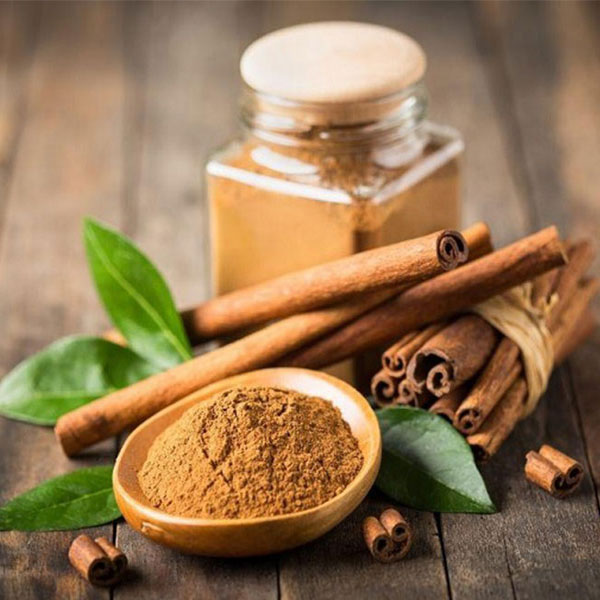
True Ceylon Scent & Flavor: Bring the broken end of a Ceylon quill to your nose. The aroma is soft, refined, warm, and sophisticated, carrying notes of Meyer lemon zest, dried flowers, and mild vanilla. When tasted directly on the tongue, it delivers a natural, sweet finish without any burning sensation or tongue-numbing astringency. Its essential oil profile contains high levels of eugenol, giving it an herbal, clove-like elegance.
Cassia Scent & Flavor: Cassia smells overwhelmingly strong and one-dimensional. It is dominated by pure cinnamaldehyde (up to 95% of its volatile oil profile). It tastes intensely spicy, sharp, and slightly bitter, leaving a lingering, drying bite across the palate.
how to identify ceylon cinnamon
6. Price Point: The Economic Reality Check
Quality sourcing comes down to basic agricultural economics. Producing true Ceylon cinnamon is extraordinarily labor-intensive. It requires skilled generational peelers who work during wet seasons to peel, cure, pipe, and shade-dry delicate quills by hand. Sri Lanka accounts for the vast majority of true Ceylon production, creating natural supply scarcity.
Cassia, conversely, is harvested in massive volumes from older, mature trees that are felled and stripped in industrial quantities with far less artisan labor.
If you find a four-ounce bag of cinnamon sticks at a discount store selling for $2.99, it is mathematically impossible for that spice to be pure Ceylon. Authentic, sustainably sourced Ceylon cinnamon quills typically command between
$35 and $65 per pound at retail, depending on the grading (such as Alba, the thinnest and most expensive grade, down to Continental or Mexican grades). While high price alone does not prove authenticity, a low price is an ironclad indicator of cassia.
What About Ground Cinnamon?
Identifying Ceylon when whole is straightforward; spotting it once powdered requires extra vigilance. If you already have a jar of ground cinnamon, look for these three clues:
how to identify ceylon cinnamon
Powder Color: Ground Ceylon is noticeably lighter in color—a sandy tan rather than a rich reddish-chocolate.
The Hot Water / Slime Test: Mix half a teaspoon of cinnamon powder with boiling water in a small glass. Cassia contains a high concentration of mucilaginous starches. As the water cools, cassia powder forms a thick, gloopy, gelatinous sludge. Ceylon cinnamon contains far less active starch; it stays relatively loose, settling to the bottom as fine, non-slimy sediment.
The Scent Bloom: Sprinkle the powder over warm porridge. If the steam carries an intoxicating, perfume-like, sweet fragrance rather than a sharp sting that makes you cough, you are enjoying authentic Cinnamomum verum.
Navigating the spice world requires looking past slick marketing slogans and relying on observable, botanical facts. If you want a spice that delivers gentle complexity to baked tarts, savory tagines, and morning beverages—without loading your system with unnecessary coumarin—insist on whole quills. Check for the tight cigar layers, admire the golden tan tone, snap the fragile bark between your fingers, and savor the unmistakable aroma of true Ceylon.
Records mentioned in this article


Frequently Asked Questions
While visual checks (lighter tan color) and the hot water test (Ceylon remains watery, while cassia turns into a thick, slimy gel) give strong clues, 100% confirmation of ground cinnamon purity requires laboratory high-performance liquid chromatography (HPLC) testing to measure coumarin levels accurately.
The European Food Safety Authority establishes a Tolerable Daily Intake (TDI) of 0.1 mg of coumarin per kilogram of body weight per day. For an adult weighing 70 kg (154 lbs), this limit can easily be exceeded by consuming just one teaspoon of high-coumarin cassia, whereas one would need to consume dozens of teaspoons of Ceylon daily to reach that threshold.
Yes. Because Ceylon cinnamon relies on delicate, complex volatile aromatics (including eugenol and linalool) rather than concentrated cinnamaldehyde, it is more sensitive to oxidation, heat, and light. Store whole quills in an airtight, opaque glass container away from direct sunlight, and grind small amounts as needed.