The Crocus sativus is a fascinating agricultural marvel, requiring precise soil conditions, manual harvesting, and careful handling to yield its precious red stigmas. Understanding the flower’s lifecycle and distinguishing it from toxic look-alikes is essential for both growers and buyers. If you are looking to source authentic, premium wholesale saffron or need expert guidance on commercial agricultural trade, connect with us at Origin & Source to discuss your B2B supply needs.
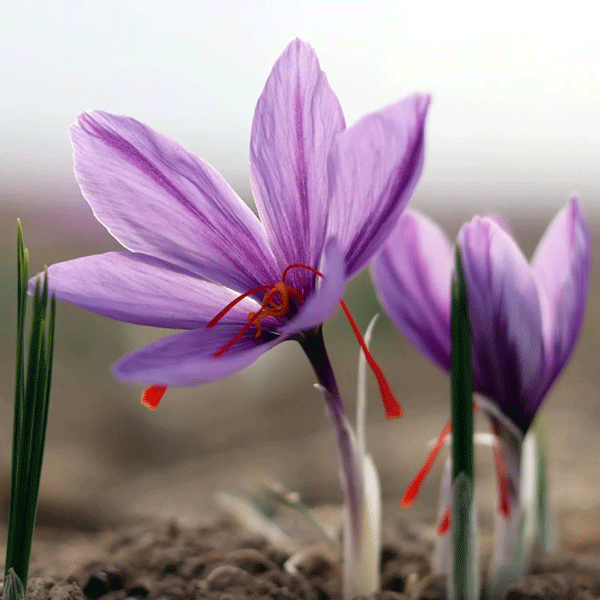
When you look at a blooming Crocus sativus, it’s hard to believe that such a delicate, unassuming purple flower is the source of the world’s most expensive spice. I’ve spent years analyzing the agricultural and commercial aspects of saffron, and the fascination never fades. The contrast between the soft lilac petals and the fiery red stigmas is stunning, but the real magic lies in the harvesting and trade of this ancient plant.
Whether you are an agricultural enthusiast looking to plant your first corms, or a buyer trying to understand the origin of your spice, understanding the Crocus sativus is the first step. Let’s break down everything you need to know about this remarkable flower, from its anatomy to its cultivation.
The Anatomy of the Saffron Flower
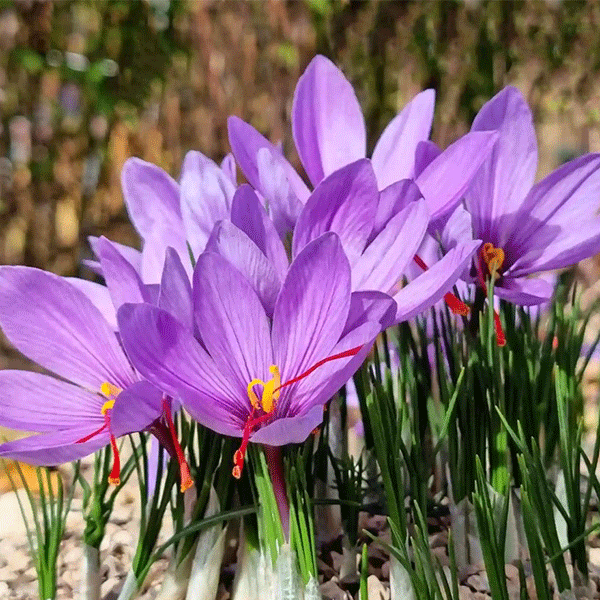
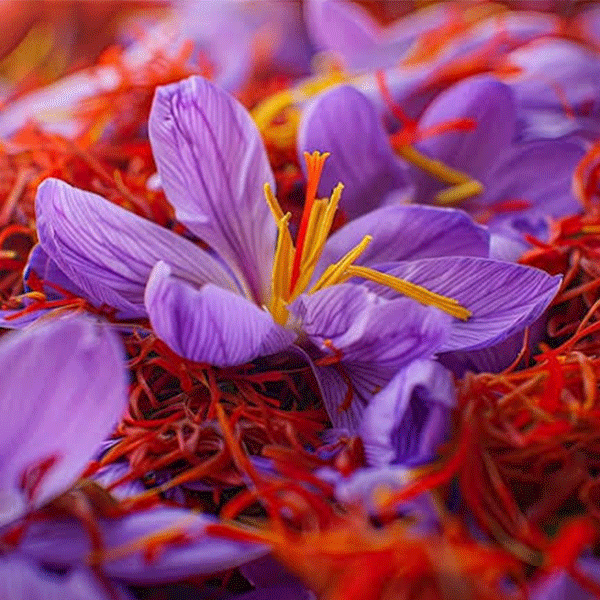
To understand saffron, you need to understand the architecture of the flower. A healthy Crocus sativus bulb (technically called a corm) will produce one to four flowers in the autumn.
saffron flower
Here is what you will find when you look closely:
The Petals (Tepals): Six beautiful lilac or purple petals that protect the reproductive organs. While they aren’t used for the spice, they are sometimes collected for use in natural dyes or herbal teas.
The Stamens: These are the three yellow, pollen-bearing organs. They are often mistaken for saffron by beginners, but they lack the aroma, flavor, and dyeing power of the real spice.
The Stigmas: This is the prize. Each flower produces exactly three vivid crimson stigmas. When carefully hand-plucked and dried, these three fragile threads become the saffron we use in our kitchens and industries.
Saffron Culture and Facts: The Saffron Flower
Crucial Comparison: Crocus Sativus vs. Autumn Crocus
| Feature | Crocus Sativus (True Saffron) | Colchicum Autumnale (Toxic Look-alike) |
|---|---|---|
| Stamen Count | Exactly 3 stamens (yellow). | Exactly 6 stamens. |
| Stigmas (The Spice) | 3 long, vibrant red threads hanging outside the petals. | Short, pale, or yellowish stigmas tucked inside. |
| Leaves during bloom | Grass-like leaves appear with or right after the flower. | Blooms without any leaves (leaves appear in spring). |
| Safety | 100% Edible and highly valuable. | Highly toxic (contains colchicine). Do not eat. |
How to Grow Crocus Sativus: A Practical Guide
Growing saffron isn’t complex, but it requires precision. Because Crocus sativus is a sterile triploid, it does not produce viable seeds. It can only be propagated by multiplying its underground corms.
If you are planning to cultivate this crop, here is a multi-step overview based on successful commercial practices:
Step 1: Sourcing and Timing
Order large, healthy corms (size 9/10 or larger for first-year blooms) from a reputable supplier. Plant them in late summer (August to September).
Step 2: Soil and Climate Preparation
Saffron thrives in extreme climates—hot, dry summers and cold winters. The soil must be well-draining, preferably sandy or loamy. If your soil holds too much water, the corms will rot. Raised beds are an excellent decision for areas with heavy rainfall.
saffron flower
Step 3: Planting Depth
Plant the corms about 4 to 6 inches (10-15 cm) deep and 4 inches apart. Planting them slightly deeper protects them from severe winter frosts and encourages them to produce larger, higher-quality replacement corms for the next year.
Step 4: The Harvest Window
The flowers bloom in mid-to-late autumn, usually October or November, depending on your region. The harvest window is incredibly brief. Flowers must be picked at dawn, just as they open, to prevent the sun from degrading the delicate essential oils (safranal, crocin, and picrocrocin) in the stigmas.
The Economics: Why is Saffron So Expensive?
Whenever we discuss the trade of Crocus sativus, the first question is always about the price. The math is humbling:
It takes roughly 150,000 to 170,000 individual flowers to produce just one kilogram (2.2 lbs) of dried high-grade saffron. Every single flower must be picked by hand, and every single red stigma must be separated manually. There is currently no machine capable of doing this delicately enough. You are paying for intense, skilled human labor, agricultural risk, and limited geographical yield.
Records mentioned in this article
Frequently Asked Questions
While possible for a quick novelty bloom, it is not sustainable long-term. The corms need a specific temperature cycle—a hot, dry summer dormancy and a cold winter—to reset and multiply for the next year. Potted indoor corms usually fail to produce flowers the second year.
If you want to harvest enough saffron to cook a few family meals a year (about 1 gram of saffron), you should plant around 150 to 200 corms.
Yes. Each year, the original “mother” corm dies, leaving behind 1 to 5 smaller “daughter” corms. After 3 to 4 years, you will need to dig up the patch, divide the clustered corms, and replant them to prevent overcrowding and reduced yields.