Vanilla is the undisputed wild card of the spice trade. It represents an agricultural anomaly: an orchid pod that requires manual hand-pollination, months of meticulous sweating and sun-curing, and a precarious journey through global logistics corridors where a single mistake can turn thousands of dollars into compost.
When procurement managers, master extractors, craft distillers, and commercial food manufacturers set out to buy bulk vanilla beans, they frequently face an opaque marketplace characterized by wild price swings, deliberate misclassification, and clever weight tampering.
To source successfully at scale, you cannot rely on casual trust or generic broker guarantees. You need an unyielding, field-tested verification framework designed to protect your balance sheet and secure authentic, high-yielding vanilla lots every single season.
1. The Anatomy of Vanilla Fraud: How Buyers Get Burned
Procurement failures in the vanilla trade rarely stem from missing cargo containers. Instead, financial loss happens inside the delivery box through sophisticated, well-practiced deceptions that exploit buyers unfamiliar with post-harvest chemistry.
buy vanilla beans bulk
The Water Weight Trap
Because vanilla is traded by the kilogram, moisture is the easiest vector for margin theft. Curing houses under intense cash-flow pressure occasionally rush the final drying phase or mist beans with water right before heat-sealing. A shipment billed at 33% gourmet moisture that arrives at 40% means you paid prime bean prices for plain water. More critically, that excess unbound water creates an anaerobic incubator inside sealed plastic, generating white mold colonies within weeks of transit.
The Grade and Species Bait-and-Switch
Importers frequently encounter the substitution of short, dry extraction-grade cuts into gourmet bundles, or the mislabeling of Vanilla planifolia hybrids and low-vanillin Vanilla pompona as genuine Bourbon vanilla. Less ethical handlers will bundle high-grade pods on the exterior of a tied bundle (botte) while stuffing the core with short, brittle, under-pollinated sticks.
Synthetic Spiking and Chemical Masking
When green vanilla is picked prematurely by farmers fearing field theft, the pods fail to develop sufficient glucovanillin precursors. To salvage value, unscrupulous processors steep under-cured beans in synthetic vanillin baths or food-grade ethyl vanillin solutions. The beans smell overwhelmingly sweet out of the carton, but completely fail gas chromatography assays and yield hollow, flat flavor profiles in industrial applications.
2. The 5-Point Quality and Authenticity Inspection Protocol
Before releasing an escrow milestone or signing off on a bill of lading, every commercial lot must clear five practical evaluation gates.
Gate 1: Moisture Content and Water Activity
Moisture determines both shelf-life stability and functional yield:
Grade A (Gourmet / Prime): 30% to 35% moisture content. The pod surface should exhibit a rich, oily sheen, flexibility, and a deep chocolate-brown to black color.
Grade B (Extraction / Splits): 20% to 25% moisture content. The beans are visibly drier, reddish-brown, and stiffer, holding a higher concentration of vanillin per kilogram of dry matter.
Moisture above 35% without industrial cold-chain handling carries unacceptable microbial risk. Moisture below 18% results in brittle, woody pods that shatter during cutting and yield diminished aromatic extraction. For exact calculation models on how moisture shifts impact raw ingredient costs and landed yields, study our breakdown on vanilla moisture levels and invoice impact.
buy vanilla beans bulk
Gate 2: Pod Length, Girth, and Caviar Density
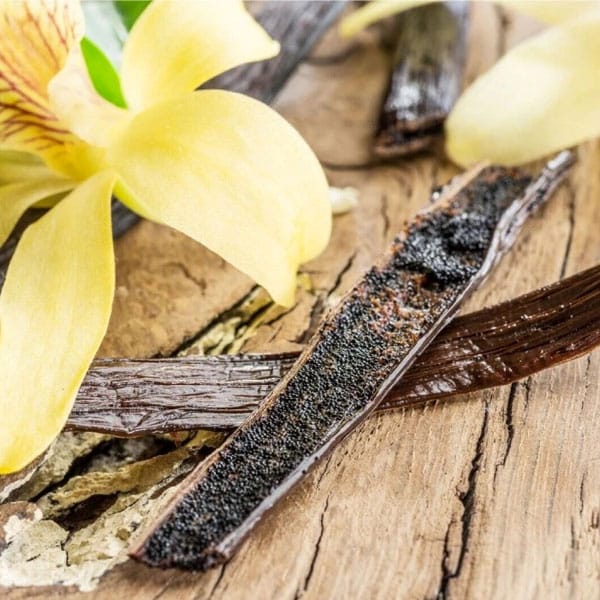
Length serves as a reliable proxy for plant maturity and pollination success. Fully matured pods that remain on the vine for eight to nine months accumulate the highest density of internal seed pulp (“caviar”):
Premium Grade: 16 cm to 22 cm. Thick, fleshy pods yielding maximum seed density.
Medium Grade: 13 cm to 15 cm. Standard commercial processing size.
Short / Cuts: Under 12 cm. Often sold as extraction trimmings or splits.
When inspecting sample bundles, untie the center. Extract five pods from the absolute middle of the bundle. Wrap each bean around your index finger; it should bend smoothly without snapping, tearing, or weeping excess liquid. For detailed standardizations across commercial grades, consult our comprehensive guide to vanilla grading classifications
Gate 3: Olfactory Profile and the “Givre” Check
High-purity, naturally cured vanilla has a complex, multi-layered aromatic structure featuring wood, dried fruit, fig, and subtle balsamic notes.
The Paper Towel Assay: Vigorously wipe a fresh bean across clean, white, laboratory-grade filter paper. Pure cured vanilla leaves a clean, pale amber oil residue. Dark synthetic residues or harsh chemical solvent odors are grounds for immediate lot rejection.
Assessing Crystals (Givre vs. Mold): High-vanillin pods naturally form delicate, needle-shaped white crystals on the exterior surface known as givre. Under a magnifying loupe, genuine vanillin crystals sparkle and lay parallel along the length of the pod. Mold, by contrast, presents as dull, fuzzy, multi-directional webs with a telltale stale, musty basement odor.
Gate 4: Packaging and Moisture-Barrier Integrity
Vanilla continues to mature enzymatically if packaged correctly, but degrades rapidly if exposed to inappropriate materials.
Vacuum Barrier Liners: Shipments should arrive in multi-layer food-grade EVOH or polyamide nylon vacuum pouches (minimum 120–150 microns). Standard polyethylene bags breathe too much, allowing essential volatiles to escape.
Traditional Waxed Paper Bundling: In origin hubs like Sambava and Antalaha, bundles are tied with natural raffia and wrapped in greaseproof parchment paper within heavy master cartons. Metal twist ties should be rejected, as they rust in humid maritime transit and introduce metal contaminants into food production streams.
buy vanilla beans bulk
Gate 5: Traceability Dossiers and HPLC Laboratory Testing
Never purchase commercial volumes based on verbal origin assurances alone. Insist on a complete documentation package:
Phytosanitary Certificate: Validated by the exporting country’s agricultural authority.
Certificate of Origin (COO): Stamped by official regional trade chambers confirming exact harvest geography.
High-Performance Liquid Chromatography (HPLC) Profile: Laboratory confirmation quantifying vanillin concentration (typically 1.6%–2.4% for prime Planifolia), alongside natural phenolic markers: 4-hydroxybenzaldehyde, vanillic acid, and 4-hydroxybenzoic acid.
To understand regional terroir differences, chemical markers, and seasonal harvesting calendars across Madagascar, Indonesia, Uganda, Mexico, and Papua New Guinea, explore our in-depth vanilla origin and traceability guide.
3. Grade Specifications at a Glance
Understanding the direct correlation between physical grades, chemical metrics, and manufacturing applications ensures you buy the correct grade for your operational requirements:
Grade A (Gourmet / Prime Black)
Moisture Range: 30% – 35%
Standard Length: 16 cm – 22 cm
Vanillin Content: 1.6% – 2.2%
Appearance: Supple, oily, deep black-brown, zero split ends.
Optimal Use: High-end culinary applications, artisanal pastry, retail glass-tube packaging, visible seed suspensions.
Grade B (Extraction / Red Splits)
Moisture Range: 20% – 25%
Standard Length: 13 cm – 16 cm
Vanillin Content: 1.8% – 2.6% (Higher concentration relative to gross weight)
Appearance: Reddish-brown streaks, drier texture, naturally split tips.
Optimal Use: Industrial vanilla extract, craft brewing, alcohol tinctures, flavor manufacturing.
buy vanilla beans bulk
Commercial Cuts and Off-Grades
Moisture Range: Unstable (often <15% or >38%)
Standard Length: Mixed / Under 12 cm
Vanillin Content: Variable (<1.2%)
Appearance: Broken pods, pale color, dry sticks, uneven curing.
Optimal Use: Low-cost commodity blending, secondary extraction, industrial fragrances.
4. How to Spot Dangerously Low Quotes
Vanilla pricing is dictated by distinct structural forces: seasonal crop yields in Madagascar’s Sava region, cyclonic weather disruptions, currency volatility, and local minimum export price mechanisms.
When analyzing quotes from brokers or direct-from-origin exporters:
The Sub-Market Danger Zone: If prevailing FOB Sambava prices for Grade A average $200/kg, a supplier offering identical-grade lots at $110/kg is cutting corners. That price differential almost always masks blended old-crop inventory, exhausted extraction byproduct, or an unfulfilled ghost contract.
Evaluating Landed Costs (FOB vs. CIF): Ensure your cost accounting includes international airfreight with temperature monitoring, customs brokerage, agricultural inspection fees, and phytosanitary clearance bonds.
To verify whether your supplier’s quote reflects real-world market conditions, cross-reference live agricultural export rates using our real-time [vanilla price index & cost calculator.]

buy vanilla beans bulk
5. The Step-by-Step Risk Mitigation Sourcing Protocol
Implement this structured procurement workflow for every commercial transaction exceeding 10 kilograms:
[Pre-Shipment Sample (PSS)] ➔ [Third-Party Assay] ➔ [Escrow / Confirmed LC] ➔ [Pre-Loading Lot Audit]
Commission a Paid Pre-Shipment Sample (PSS): Never accept “representative” showroom samples. Require a 100g sample drawn directly from the specific, serialized master cartons prepared for your shipment.
Mandate Milestone Payment Terms: Avoid 100% upfront wire transfers (T/T) with unvetted suppliers. Implement an Irrevocable Letter of Credit (LC) payable upon presentation of clean shipping documents and third-party laboratory release certificates.
Contract Independent Origin Inspection: For wholesale purchases over 100 kg, engage an international inspection firm (such as SGS or Bureau Veritas) to physically verify container packing, conduct randomly distributed moisture tests, and confirm carton seal numbers at the origin port.
Records mentioned in this article
Frequently Asked Questions
The primary indicators are an acrid, vinegar-like smell (acetic acid fermentation from improper sweating) and the presence of dull, spongy mold clusters inside bundle cores. Healthy cured beans should always exhibit a clean, sweet, woody aroma and a flexible, oily skin.
No. Grade B beans contain less water (20%–25% vs. 30%–35%), which means you receive more dry vanilla bean matter and higher vanillin concentration per kilogram purchased. This makes Grade B the more cost-effective and chemically efficient choice for alcohol-based vanilla extraction.
Store bulk beans in airtight, food-grade vacuum pouches or heavy glass containers in a cool, dark, temperature-stable room (15∘C to 20∘C ). Never refrigerate or freeze vanilla beans, as condensation inside the packaging triggers mold growth and crystallization breakdown.