Managing a commercial procurement pipeline or negotiating import contracts for natural cured vanilla requires navigating an agricultural commodity market unlike any other. Madagascar’s vanilla trade is shaped by smallholder hand-pollination across remote tropical rainforests, currency hedging, government floor pricing, and strategic procurement by multinational flavor conglomerates.
In analyzing the Madagascar vanilla export market, analysts and procurement directors frequently make the mistake of conflating raw harvest volume with actual customs-cleared export tonnage.
This market intelligence report details the commercial realities of the Bourbon vanilla trade: actual export figures, primary destination markets, quality grading standards, pricing mechanics, and actionable supply-chain strategies for commercial buyers.
1. Global Production Snapshot: Madagascar’s Dominant Market Share
According to global trade benchmarks documented in Vanilla Record Benchmark, total global vanilla production reached 7,433 metric tons in 2023.

madagascar vanilla export
The worldwide geographic supply remains heavily consolidated:
Madagascar (42% global share): Concentrated in the northeastern SAVA region (Sambava, Antalaha, Vohémar, and Andapa), Madagascar remains the global benchmark for both total volume and organoleptic profile (Vanilla planifolia).
Indonesia (25% global share): The primary secondary producer, focused heavily on bulk industrial extraction grades processed via expedited curing methods.
Rest of the World (33% combined): Including Papua New Guinea (PNG), Uganda, Mexico, Comoros, and French Polynesia (Tahiti).
For a structural analysis of the agronomic and historical factors behind this concentration, see Why Half of the World’s Vanilla Grows in Madagascar.
2. Production vs. Export Volume: Why the Numbers Diverge
A critical metric often misunderstood in macro trade datasets is the variance between farm-gate harvest statistics (Production) and customs-cleared export manifests (FOB Exports).
[ Green Vanilla Pods (Raw Harvest) ] ──(Curing Shrinkage: 5:1 to 6:1)──> [ Black Cured Vanilla Beans ]
[ Vacuum Aging, Speculative Holding & Quality Rejections ] [ Customs-Cleared FOB Shipments ]
Three primary operational factors account for this discrepancy:
1. The Curing Weight Loss Ratio (5:1 to 6:1 Shrinkage)
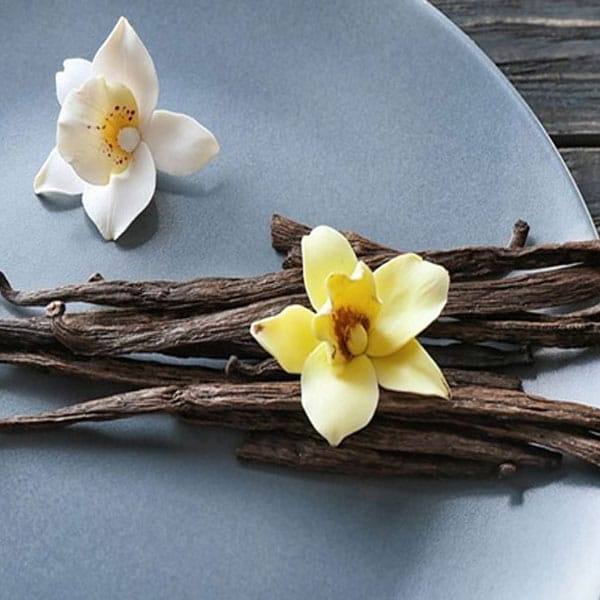
Vanilla pods are harvested completely green and odorless. Transforming these pods into stable, aromatic black vanilla beans requires a labor-intensive 5- to 6-month curing cycle involving scalding, sweating, sun-drying, and slow conditioning. It takes 5.0 to 6.0 kg of raw green beans to produce just 1.0 kg of exportable cured black vanilla. Reporting errors often occur when raw harvest weights are improperly compared against cured export data.
madagascar vanilla export
2. Strategic Inventory Stockpiling and Market Timing
Because properly cured vanilla can be vacuum-sealed (sous-vide) and stored for extended periods without immediate degradation, local collectors (collecteurs) and multi-origin export houses often hold inventory across fiscal cycles. During price downturns or regulatory policy shifts, significant tonnage is stored in secure regional warehouses rather than exported immediately.
3. Moisture Adjustment and Quality Fallouts
Export-grade vanilla is categorized under strict moisture tolerances:
Gourmet / Prime Grade: 30% to 38% moisture.
Extraction / Industrial Grade: 18% to 25% moisture.
Sub-standard pods, lots with moisture instability, or beans failing microbiological specifications undergo further drying or sorting, resulting in net mass reduction prior to container loading.
For a step-by-step breakdown of logistical transfer points from forest farmsteads to ocean freight, refer to the Vanilla Supply Chain Guide.
3. Who Buys Madagascar Vanilla?
| Destination Market | Approx. Export Share | Primary Industrial Application | Predominant Grade Imported |
|---|---|---|---|
| United States | 45% – 50% | Pure vanilla extractors, commercial ice cream manufacturers, RTD beverages | Extraction Grade (Red / TK split & non-split) |
| European Union (France Hub) | 30% – 35% | High-end gastronomy, retail re-packers, artisan baking, premium perfumery | Black Gourmet / Bourbon Prime (high moisture, supple) |
| Germany & Switzerland | 8% – 12% | Certified organic food processors, dairy ingredient manufacturers, pharma | Certified Organic / Fairtrade Extraction & Gourmet |
| Japan & East Asia | 5% – 8% | Luxury confectionery, boutique patisseries, RTD milk teas | A-Grade Gourmet (16cm+, zero splits, high vanillin assay) |
4. Price Structure & Valuation Mechanics (At What Price)
Vanilla prices have historically experienced severe cycles—moving from peaks above $600/kg (FOB) in 2017–2018 through periods of government-enforced minimum floor pricing (such as the previous $250/kg policy) and subsequent market-driven adjustments.
Total Contract Value = Spot Base Commodity Rate (FOB)
Natural Vanillin Assay Premium (1.6% – 2.2% baseline)
Physical Grading Tier (Length, Color, Moisture, Splits)
Traceability & Certification Surcharges (Organic / Fairtrade)
Natural Vanillin Content: The international industry baseline for cured Malagasy beans is 1.6% to 2.2% natural vanillin by dry weight. Verified lab assays exceeding 2.0% command clear spot-market premiums.
Pod Length and Visual Grade: Whole, supple, dark chocolate-colored beans measuring 16 cm to 20 cm+ with zero splits represent top-tier Gourmet Grade. Shorter pods (under 14 cm) or split beans (Cuts & Splits / Short TK) are traded at discounts and routed directly to industrial alcohol-extraction tanks.
Certification and Compliance: Strict enforcement of pesticide MRLs (Maximum Residue Limits) in Europe and supply chain transparency standards in North America mean certified organic and fully traceable lots command a 15% to 25% premium over standard conventional lots.
For real-time index updates and historical trend data, visit the [Vanilla Pricing Dashboard.]
madagascar vanilla export
5. B2B Sourcing, Logistics & Risk Mitigation Playbook
Commercial importers must institute strict quality assurance and freight protocols before issuing letters of credit or approving shipments:
Moisture Testing & Aeration Safeguards: Ensure purchase contracts specify maximum moisture thresholds upon port of entry. Gourmet pods shipped above 35% moisture in unventilated containers face severe risks of mold bloom during maritime transit.
Mandatory Export Documentation: Compliant customs clearance requires official Phytosanitary Certificates issued by the Malagasy Ministry of Agriculture, EUR.1 Movement Certificates for EU preferential tariff rates, and detailed batch analysis sheets.
Freight Optimization by Volume:
Air Freight (via TNR – Antananarivo): Standard for high-value Gourmet lots and consignments under 2 metric tons to eliminate ocean transit humidity exposure.
Ocean Freight (via Port of Toamasina): Utilized for 20ft/40ft FCL bulk extraction-grade shipments, requiring desiccant bags, climate-controlled container settings, and verified vacuum packaging.
Records mentioned in this article
Frequently Asked Questions
Madagascar Bourbon vanilla delivers a sweet, creamy, and balsamic aroma profile driven by high vanillin content and over 250 subtle volatile aromatic compounds, making it the global standard for dairy and fine baking. Indonesian vanilla is often cured rapidly over direct heat or sunlight, resulting in a woodier, smokier profile that performs exceptionally well in high-heat industrial baking and broad-spectrum flavor blending.
The volume gap is primarily caused by the curing and drying process, which has a 5:1 to 6:1 shrinkage ratio. Freshly harvested green vanilla beans contain roughly 80–85% water content. After several months of scalding, sweating, sun-drying, and conditioning, 5 to 6 kilograms of green vanilla yield only 1 kilogram of cured black vanilla with export-standard moisture levels (15%–35%). Additional factors include moisture standardization, strict sorting loss, and local speculative holding by collectors in the SAVA region.
Commercial buyers utilize High-Performance Liquid Chromatography (HPLC) and Gas Chromatography-Mass Spectrometry (GC-MS) to analyze the natural fingerprint of the beans. Authentic Vanilla planifolia contains a specific balance of naturally occurring secondary compounds—namely 4-hydroxybenzaldehyde, vanillic acid, and 4-hydroxybenzoic acid relative to vanillin. This testing screens out synthetic vanillin spiking (derived from guaiacol or lignin) and unauthorized flavor enhancers like synthetic ethyl vanillin.