“Discover the true nutritional density of premium saffron, a bioactive powerhouse that delivers a rich concentration of essential trace minerals and carotenoids even in micro-doses. By utilizing optimal extraction techniques like ice-steeping and fat-pairing, you can maximize nutrient absorption while preserving its delicate, heat-sensitive vitamins. Explore our expert guide to master proper saffron preparation, compare its unique profile with bulk spices like turmeric, and safely elevate your daily wellness routine.”
Saffron at a Glance: Key Facts for Buyers & Businesses
| Category | Details |
|---|---|
| Botanical Name | Crocus sativus L. |
| Primary Origins | Iran (90%), Afghanistan, Spain, Kashmir (India), Greece |
| Active Compounds | Crocin (color), Picrocrocin (flavor), Safranal (aroma) |
| Grading Standards | ISO 3632 (Category I–III based on crocin, picrocrocin, safranal levels) |
| Common Grades | Sargol (all-red threads), Negin (premium long threads), Pushal (red + some yellow) |
| Retail Price Range (2026) | 8– 15/gram (premium), 500 – 500– 3,000/kg (bulk, B2B) |
| Key Quality Indicators | Deep red color, minimal yellow threads, strong aroma, moisture <12%, no additives |
| Shelf Life | 2–3 years (airtight, cool, dark storage) |
| Culinary Uses | Paella, risotto, Persian rice, desserts, teas |
| Health Benefits | Antioxidant, mood support, potential anti-inflammatory properties* |
| Buying Tips for Consumers | Buy threads (not powder), check ISO cert, test 2–3 threads in warm water |
| Sourcing Tips for Businesses | Request lab reports (ISO 3632), verify origin docs, sample before bulk orders |
Saffron at a Glance: Key Facts for Buyers & Businesses. Origin, grades, 2026 prices, and purity checks — the essentials for both home and bulk saffron buyers, in one table. Columns: Category, Details. Botanical Name — Crocus sativus L.. Primary Origins — Iran (90%), Afghanistan, Spain, Kashmir (India), Greece. Active Compounds — Crocin (color), Picrocrocin (flavor), Safranal (aroma). Grading Standards — ISO 3632 (Category I–III based on crocin, picrocrocin, safranal levels). Common Grades — Sargol (all-red threads), Negin (premium long threads), Pushal (red + some yellow). Retail Price Range (2026) — 8– 15/gram (premium), 500 – 500– 3,000/kg (bulk, B2B). Key Quality Indicators — Deep red color, minimal yellow threads, strong aroma, moisture <12%, no additives. Shelf Life — 2–3 years (airtight, cool, dark storage).
While globally renowned as the world’s most expensive spice, saffron is far more than a culinary luxury; it is a densely packed botanical powerhouse. Its true nutritional value lies not in daily caloric intake, but in its exceptional concentration of vital minerals like manganese and iron, alongside essential B-vitamins. Understanding how to source high-quality threads and prepare them correctly ensures you extract the maximum biochemical benefit from every single pinch.
When we evaluate spices at OriginAndSource, we look beyond the aroma and color. We analyze the raw biochemical makeup that justifies a product’s reputation. Saffron (Crocus sativus) is fascinating because you consume it in microscopic amounts—often just a few threads weighing less than 0.1 grams. Yet, even in these trace quantities, the nutritional profile of saffron delivers a measurable impact on human biology.
If you are trying to decide whether incorporating saffron into your daily diet is worth the investment for your health, you need to understand exactly what is hidden inside those crimson threads.
The Reality of Saffron Serving Sizes vs. Nutritional Density
Before diving into the specific vitamins and minerals, we must address a common point of confusion in nutritional science: concentration versus consumption.
Most nutritional databases list saffron’s profile per 100 grams. However, consuming 100 grams of saffron is not only financially impractical, but it is also toxic. A standard culinary or therapeutic dose is between 30 to 50 milligrams (about 10 to 15 threads). Therefore, when evaluating saffron’s nutritional profile, we must look at how highly concentrated these nutrients are, allowing them to be biologically active even in trace amounts.
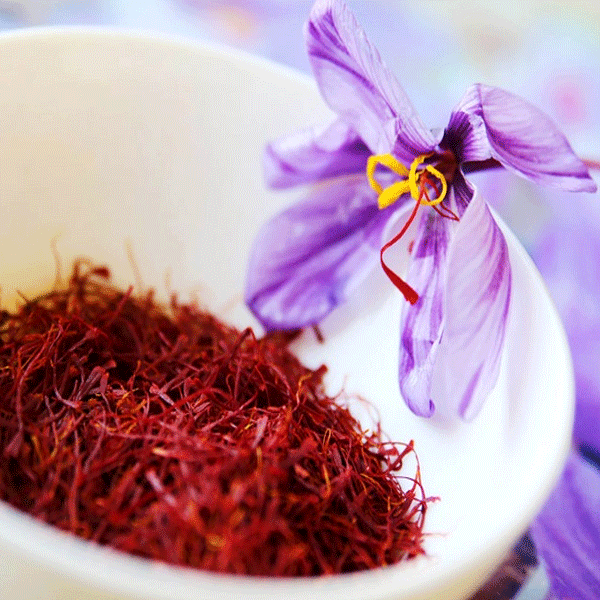
Saffron nutritional profile
Essential Minerals in Saffron: The Unsung Heroes
The mineral density of high-quality saffron is where this spice truly shines.
Manganese (The Metabolism Booster): Saffron is exceptionally rich in manganese. Just a tiny pinch provides a significant percentage of your daily requirement. Manganese is crucial for blood sugar regulation, calcium absorption, and the metabolism of carbohydrates.
Iron (The Oxygen Carrier): For individuals looking for plant-based iron support, saffron is a surprisingly dense source. While it won’t replace an iron supplement for acute anemia, the bioavailable iron in saffron helps support healthy red blood cell production when used consistently in cooking.
Potassium & Magnesium (The Heart Protectors): These two electrolytes work in synergy to regulate blood pressure and support nerve function. The presence of potassium in saffron helps counteract sodium in the diet, promoting cardiovascular health.
The Vitamin Breakdown: Tiny Strands, Big Impact
Saffron does not just offer minerals; it contains a spectrum of vitamins that act as powerful antioxidants.
Vitamin C (Ascorbic Acid): While heating saffron can diminish its Vitamin C content, raw or gently steeped saffron releases a vital dose of this immune-boosting vitamin, which also aids in the absorption of the iron present in the spice.
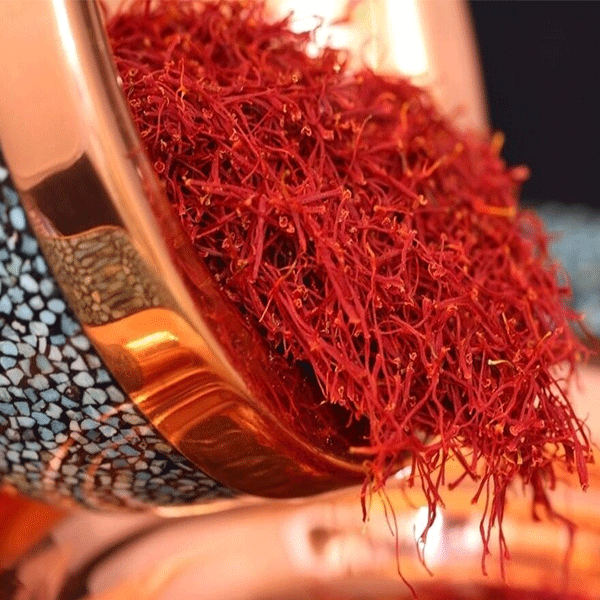
Saffron nutritional profile
B-Vitamins (Riboflavin, Niacin, and Folic Acid): Saffron contains Vitamin B2 (Riboflavin) and B6, which are essential for converting food into energy and maintaining a healthy nervous system. Folic acid (B9) is also present, supporting cellular repair.
Vitamin A Precursors: The distinct bright red-orange color of saffron comes from carotenoids (like crocin and crocetin). These act as provitamin A in the body, fiercely protecting eye health and skin integrity from oxidative stress.
Saffron Health Benefits: Explore how modern clinical research is validating this ancient spice as a potent therapeutic agent, proving its efficacy in supporting mood regulation, cognitive health, and cellular protection.
Nutritional Breakdown Table
| Nutrient | Amount per 100g | Amount per 1g (Approx. 300 threads) | Primary Health Benefit |
|---|---|---|---|
| Manganese | 28.4 mg (1420% DV) | 0.28 mg (14% DV) | Bone health, blood sugar regulation |
| Vitamin C | 80.8 mg | 0.8 mg | Immune support, collagen production |
| Iron | 11.1 mg | 0.11 mg | Oxygen transport, fatigue reduction |
| Potassium | 1724 mg | 17.2 mg | Blood pressure regulation |
| Vitamin B6 | 1.01 mg | 0.01 mg | Brain health, neurotransmitter function |
Saffron vs. Turmeric: A Nutritional Comparison
When consumers look to add healthy, vibrantly colored spices to their diet, the choice often comes down to saffron or turmeric. How do they compare nutritionally?
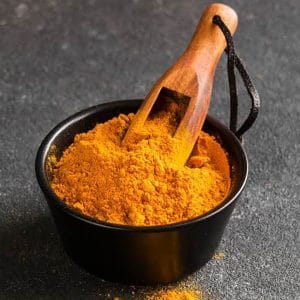
While both contain powerful antioxidants (Curcumin in turmeric vs. Crocin in saffron), their nutritional utility differs vastly based on how we consume them. You might easily add a full tablespoon of turmeric to a curry, delivering a bulk dose of fiber, iron, and potassium. Saffron, however, is consumed in pinches.
The Verdict: Rely on turmeric for bulk nutritional supplementation (like dietary fiber and daily iron intake), but use saffron for its hyper-concentrated micro-nutrients, particularly manganese, and its unique neuroprotective compounds that turmeric cannot replicate.
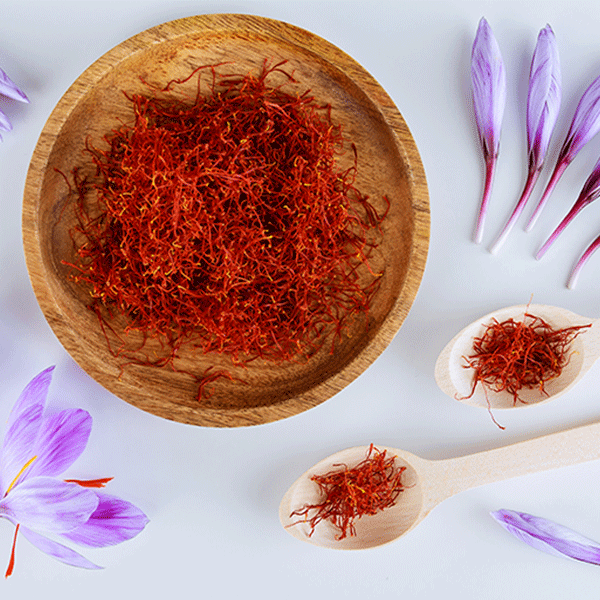
Saffron nutritional profile
How to Maximize Nutrient Absorption from Saffron
Having highly nutritious saffron is useless if your body cannot absorb its vitamins and minerals. Because saffron’s bioactive compounds are both water-soluble and fat-soluble, how you prepare it dictates what nutrients you get.
To extract the maximum vitamins and minerals, follow this multi-step extraction method:
Grind Gently: Use a mortar and pestle to grind the threads into a fine powder. This breaks down the cellular walls of the stigma, exposing the minerals.
The Ice Method (For Vitamins): Steep the powder in an ice cube rather than boiling water. Boiling water destroys heat-sensitive Vitamin C and some B-vitamins. Letting the saffron bloom over ice preserves its delicate vitamin profile.
Add a Fat Source (For Carotenoids): To absorb the Provitamin A (carotenoids) effectively, consume your saffron infusion alongside a healthy fat—such as a splash of warm milk, olive oil in a paella, or a butter-basted rice dish.
Refrence:
https://pmc.ncbi.nlm.nih.gov/articles/PMC4643654/
Records mentioned in this article
Frequently Asked Questions
Yes and no. High heat will destroy water-soluble vitamins like Vitamin C and degrade some of the delicate essential oils. However, minerals like Iron, Potassium, and Manganese remain entirely stable during cooking. To preserve everything, add your bloomed saffron liquid at the very end of the cooking process.
While saffron is incredibly dense in manganese, reaching 100% of your Daily Value would require consuming over 7 grams of saffron in a day. This is far beyond the safe daily limit (which is under 1.5 grams). Saffron should be viewed as an excellent supplementary source, not a sole source.
Both have distinct advantages. Saffron tea (especially if steeped at a moderate temperature) is excellent for absorbing water-soluble B and C vitamins. Adding saffron to food, particularly dishes containing fats or oils, significantly increases the absorption of its fat-soluble antioxidant compounds.