Elevate your mixology with artisanal saffron simple syrup, a vibrant golden elixir designed to perfectly infuse the spice’s delicate floral and earthy notes into cold beverages. Master the professional “blooming” technique and discover how this premium syrup seamlessly enhances botanical gins, smoky agaves, and sophisticated zero-proof mocktails. Explore the complete step-by-step recipe, expert ingredient comparisons, and pro troubleshooting tips to transform your standard drinks into high-end cocktail experiences.
Saffron at a Glance: Key Facts for Buyers & Businesses
| Category | Details |
|---|---|
| Botanical Name | Crocus sativus L. |
| Primary Origins | Iran (90%), Afghanistan, Spain, Kashmir (India), Greece |
| Active Compounds | Crocin (color), Picrocrocin (flavor), Safranal (aroma) |
| Grading Standards | ISO 3632 (Category I–III based on crocin, picrocrocin, safranal levels) |
| Common Grades | Sargol (all-red threads), Negin (premium long threads), Pushal (red + some yellow) |
| Retail Price Range (2026) | 8– 15/gram (premium), 500 – 500– 3,000/kg (bulk, B2B) |
| Key Quality Indicators | Deep red color, minimal yellow threads, strong aroma, moisture <12%, no additives |
| Shelf Life | 2–3 years (airtight, cool, dark storage) |
| Culinary Uses | Paella, risotto, Persian rice, desserts, teas |
| Health Benefits | Antioxidant, mood support, potential anti-inflammatory properties* |
| Buying Tips for Consumers | Buy threads (not powder), check ISO cert, test 2–3 threads in warm water |
| Sourcing Tips for Businesses | Request lab reports (ISO 3632), verify origin docs, sample before bulk orders |
Saffron at a Glance: Key Facts for Buyers & Businesses. Origin, grades, 2026 prices, and purity checks — the essentials for both home and bulk saffron buyers, in one table. Columns: Category, Details. Botanical Name — Crocus sativus L.. Primary Origins — Iran (90%), Afghanistan, Spain, Kashmir (India), Greece. Active Compounds — Crocin (color), Picrocrocin (flavor), Safranal (aroma). Grading Standards — ISO 3632 (Category I–III based on crocin, picrocrocin, safranal levels). Common Grades — Sargol (all-red threads), Negin (premium long threads), Pushal (red + some yellow). Retail Price Range (2026) — 8– 15/gram (premium), 500 – 500– 3,000/kg (bulk, B2B). Key Quality Indicators — Deep red color, minimal yellow threads, strong aroma, moisture <12%, no additives. Shelf Life — 2–3 years (airtight, cool, dark storage).
Transforming everyday drinks into premium experiences comes down to one ingredient: saffron simple syrup. This golden elixir acts as the perfect carrier for saffron’s delicate, earthy, and slightly floral flavor profile, which otherwise struggles to infuse directly into cold cocktails. By extracting the natural color and aroma of high-quality saffron threads into a stable syrup, you gain precise control over the flavor balance of your beverages.
Whether you are crafting a saffron gin sour, elevating a classic margarita, or creating visually striking mocktails, mastering this syrup requires understanding the extraction process—often referred to as “blooming.”
The Core Recipe: Professional Saffron Simple Syrup
Making simple syrup is straightforward (a 1:1 ratio of sugar to water), but adding saffron requires a two-step process to maximize the yield of the spice and prevent scorching its volatile oils.
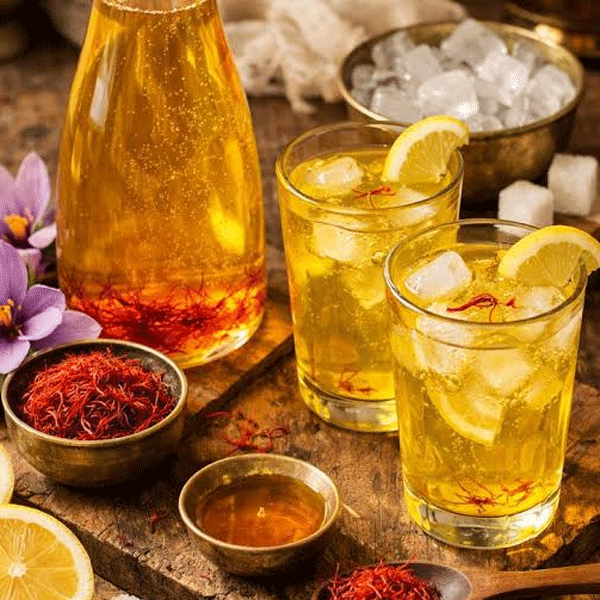
Saffron simple syrup
Ingredients
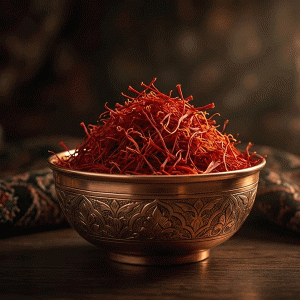
Saffron Threads: 1 generous pinch (about 0.1 to 0.15 grams) of premium saffron (e.g., Super Negin).
Water: 1 cup (filtered water is crucial to avoid chlorine masking the saffron).
Sugar: 1 cup (granulated white sugar is standard).
Optional: 1 bar spoon of rose water or orange blossom water (to enhance the floral notes).
Step-by-Step Instructions
Step 1: Grind and Bloom the Saffron
Do not just drop whole threads into boiling syrup. For maximum color and flavor extraction, gently crush the saffron threads in a small mortar and pestle with a tiny pinch of sugar (the sugar acts as an abrasive).
Transfer the crushed saffron to a small glass. Add two tablespoons of hot (not boiling) water. Let it steep (bloom) for 15 to 20 minutes. The liquid will turn a deep, vibrant crimson.
Step 2: Prepare the Simple Syrup
In a small saucepan, combine the remaining water and the 1 cup of sugar. Heat over medium-low heat, stirring gently until the sugar is completely dissolved. Do not let it boil, as evaporation alters the 1:1 ratio and makes the syrup too thick.
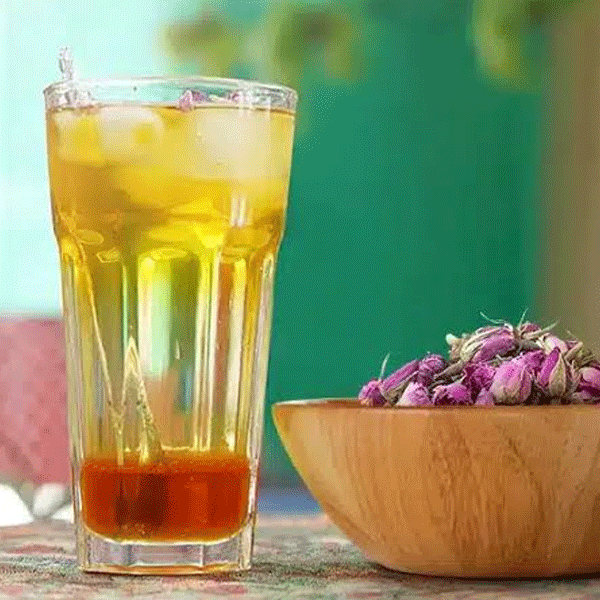
Saffron simple syrup
Step 3: Combine and Cool
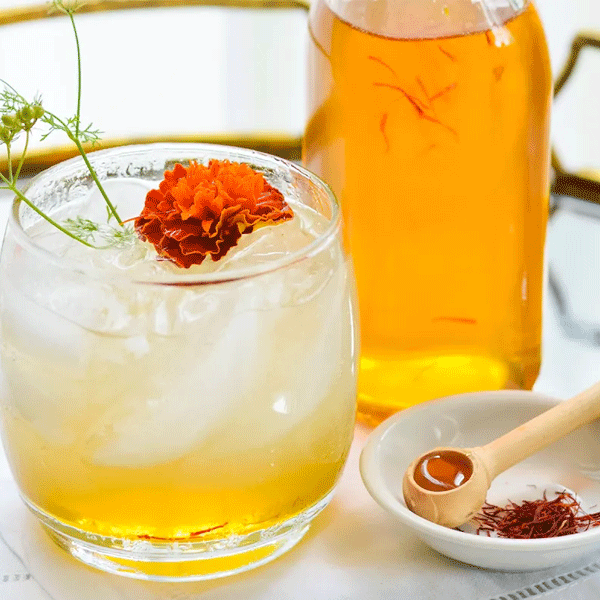
Once the sugar water is clear, remove the saucepan from the heat. Pour your bloomed saffron liquid into the warm syrup. Stir gently. You will immediately see the syrup transform into a brilliant, translucent gold. Let it cool completely at room temperature.
Step 4: Strain and Store
You can leave the micro-fragments of saffron in the syrup for visual appeal, or strain them out using a fine mesh sieve if you prefer a perfectly clear cocktail. Store in a sterilized glass bottle in the refrigerator.
Saffron Culinary Arts: Discover expert techniques and time-honored traditions to elevate your everyday dishes with the vibrant color and complex flavor of the world’s most precious spice.
Comparing Sugar Types and Saffron Formats
| Base / Ingredient | Requires blooming, but guarantees authenticity, nuanced flavor and no adulteration. All premium mixology applications. The only recommended format for artisanal syrups. | ||
|---|---|---|---|
| Saffron Powder | Extracts instantly, but often lacks depth. High risk of commercial adulteration (mixed with turmeric). | Quick, high-volume batching where quality isn’t the primary focus. | Avoid for high-end cocktails; color can be dull or artificially orange. |
Pairing Saffron Syrup in Mixology
Saffron pairs exceptionally well with citrus, botanical spirits, and earthy herbs. Here is how to apply your freshly made syrup:
The Botanical Match: Gin is saffron’s best friend. The juniper and botanicals in gin interlock with saffron’s earthy notes. Try substituting regular simple syrup for saffron syrup in a classic Gimlet or Tom Collins.
The Agave Connection: The earthy, slightly smoky notes of Reposado Tequila or Mezcal are elevated by saffron. A Saffron Margarita (using fresh lime, triple sec, tequila, and 0.5 oz of saffron syrup) is a complex, savory-sweet experience.
Non-Alcoholic Elevations: Add 1 ounce of saffron syrup to a glass of sparkling water with a squeeze of fresh lemon and a sprig of rosemary for a sophisticated, zero-proof beverage.
Records mentioned in this article
Frequently Asked Questions
Cloudiness usually happens for two reasons: either the sugar did not dissolve completely before the liquid cooled, or the syrup was boiled vigorously, which can alter the sugar’s structure and degrade the delicate saffron compounds. Always heat gently and stir until just clear.
Yes. Traditional Persian culinary techniques often use ice to bloom saffron. Place the crushed saffron in a glass, add two ice cubes, and let them melt at room temperature. The slow, cold extraction pulls out a remarkably smooth flavor profile and intense color. You can then add this cold-bloomed liquid directly to your cooled simple syrup.
While the sweetness and color will remain stable, the volatile aromatic compounds of saffron do begin to dissipate after about 3 to 4 weeks. For the best aromatic experience in your cocktails, it is recommended to make saffron syrup in small batches rather than bulk.