For commercial buyers, flavor houses, and industrial food manufacturers, tracking the vanilla price per kg is a critical supply chain operation. Vanilla remains one of the most labor-intensive and volatile agricultural commodities in the world. Unlike synthetic vanillin, genuine vanilla beans require hand-pollination, months of careful curing, and complex logistics to move from tropical farms to global manufacturing hubs.
If you are sourcing vanilla for enterprise use, looking at retail prices will completely skew your procurement budget. To make informed purchasing decisions, buyers must look strictly at the trade data. Below, we break down exactly what vanilla trades at today, the mathematical breakdown of these costs, and why understanding the import value is the only way to accurately forecast your raw material expenses.
Today’s Trading Value
Based on current tracking from our central pricing database, the benchmark vanilla price per kg sits at $150.00 USD.
It is absolutely vital to understand that this figure represents the customs value—not the retail or shop price.
vanilla price per kg
Customs value (often calculated as CIF—Cost, Insurance, and Freight, or FOB—Free on Board) is the declared value of the goods when they cross international borders. It represents the wholesale, bulk transfer of raw agricultural material from exporters to major importers. By the time this vanilla is repackaged in glass vials and placed on a supermarket shelf, retail markups, packaging costs, and distributor margins often inflate the price by 300% to 500%.
For manufacturers formulating recipes or forecasting budgets, here is how that baseline customs value breaks down across standard industrial measurements:
Vanilla Price Per Kilogram (kg): $150.00 USD
Vanilla Price Per Pound (lb): $68.04 USD (Calculated at 1 kg = 2.20462 lbs)
Vanilla Price Per 100 Grams: $15.00 USD
To view the most up-to-date daily market adjustments and verify the exact current numbers, always consult our live [vanilla price index].
Why Customs Value is the True Metric for B2B Buyers
When a procurement manager searches for the current market rate of vanilla, they are often bombarded by consumer-facing data. A quick online search might show a single vanilla bean selling for $5.00, or a small 100-gram bundle selling for $60.00.
For a B2B buyer purchasing pallets of extraction-grade beans, consumer data is useless. The customs value is the only metric that matters because it reflects the true, unadulterated cost of the raw material before domestic supply chains take their cut.
vanilla price per kg
When you buy at the customs value, you are paying for:
Farm-Level Labor: The manual pollination and harvesting of the green beans.
The Curing Process: The 3 to 6 months required to sweat, dry, and condition the beans to develop their vanillin content.
Export Logistics: Transportation from remote regions (like the SAVA region in Madagascar), export taxes, and international freight.
You are not paying for glass jars, fancy labeling, domestic warehousing, or the marketing budgets of consumer spice brands.
Geographic Factors Driving the Cost
You cannot discuss the price of this spice without discussing where it is grown. The global vanilla market is heavily monopolized by a few key regions, which makes the supply chain incredibly vulnerable to localized disruptions.
Madagascar currently produces roughly 80% of the world’s natural vanilla. Because of this massive market share, any event in Madagascar—whether it is a devastating cyclone, a change in government export minimums, or a poor flowering season—creates an immediate ripple effect on the global vanilla price per kg.
Other regions, such as Indonesia, Uganda, and Papua New Guinea, offer excellent alternatives, but their production volumes are not large enough to dictate global pricing. To truly master vanilla sourcing, a buyer must understand the agricultural and political nuances of these regions. We highly recommend reviewing our comprehensive guide on the origin of vanilla to understand how geography dictates your procurement costs.
How Quality and Moisture Dictate the Final Bill
The $150/kg benchmark mentioned above is an average baseline for standard commercial beans. However, vanilla is not a uniform commodity. The price you ultimately pay at customs will fluctuate depending on the specific physical characteristics of the batch you are importing.
The two main factors that alter the price are moisture content and vanillin yield.
Grade A (Gourmet/Black): These beans have a higher moisture content (typically 30-35%). They are visually flawless, pliable, and primarily sold to high-end restaurants and retail spice companies. Because you are essentially paying for water weight alongside the flavor, the price per kg for Gourmet beans is significantly higher.
vanilla price per kg
Grade B (Extraction): These beans have a much lower moisture content (usually 15-25%). They are often visually imperfect, dry, and brittle. However, they are highly sought after by flavor houses and extract manufacturers because they yield a high concentration of vanillin per kilogram of dry weight. The customs value for extraction beans is generally lower per kg, but they offer better industrial ROI.
Understanding these classifications is non-negotiable for commercial buyers. Purchasing the wrong grade can result in thousands of dollars of wasted budget. For a deep dive into how these specifications are categorized in the B2B market, read our technical breakdown of vanilla grading standards.
Why Prices Change So Drastically
If you look at a historical chart of vanilla prices, it looks more like a volatile cryptocurrency than an agricultural staple. In the early 2000s, prices crashed to below $20 per kg. Fast forward to 2017 and 2018, and a combination of extreme weather events and massive market speculation drove the customs value to an astonishing $600 per kg—making it more expensive than silver at the time.
Today’s market has stabilized considerably from those historic highs, largely due to increased global plantings reaching maturity and major buyers pushing back against exorbitant costs by reformulating products. However, the market remains cyclical.
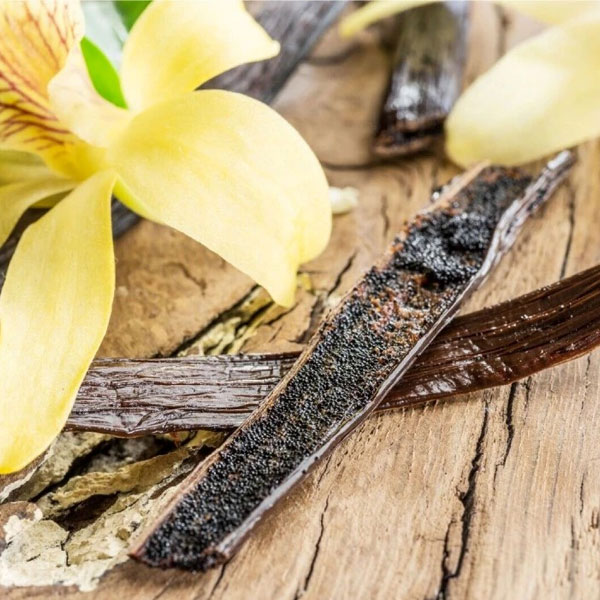
vanilla price per kg
Smart procurement requires anticipating these market shifts before they happen. Buyers cannot afford to look only at today’s rate; they must analyze the macroeconomic trends of the past decade. To see exactly how we arrived at today’s current trading value, study our detailed analysis of vanilla price history.
Sourcing Strategy for Importers
If you are entering the vanilla market today, the customs value of $150 per kg (or $68.04 per pound) provides a realistic baseline for your landed cost calculations. When negotiating with international suppliers, use this figure as your anchor.
Remember to account for the hidden costs beyond the customs declaration: import duties, domestic freight from the port to your facility, and quality assurance testing (such as HPLC testing for vanillin content and microbiological screening). By separating the true B2B import value from consumer retail noise, you position your manufacturing operation to source intelligently, profitably, and sustainably.
Records mentioned in this article

Frequently Asked Questions
The customs value represents the bulk, wholesale cost of raw imported beans at the border. Retail prices include heavy markups for domestic shipping, repacking into small consumer quantities, retail margins, and brand marketing.
Customs value generally reflects the CIF (Cost, Insurance, and Freight) or FOB (Free on Board) price agreed upon between the exporter and importer. It does not include domestic import tariffs, port fees, or inland transportation to your warehouse.
The exact count depends on the grade and moisture content, but a standard kilogram typically contains between 250 and 350 individual vanilla beans. Drier extraction-grade beans will have a higher bean count per kg than moist, heavy gourmet beans.