Think about the last time you baked a cake, enjoyed a scoop of rich ice cream, or simply inhaled the warm, comforting scent of a high-quality candle. The unmistakable, sweet, and complex aroma of real vanilla is deeply woven into our daily lives. Yet, behind that familiar flavor lies one of the most astonishing and labor-intensive agricultural secrets on the planet.
If you want to truly understand the origin of this beloved spice, you have to look past the grocery store shelves and travel to the humid, tropical vine forests of Madagascar, Tahiti, or Mexico. There, you will uncover a shocking truth: every single vanilla pod you have ever consumed exists because a human being patiently and carefully created it.
To comprehend how vanilla is pollinated, we have to explore a high-stakes race against time, a stubborn botanical barrier, and a historic discovery that forever changed the culinary world.
Nature’s Strictest Deadline
In the world of agriculture, few crops demand as much vigilance as the Vanilla planifolia orchid. Unlike apples, wheat, or even coffee, the vanilla orchid is notoriously uncooperative when it comes to reproduction. The core of the drama lies in the flower’s incredibly short lifespan.
A vanilla vine takes up to three to four years of careful cultivation before it even produces its first cluster of flowers. When the flowering season finally arrives, the farmer enters a period of intense, sleepless dedication. The vanilla orchid blooms for exactly one day.
It opens gently in the early morning hours, usually as the tropical sun begins to burn off the dawn mist. By the late afternoon of that very same day, the flower begins to wilt and die. If the flower is not pollinated during this fleeting 12-hour window, it simply falls from the vine. No pollination means no vanilla bean. The opportunity for that specific flower is gone forever.
how vanilla is pollinated
During the blooming season, farmers must walk their plantations every single morning, inspecting hundreds or thousands of vines to spot the pale yellow-green blossoms that have opened that day. It is a meticulous daily patrol where missing a single flower means losing a valuable pod.
Why Natural Pollination Fails
You might wonder: if the flower only lives for 12 hours, how did vanilla ever survive in the wild before humans intervened?
For centuries, vanilla grew exclusively in the tropical forests of Mesoamerica, primarily in modern-day Mexico. In its native habitat, the vanilla orchid had formed an exclusive evolutionary partnership with a specific type of local insect: the Melipona bee (and occasionally certain hummingbirds).
The anatomy of the vanilla flower is remarkably complex. Unlike a daisy or a tulip, where the pollen (male) and stigma (female) are easily accessible to the wind or passing insects, the vanilla orchid has a built-in barrier. A thin, flap-like membrane called the rostellum physically separates the plant’s pollen from its own stigma. This evolutionary quirk was designed to prevent self-pollination and encourage genetic diversity.
The small, industrious Melipona bee is one of the only creatures equipped with the exact size and strength needed to crawl deep into the flower, lift the rostellum, and accidentally smear the pollen onto the stigma as it backs out.
However, even with the Melipona bee working tirelessly in Mexico, the natural pollination success rate is incredibly low. In the wild, there is only about a 1% chance that a vanilla flower will be successfully pollinated.
When European explorers discovered vanilla in the 16th century, they fell in love with its flavor and took vine cuttings back to botanical gardens in Europe and colonies in the Indian Ocean. The vines grew beautifully in the tropical climates of places like Madagascar and Réunion Island. They produced lush green leaves and beautiful flowers—but absolutely no vanilla pods. The flowers would open, wilt, and drop to the ground. Without the Mexican Melipona bee, the vanilla orchid was completely sterile.
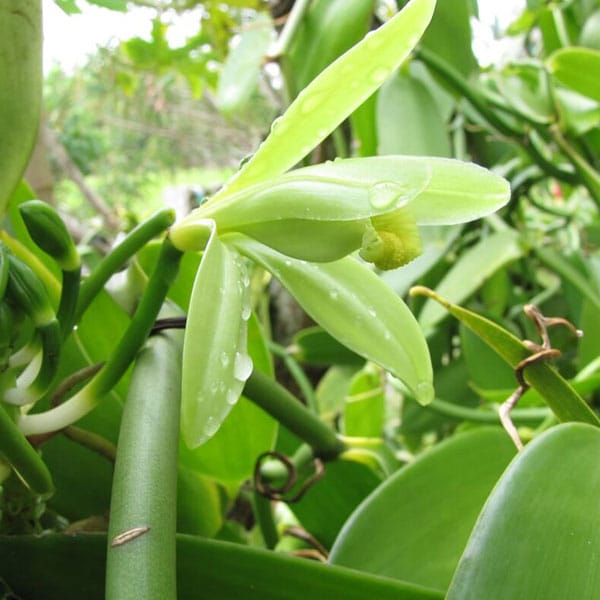
how vanilla is pollinated
How Vanilla is Pollinated Today
Today, vanilla is grown far beyond the borders of Mexico, with Madagascar supplying the vast majority of the world’s demand. Because the natural pollinator does not exist in these other countries—and because a 1% success rate is not commercially viable even in Mexico—the entire global vanilla industry relies exclusively on hand-pollination.
So, exactly how vanilla is pollinated by humans? It is a delicate, surgical process that requires steady hands, sharp eyes, and immense patience. The technique is often beautifully referred to by the French term Le Mariage (The Marriage) of the flower.
Here is what happens on a vanilla farm every morning during the blooming season:
The Tools: The farmer carries nothing but a small, sharp instrument. This is typically a splinter of bamboo, a small wooden needle, or a specialized thorn. No heavy machinery or automated technology can replicate this task.
The Approach: The farmer gently holds the fragile base of the open flower with one hand.
Tearing the Lip: With the other hand, using the bamboo splinter, the farmer carefully tears open the “lip” (the labellum) of the orchid to expose the hidden inner reproductive organs.
Lifting the Barrier: The farmer uses the tip of the bamboo splinter to reach inside and lift up the rostellum—the tiny plant tissue blocking the male and female parts from touching.
The Marriage: Once the rostellum is pushed up and out of the way, the farmer uses their thumb to gently but firmly press the anther (which holds the sticky mass of pollen) down onto the stigma.
If pressed too hard, the delicate reproductive organs are crushed, and the flower dies. If not pressed hard enough, the pollen won’t stick, and the flower dies. It must be perfect.
A skilled vanilla farmer can hand-pollinate between 1,000 to 1,500 flowers in a single morning. When you consider that millions of vanilla beans are exported globally each year, the sheer scale of human labor involved is staggering. Every single dark, wrinkled vanilla pod you see was once a flower individually held, manipulated, and successfully “married” by human hands.
A 12-Year-Old’s Discovery That Changed the World
The precise, manual technique used across the globe today is not a modern technological invention. In fact, for hundreds of years, the greatest botanical minds in Europe tried and failed to figure out how to artificially pollinate the vanilla orchid. The mystery seemed unsolvable, and a global vanilla trade appeared impossible.
The breakthrough did not come from a university professor or a wealthy botanist. It came in 1841 on the French island of Réunion in the Indian Ocean. A 12-year-old enslaved boy, working on a plantation, observed the anatomy of the flower and ingeniously figured out how to use a thin stick and his thumb to bypass the rostellum.
His brilliant, simple, and rapid technique worked flawlessly. Thanks to him, vanilla could suddenly be cultivated anywhere with the right climate. If you are fascinated by the human history behind this spice, you must read the incredible story of Edmond Albius, the boy who made vanilla possible. His legacy is the reason you can enjoy vanilla today.
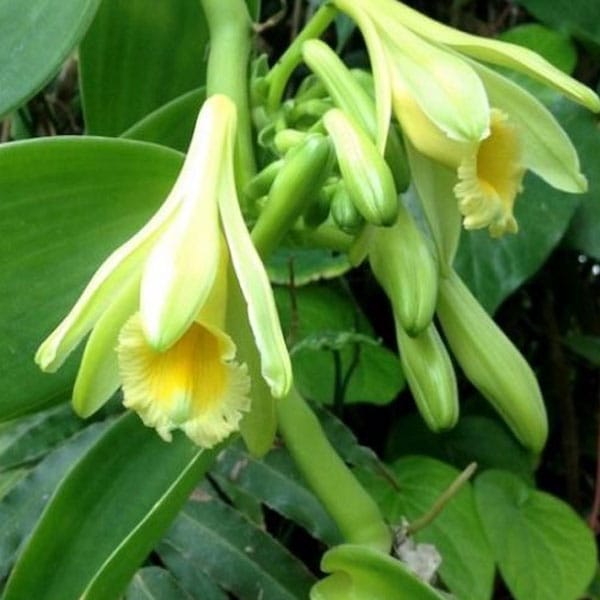
how vanilla is pollinated
The True Cost of Hand-Pollination
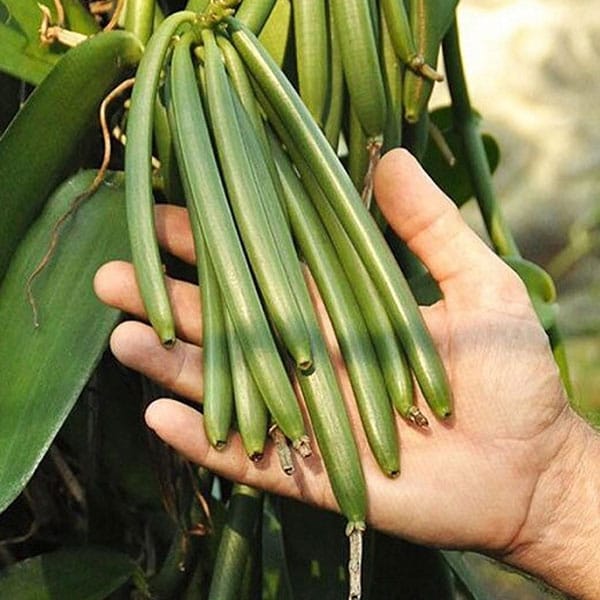
The journey of vanilla does not end with successful hand-pollination. If the “marriage” is successful, the flower will wither but remain attached to the stem. Over the next nine months, a green pod will slowly grow and swell. Even then, the green pod has no flavor or aroma. It must undergo months of curing, sweating, and drying in the sun before it develops its signature scent.
When you buy a bottle of real vanilla extract or a glass vial containing a few whole beans, you are not just paying for a flavor. You are paying for a farmer waking up at dawn, walking miles through humid vines, and performing a delicate surgery on a flower that will die in hours. You are paying for a process that relies 100% on human dedication. This intense, unyielding requirement for manual labor is the primary reason behind why vanilla is so expensive.
Understanding this process transforms how we experience this spice. It elevates vanilla from a common baking ingredient to an extraordinary agricultural masterpiece. The next time you slice open a pod to scrape out those thousands of tiny black seeds, take a moment to appreciate the human hands that made it happen.
If you want to explore the finest selections of this incredible spice and learn more about its journey from vine to kitchen, explore our collection of pure vanilla beans and their origins.
Records mentioned in this article
Frequently Asked Questions
No. The vanilla orchid is incredibly delicate, and its reproductive organs are hidden inside a complex floral structure. The precision required to lift the rostellum and press the pollen without damaging the flower can only be done by human hands. No machine or automated technology has ever been invented that can replace this manual labor.
If a vanilla flower opens in the morning and is not pollinated by the late afternoon, it will wilt, die, and fall off the vine within a day or two. The plant will not produce a vanilla pod from that flower, and the opportunity is permanently lost.
Yes. The technique invented by Edmond Albius in 1841 using a small bamboo splinter or thorn to lift the rostellum and the thumb to press the pollen is still the exact method used by vanilla farmers all over the world today. It remains the most efficient and effective way to pollinate the orchid.