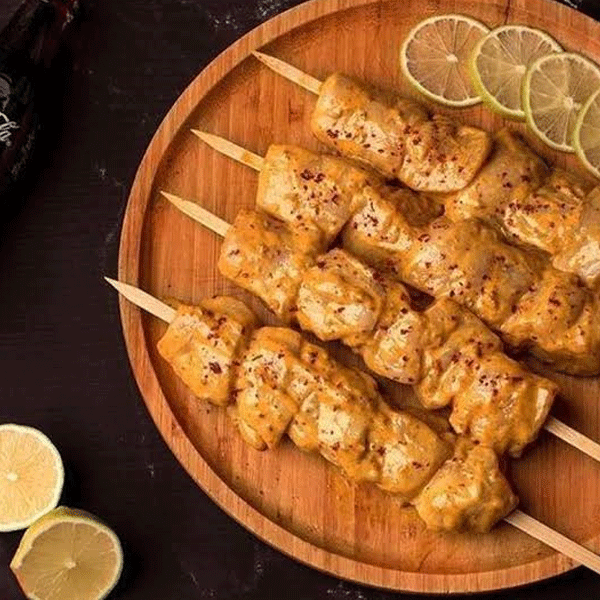
The secret to authentic restaurant-quality Persian Saffron Chicken Kebab (Joojeh Kabab) lies in the precise sequencing of the marinade: saffron, fat, sliced onions, and finally, acid. By utilizing the ice-water blooming technique and adding lime juice last, you protect the meat’s proteins from toughening while locking in a vibrant, unbleached golden color. Finishing the grill with a traditional Roomaal (saffron and melted butter baste) elevates the flavor profile, ensuring a juicy, perfectly glazed result every time.
Saffron at a Glance: Key Facts for Buyers & Businesses
| Category | Details |
|---|---|
| Botanical Name | Crocus sativus L. |
| Primary Origins | Iran (90%), Afghanistan, Spain, Kashmir (India), Greece |
| Active Compounds | Crocin (color), Picrocrocin (flavor), Safranal (aroma) |
| Grading Standards | ISO 3632 (Category I–III based on crocin, picrocrocin, safranal levels) |
| Common Grades | Sargol (all-red threads), Negin (premium long threads), Pushal (red + some yellow) |
| Retail Price Range (2026) | 8– 15/gram (premium), 500 – 500– 3,000/kg (bulk, B2B) |
| Key Quality Indicators | Deep red color, minimal yellow threads, strong aroma, moisture <12%, no additives |
| Shelf Life | 2–3 years (airtight, cool, dark storage) |
| Culinary Uses | Paella, risotto, Persian rice, desserts, teas |
| Health Benefits | Antioxidant, mood support, potential anti-inflammatory properties* |
| Buying Tips for Consumers | Buy threads (not powder), check ISO cert, test 2–3 threads in warm water |
| Sourcing Tips for Businesses | Request lab reports (ISO 3632), verify origin docs, sample before bulk orders |
Saffron at a Glance: Key Facts for Buyers & Businesses. Origin, grades, 2026 prices, and purity checks — the essentials for both home and bulk saffron buyers, in one table. Columns: Category, Details. Botanical Name — Crocus sativus L.. Primary Origins — Iran (90%), Afghanistan, Spain, Kashmir (India), Greece. Active Compounds — Crocin (color), Picrocrocin (flavor), Safranal (aroma). Grading Standards — ISO 3632 (Category I–III based on crocin, picrocrocin, safranal levels). Common Grades — Sargol (all-red threads), Negin (premium long threads), Pushal (red + some yellow). Retail Price Range (2026) — 8– 15/gram (premium), 500 – 500– 3,000/kg (bulk, B2B). Key Quality Indicators — Deep red color, minimal yellow threads, strong aroma, moisture <12%, no additives. Shelf Life — 2–3 years (airtight, cool, dark storage).
If you have ever walked past an Iranian restaurant or attended a Persian barbecue, you know the unmistakable, intoxicating aroma of charcoal, citrus, and earthy saffron. Joojeh Kabab (Persian Saffron Chicken Kebab) is globally beloved, yet when most people try to recreate it at home, the chicken comes out pale, dry, or lacking that deep, complex restaurant flavor.
As a sourcing and culinary research expert at OriginAndSource.com, I’ve spent years analyzing not just the recipes, but the exact specifications of the ingredients and the chemical reactions of the marinades.
Here is the truth: The secret to the perfect Joojeh Kabab isn’t a hidden ingredient. It is the quality of your source materials and the exact sequence in which you apply them.
Most home cooks throw the chicken, saffron, onions, and lime juice into a bowl all at once. This is a crucial mistake. When you do this, the onions absorb all the expensive saffron, and the acidic lime juice instantly starts “cooking” the chicken, leaving it tough.
Let’s break down the authentic method, ingredient by ingredient, and step by step.
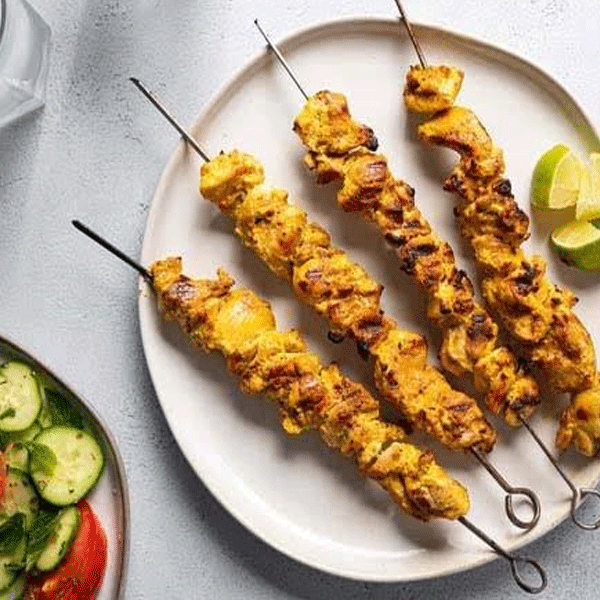
Joojeh Kabab recipe
1. Sourcing the Elements: What You Actually Need
Before you chop a single onion, you need to understand your raw materials. The difference between an average kebab and a spectacular one lies in your sourcing decisions.
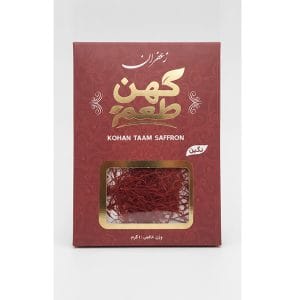
The Saffron (The Non-Negotiable Core): Do not buy cheap, powdered saffron from the generic spice aisle; it is often cut with turmeric or safflower. You want authentic Persian saffron, ideally the Super Negin or Sargol grades. These grades consist only of the red stigma tips, containing the highest levels of crocin (color) and safranal (aroma).
The Chicken (Thighs vs. Breast): Both are traditional, but they serve different purposes. Boneless, skinless thighs are forgiving, rich, and perfect for high-heat grilling. Breast meat requires absolute precision in cooking time to avoid drying out.
The Acid: Fresh lime juice (or sour orange if you can find it). Never use bottled lemon juice; the preservatives leave a metallic aftertaste.
The Onion: Yellow or white onions. They must be sliced, never grated.
2. A Multi-Step Marinade Strategy
To get that brilliant golden hue and incredibly juicy texture, you must layer your ingredients in a specific order. This is the true restaurant secret.
Step 1: The Saffron Spa
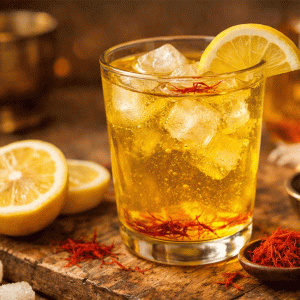
First, you must “bloom” your saffron. Grind a generous pinch of saffron threads with a tiny pinch of sugar into a fine powder. Dissolve it in 3 to 4 tablespoons of ice water (ice shocks the saffron into releasing its color better than hot water).
Toss your cubed chicken in this liquid gold. Let it sit for 30 minutes.
The Science: By doing this first, the chicken fibers absorb the pure color and aroma without any interference.
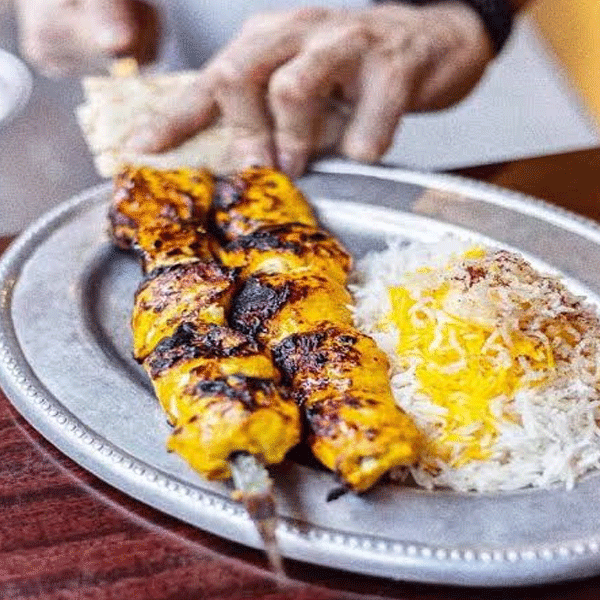
Joojeh Kabab recipe
Step 2: The Fat Seal Next, add 3 to 4 tablespoons of a neutral oil (like grapeseed or mild olive oil) or melted butter to the bowl. Mix thoroughly.
The Science: The fat coats the chicken, locking the saffron color in and creating a protective barrier against the harsh acids you are about to add.
Step 3: The Flavor Infusion
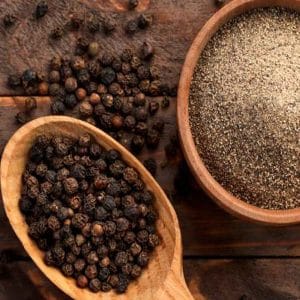
Now, add thickly sliced onions, salt, and freshly ground black pepper.
Decision-making tip: Why sliced and not grated? Grated onion sticks to the chicken like glue. When you put the skewers on the grill, those tiny onion bits will burn and turn bitter long before the chicken is cooked. Sliced onions flavor the meat and can be easily brushed off before grilling.
Step 4: The Acidic Finish
Finally, add your fresh lime juice. If you prefer a creamier, slightly tangy crust (the home-style method), you can also fold in 2 to 3 tablespoons of full-fat yogurt (Greek or plain) at this stage.
Cover and refrigerate.
How long to marinate? The sweet spot is 12 to 24 hours. Less than 6 hours won’t tenderize the meat; more than 48 hours will cause the lime juice to break down the proteins into a mushy texture.
Saffron Culinary Arts: Master the professional techniques of blooming, marinating, and basting to unlock the full aromatic potential and vibrant golden hues of premium saffron in every dish.
3. Decision Matrix: Customizing Your Joojeh Kabab
| Decision Factor | Option A (Traditional/Restaurant) | Option B (Home-Style/Convenience) | Expert Verdict |
|---|---|---|---|
| Chicken Cut | Boneless Skinless Thighs | Chicken Breast | Thighs are vastly superior for charcoal grilling. They remain juicy even if slightly overcooked. Use breast only if monitoring internal temp (165∘F). |
| Dairy vs. No Dairy | Oil & Lime only (Pure color) | Adding 2-3 tbsp Yogurt | Restaurants skip yogurt to keep the bright yellow saffron color. Yogurt mutes the color slightly but yields a tender, caramelized crust. |
| Cooking Method | Charcoal Mangal (Grill) | Oven Broiler / Air Fryer | Charcoal provides the authentic smoky flavor. If using an oven, broil on high heat and baste with saffron-butter for the last 2 minutes. |
4. The Final Touch: Basting (Roomaal)
Your job doesn’t end when the chicken hits the heat. The final hallmark of a premium Joojeh Kabab is the Roomaal—a basting liquid applied in the final minutes of cooking.
While the chicken is on the grill, melt high-quality butter (or ghee) and mix it with a splash of extra bloomed saffron and a squeeze of lime. When the chicken is 90% cooked, brush this mixture generously over the meat. This creates a glossy finish, reintroduces the intense saffron aroma that the fire might have cooked off, and adds a final hit of rich, acidic moisture.
Records mentioned in this article
Frequently Asked Questions
You likely added the lime juice before the saffron or didn’t use enough fat to protect the color. Acid bleaches the meat. Always dye the meat with saffron first.
From a sourcing and authenticity standpoint: Absolutely not. Persian kebabs rely on the fresh, volatile oils of raw onions. Garlic is rarely used in authentic Joojeh Kabab as it overpowers the delicate floral notes of the saffron.
Serve immediately over steaming Basmati rice with a knob of butter, grilled Roma tomatoes, and a side of fresh herbs (Sabzi Khidan) and flatbread.