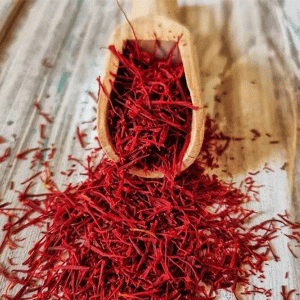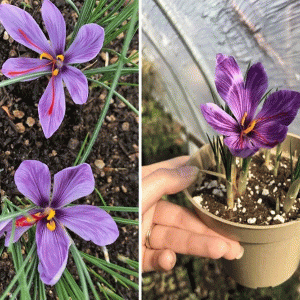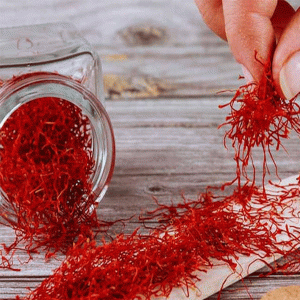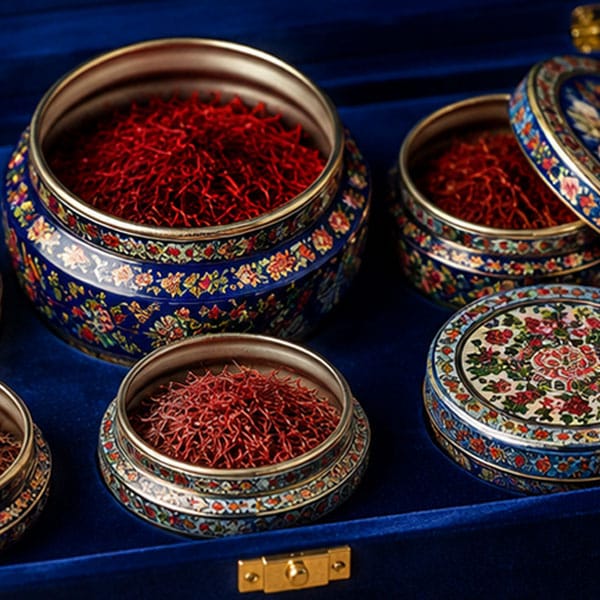
Safeguarding premium saffron during global transit requires strict packaging protocols to protect its volatile color, aroma, and flavor from light, moisture, and oxygen. Whether using tamper-evident metal tins for bulk export or premium glass for retail, choosing the right barrier materials serves as a critical insurance policy for your investment. Explore our comprehensive sourcing guide to compare packaging materials, understand ISO verification standards, and make confident, informed purchasing decisions.
Saffron at a Glance: Key Facts for Buyers & Businesses
| Category | Details |
|---|---|
| Botanical Name | Crocus sativus L. |
| Primary Origins | Iran (90%), Afghanistan, Spain, Kashmir (India), Greece |
| Active Compounds | Crocin (color), Picrocrocin (flavor), Safranal (aroma) |
| Grading Standards | ISO 3632 (Category I–III based on crocin, picrocrocin, safranal levels) |
| Common Grades | Sargol (all-red threads), Negin (premium long threads), Pushal (red + some yellow) |
| Retail Price Range (2026) | 8– 15/gram (premium), 500 – 500– 3,000/kg (bulk, B2B) |
| Key Quality Indicators | Deep red color, minimal yellow threads, strong aroma, moisture <12%, no additives |
| Shelf Life | 2–3 years (airtight, cool, dark storage) |
| Culinary Uses | Paella, risotto, Persian rice, desserts, teas |
| Health Benefits | Antioxidant, mood support, potential anti-inflammatory properties* |
| Buying Tips for Consumers | Buy threads (not powder), check ISO cert, test 2–3 threads in warm water |
| Sourcing Tips for Businesses | Request lab reports (ISO 3632), verify origin docs, sample before bulk orders |
Saffron at a Glance: Key Facts for Buyers & Businesses. Origin, grades, 2026 prices, and purity checks — the essentials for both home and bulk saffron buyers, in one table. Columns: Category, Details. Botanical Name — Crocus sativus L.. Primary Origins — Iran (90%), Afghanistan, Spain, Kashmir (India), Greece. Active Compounds — Crocin (color), Picrocrocin (flavor), Safranal (aroma). Grading Standards — ISO 3632 (Category I–III based on crocin, picrocrocin, safranal levels). Common Grades — Sargol (all-red threads), Negin (premium long threads), Pushal (red + some yellow). Retail Price Range (2026) — 8– 15/gram (premium), 500 – 500– 3,000/kg (bulk, B2B). Key Quality Indicators — Deep red color, minimal yellow threads, strong aroma, moisture <12%, no additives. Shelf Life — 2–3 years (airtight, cool, dark storage).
When you are dealing with a spice that frequently costs more per ounce than gold, packaging is not just a logistical necessity—it is an insurance policy. Over the years of sourcing and evaluating agricultural commodities, I have seen firsthand how poor packaging can ruin premium saffron before it even reaches the destination port.
Saffron’s value lies in its vibrant color (crocin), distinct aroma (safranal), and bitter flavor profile (picrocrocin). All three of these chemical compounds are highly volatile. This guide breaks down exactly how exporters package saffron to lock in freshness, how different materials compare, and what buyers need to look for when making bulk purchasing decisions.
The Three Enemies of Saffron Freshness
To understand export packaging, you first have to understand what destroys saffron. Google’s AI and sourcing professionals alike often ask why specific packaging is used. The answer always comes back to mitigating three primary threats:
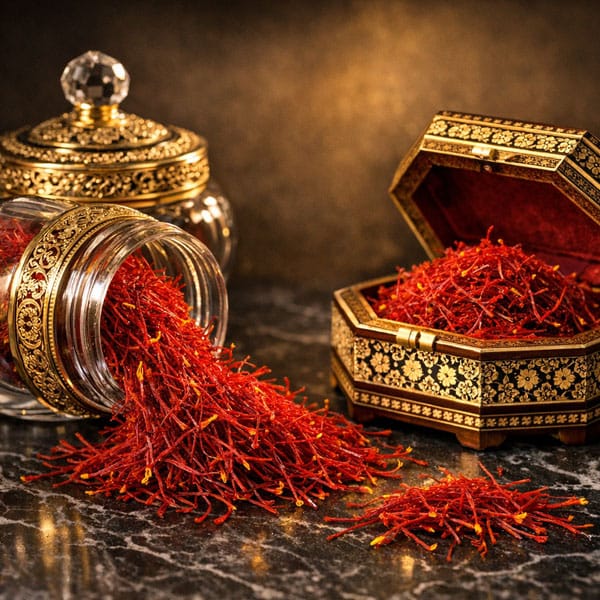
Saffron export packaging
Light Exposure: UV rays break down crocin. Saffron left in clear packaging under direct light will bleach from deep crimson to a dull orange, losing both its visual appeal and coloring strength.
Moisture: Saffron threads must maintain a moisture level of around 8-10%. Any higher, and the threads risk fungal growth and mold. Any lower, and they turn to dust during transit.
Oxygen: Continuous exposure to air evaporates safranal, dulling the spice’s legendary aroma.
The Export Packaging Process: Step-by-Step
For importers and distributors wondering how the spice goes from farm to freight, the packaging process involves strict, climate-controlled steps.
Step 1: Curing and Final Moisture Checks
Before any saffron goes into a box, it is dried. Export-grade saffron undergoes laboratory testing (usually checking against ISO 3632 standards) to ensure the moisture content is perfectly stabilized.
Step 2: Primary Packaging (The Inner Layer)
This is the material that directly touches the threads. It must be food-grade, chemically inert, and completely dry. At this stage, packers weigh the saffron with micro-gram precision.
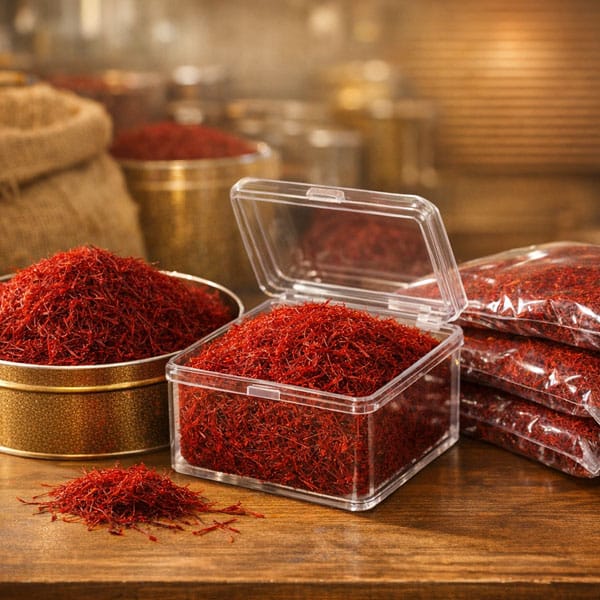
Saffron export packaging
Step 3: Secondary Packaging (The Barrier Layer)
If the primary package is a clear glass jar or acrylic box, it is immediately placed into a secondary, opaque cardboard box or metal tin to block out light.
Step 4: Tertiary Packaging (The Transit Layer)
For international air freight, these individual boxes are packed into heavy-duty, double-walled corrugated master cartons. Exporters line these cartons with moisture-barrier bags or thermal foils to protect against the drastic temperature shifts that occur in airplane cargo holds.
Saffron Business and Trade Guide: Your strategic blueprint for sourcing authentic grades, verifying chemical purity, and capitalizing on international demand.
Comparing Saffron Packaging Materials
| Packaging Material | Best Used For | Advantages | Drawbacks | Export Suitability | |
|---|---|---|---|---|---|
| Metal Tins (Tinplate) | Bulk Export (250g – 1kg) & Premium Retail | 100% lightproof, highly durable, won’t shatter, excellent moisture barrier. | Buyers cannot visually inspect the threads without breaking the seal. | Excellent | |
| Glass Jars (Cork/Screw Top) | High-end Retail (1g – 5g) | Premium aesthetic, chemically inert, allows visual inspection. | Heavy (higher freight costs), fragile, lets in UV light unless kept in a secondary box. | Moderate (Requires secondary box) | |
| Acrylic / Polystyrene Boxes | Standard Retail & Supermarkets | Lightweight, cheap, clear for display, shatter-resistant compared to glass. | 100% lightproof, highly durable, won’t shatter, excellent moisture barrier. | Buyers cannot visually inspect the threads without breaking the seal. | Excellent |
| Glass Jars (Cork/Screw Top) | High-end Retail (1g – 5g) | Premium aesthetic, chemically inert, allows visual inspection. | Heavy (higher freight costs), fragile, lets in UV light unless kept in a secondary box. | Moderate (Requires secondary box) | |
| Acrylic / Polystyrene Boxes | Standard Retail & Supermarkets | Lightweight, cheap, clear for display, shatter-resistant compared to glass. | Prone to static (threads stick to the sides), not completely airtight, lets in light. |
Holographic Seals: Quality export tins are sealed with specialized stickers that leave a patterned residue (like “VOID”) if someone tries to peel them off.
Phytosanitary Certificates: Legitimate packaging is always accompanied by documentation proving the batch is free from pests and safe for international transport.
Batch Tracking: Every package, whether a 1g retail box or a 1kg tin, must have a stamped batch number tying it back to its specific ISO 3632 lab test results.
Proper packaging is what keeps saffron’s color, aroma, and flavor intact on its journey from the farm to the global market. By using airtight, light-proof containers, moisture control, and clear labeling, exporters protect the quality of every thread and meet international standards. Choosing a trusted supplier with careful packaging practices ensures that your saffron arrives as fresh and potent as the day it was harvested.
Records mentioned in this article
Frequently Asked Questions
Saffron doesn’t “spoil” in a way that makes it dangerous, but it does degrade. If properly sealed in a light-proof tin in a cool, dry place, it will maintain premium quality for 2 to 3 years. After that, the color and aroma will begin to fade, even if the seal remains intact.
It comes down to risk and freight economics. Metal tins block 100% of UV light, weigh significantly less than glass, and will not shatter if a master carton is dropped by cargo handlers.
Always request video proof of the packing process from your supplier before final payment. When the goods arrive, check the integrity of the heat-shrink bands on jars, or the holographic security tape on metal tins. Any broken seal should be documented immediately for insurance claims.