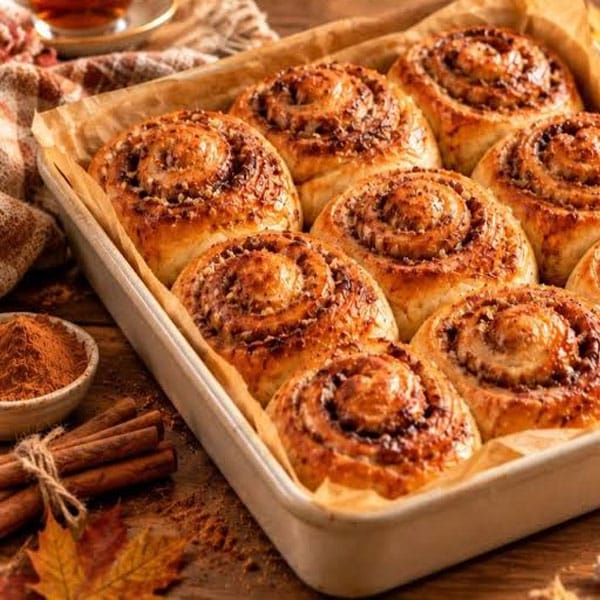
There is an unspoken test of patience that happens when a fresh tray of cinnamon rolls slides into a hot oven. Within ten minutes, the kitchen fills with that dense, caramelized aroma—the warm, sweet woodiness that pulls everyone straight toward the stove. Yet, every home baker has had the experience of pulling out a gorgeous batch of golden spirals, biting into the center, and feeling slightly let down. The texture is soft, the cream cheese icing is silky, but the cinnamon filling itself feels polite, muted, or washed out.
Most people blame their yeast, the brand of butter, or the baking time. In reality, the culprit almost always comes down to the spice jar.
In culinary discussions and throughout the cinnamon record, cinnamon is often treated as a singular pantry staple. But in the world of professional baking and spice sourcing, “cinnamon” is an umbrella term covering drastically different botanical species with completely divergent chemical profiles. When you are formulating a rich dough packed with whole milk, eggs, two sticks of melted butter, and packed brown sugar, choosing the wrong type will turn your signature morning bun into an ordinary roll.
Here is the honest, field-tested answer to which cinnamon actually makes the best cinnamon roll, why pastry chemistry demands bold choices, and how to source the right spice for your holiday table.
best cinnamon for cinnamon rolls
Why Cassia Wins Every Single Time
If you consult gourmet purists, they will often advise you to buy “true” Ceylon cinnamon (Cinnamomum verum) for its delicate, refined complexity. But when it comes to classic American and Nordic cinnamon buns, that advice falls completely flat.
The honest truth: Cassia is the undisputed king of cinnamon rolls.
Cassia cinnamon contains significantly higher concentrations of cinnamaldehyde—the essential oil responsible for cinnamon’s signature fiery, warm, and assertive punch. Ceylon cinnamon, by comparison, is floral, citrusy, and subtle, driven by higher amounts of eugenol (the same aromatic compound prominent in cloves).
When you bake a delicate French apple tart, an egg custard, or a light tea biscuit, Ceylon’s nuanced perfume shines. But a cinnamon roll is not a delicate pastry. It is an unapologetic powerhouse of fat and sugar.
When Ceylon cinnamon meets a wall of melted butter, molasses-rich dark brown sugar, and a tangy cream cheese glaze, its delicate floral notes are completely overwhelmed. It simply vanishes into the background, leaving your roll tasting like sweet bread with a faint, indistinct warmth. Cassia, on the other hand, punches right through the heavy dairy and caramelized sugar, delivering that deep mahogany hue and the assertive, bakery-style kick everyone expects.
Korintje vs. Saigon vs. Ceylon
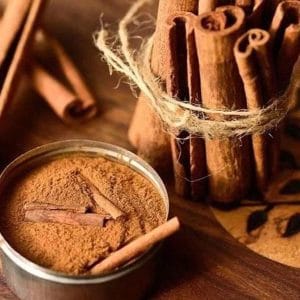
Not all Cassia is created equal. Depending on where it grows and how it is harvested, Cassia takes on very different culinary personalities. If you want bakery-level results, these are the three varieties you will encounter:
1. Indonesian Korintje (Cinnamomum burmannii) — The Bakery Standard
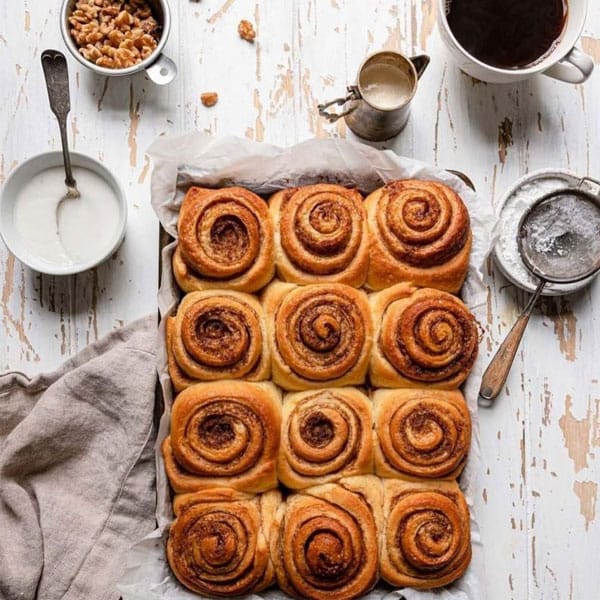
If you have ever stood in an airport or shopping mall and caught the irresistible scent of a commercial bakery chain like Cinnabon, you were smelling Korintje Cassia. Sourced primarily from the slopes of Mount Kerinci on the Indonesian island of Sumatra, Korintje offers the classic, smooth, nostalgic cinnamon flavor. It is woody, warm, and sweet, with virtually no bitter aftertaste. It melts seamlessly into brown sugar fillings without tasting medicinal or harsh. For most home bakers, an “A” or “AA” grade Korintje is the absolute benchmark for everyday rolls.
best cinnamon for cinnamon rolls
2. Vietnamese Saigon (Cinnamomum loureiroi) — The Intense Powerhouse
Grown in the central highlands of Vietnam, Saigon cinnamon is the heavyweight champion of the spice rack. It boasts the highest natural oil content of any commercial cinnamon (often exceeding 4% to 5% essential oil, compared to 1% to 2% in other varieties). The moment you pop the seal on a jar of Saigon, the aroma fills the room. It is bold, spicy, and distinctly sweet upfront, finishing with an assertive, red-hot candy kick. If you like cinnamon rolls that tingle on your tongue and clear your sinuses, Saigon is an exceptional choice.
3. Ceylon True Cinnamon (Cinnamomum verum) — The Refined Outlier
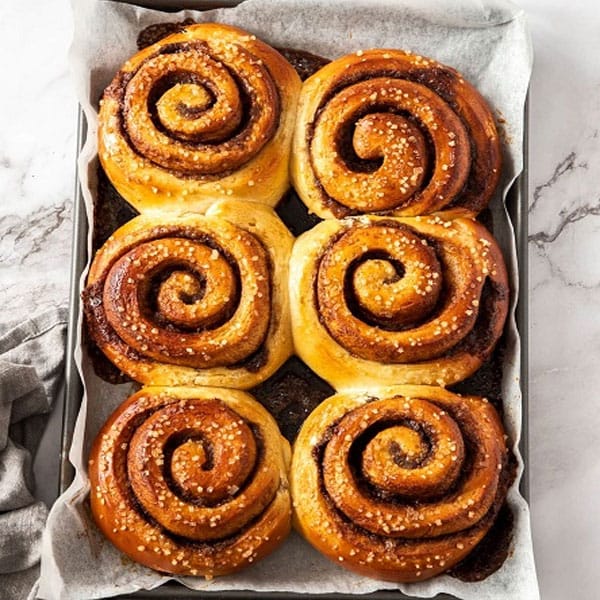
Harvested from the papery inner bark of shrubs native to Sri Lanka, Ceylon rolls into fragile, multi-layered quills that crumble easily. It has a light tan color and an aroma of warm honey, citrus peel, and soft wood. If you insist on using Ceylon in sweet buns, it works best in Scandinavian-style kanelbullar, where the dough is heavily infused with cracked green cardamom and pearl sugar, allowing the cinnamon to act as a supporting floral note rather than the star of the show.
How Cinnamon Behaves Under Heat
Understanding how to build a world-class filling requires looking at what happens inside the oven. Cinnamaldehyde is volatile; when exposed to continuous dry heat above300∘F(150∘C), loose spices begin to lose their aromatic potency.
To preserve maximum flavor, cinnamon must be suspended in fat. Fat acts as a protective barrier and an aromatic carrier. When you mix your ground spice with softened butter and brown sugar before spreading it across your dough sheet, the butterfat traps the volatile oils. As the roll bakes, the melting butter infuses the dough layers while the sugar draws moisture out of the rolling dough, creating a luscious, self-basting syrup right in the spirals.
Getting the balance right is essential. If you skimp on spice, the roll tastes bland; if you dump too much dry powder onto dry dough, the filling turns gritty and forces the layers to separate during baking. Knowing precisely how much to use relative to your fat-to-sugar ratio is the secret behind that sought-after gooey, caramel-like spiral that clings to the fork.
Understanding the Coumarin Factor and Food Safety
Whenever you bake with Cassia, you will inevitably encounter discussions around coumarin. Coumarin is a naturally occurring chemical compound found in relatively high concentrations in all Cassia varieties (Indonesian, Vietnamese, and Chinese), while Ceylon cinnamon contains only trace, near-undetectable amounts.
In very high, sustained doses over prolonged periods, coumarin can place stress on liver function in individuals sensitive to the compound. Because of this, food safety authorities closely monitor its presence in commercial food production. Across Europe, food safety regulations set clear maximum thresholds to ensure consumer safety; for example, the EU limit for seasonal bakery goods permits up to 50 milligrams of coumarin per kilogram of finished product for traditional and seasonal bakery items where cinnamon is a core ingredient.
best cinnamon for cinnamon rolls
What does this mean for the everyday home baker?
It provides reassurance and context. The European thresholds are designed to account for commercial formulations and year-round high-volume consumption. Baking a fresh batch of Cassia-laden rolls on a Saturday morning, sharing them with family, or baking holiday pastries once a month falls safely within standard consumption patterns.
However, if you bake cinnamon treats daily, make cinnamon rolls a breakfast staple, or feed young toddlers, a balanced approach works wonders: use a high-grade Korintje Cassia for that signature center-roll punch, or create a 50/50 blend of Saigon and Ceylon to temper coumarin exposure while keeping the spice flavor prominent and vibrant.
The Pro-Baker’s Secret
You do not have to limit yourself to one jar. In professional kitchens, the best pastry chefs rarely use a single single-origin spice. They blend to capture the best attributes of each cultivar:
The Classic Bakery Blend: Combine 75% Indonesian Korintje with 25% Vietnamese Saigon. The Korintje delivers the warm, comforting, woodsy foundation, while the Saigon injects an aromatic top note that hits your nose before the roll even touches your tongue.
The Sophisticated Scandinavian Blend: Combine 60% Ceylon cinnamon with 40% Korintje, accompanied by freshly cracked green cardamom in the dough. This delivers warmth and depth without blowing out the floral botanicals of the dough.
Always check the harvest age of your ground spice. Ground cinnamon begins losing its aromatic intensity within six to nine months of milling. If your jar has sat in a warm pantry cabinet above the stove for two years, even the finest Saigon Cassia will taste dusty and flat. Buy whole sticks or source freshly milled ground spice from reputable merchants who transparently state the harvest year and country of origin.
Records mentioned in this article

Frequently Asked Questions
Yes, but expect a much milder outcome. If your recipe calls for two tablespoons of Cassia and you switch to Ceylon, your rolls will taste significantly lighter, sweeter, and less spicy. If substituting, increase the amount of Ceylon by 25% to 50%, or pair it with freshly ground nutmeg and clove to help mimic Cassia’s natural warmth.
A dry filling happens when the ratio of dry spice and sugar outweighs the fat. Always mix your cinnamon and sugar directly into softened, room-temperature butter to create a spreadable paste, rather than dusting dry cinnamon-sugar over melted butter brushed onto the dough.
Vietnamese Saigon and Chinese Cassia typically produce the deepest reddish-brown to dark mahogany swirls when baked with dark brown sugar. Ceylon cinnamon remains pale tan even after exposure to high oven temperatures.