If you are stepping up your baking game, running a commercial kitchen, or planning to craft your own large batches of vanilla extract, buying vanilla beans by the single glass vial is no longer going to cut it. You have to start thinking in bulk. But when you look at bulk purchasing, you are immediately confronted with a mathematical challenge: suppliers sell by weight, but recipes call for individual pods.
exactly how many vanilla beans in a kg?
As a sourcing expert, I hear this question constantly. Buyers want a simple, flat number. However, the most honest and accurate answer in the spice trade is that there is no single, fixed number. Because vanilla is an agricultural product—shaped by nature, climate, and curing techniques—the exact count depends heavily on the grade, the length of the pods, and, most importantly, the moisture content.
Let’s dive into the real-world metrics, explore the standard ranges you can expect, and learn how to calculate your true cost per bean.

how many vanilla beans in a kg
Expected Ranges by Grade
While we cannot give you a perfectly exact number without measuring a specific batch, we can provide highly accurate industry ranges. The number of vanilla beans you get in a kilogram depends entirely on whether you are buying Grade A (Gourmet) or Grade B (Extract) beans.
Grade A (Gourmet) Vanilla Beans: 200 to 300 beans per kilogram
Grade A beans are the crown jewels of the vanilla world. They are visually flawless, long (usually 15 centimeters or longer), plump, and packed with internal vanilla caviar. Because they are designed for culinary uses where the seed speckles matter, they are cured to retain a high moisture level. This extra water weight means each individual bean is heavier (typically weighing between 3 to 5 grams). Consequently, it takes fewer of these heavy, plump beans to reach the 1000-gram mark.
Grade B (Extract) Vanilla Beans: 350 to 500 beans per kilogram
Grade B beans are primarily used for making vanilla extract, pastes, and powders. They are generally shorter, may have visual imperfections, and are intentionally cured to be much drier. A Grade B bean typically weighs between 2 to 3 grams. Because they carry significantly less water weight, you get a much higher physical count of pods in a single kilogram.
Factor 1: The Heavyweight Champion—Moisture Content
If there is one technical specification you must understand when sourcing vanilla, it is moisture. Water weight drastically skews the bean count.
Gourmet beans typically feature a moisture content of 30% to 35%. This high moisture is what gives them their flexible, leathery texture and makes them easy to split down the middle with a paring knife. However, when you buy a kilogram of Grade A beans, you are technically paying for that water weight.
Extract grade beans, on the other hand, have a moisture content closer to 15% to 25%. They are often brittle and might snap if you try to bend them. While they might not look as glamorous, their low moisture content makes them an incredibly concentrated source of flavor. When you extract the flavor into alcohol, the missing water doesn’t matter, but the sheer volume of beans you received in your kilogram certainly does. For a deeper understanding of how this specific metric shifts your buying strategy, exploring the vanilla moisture and its effect on weight is highly recommended for commercial buyers.
Factor 2: Length, Plumpness, and Origin
Nature does not grow standard-sized vanilla pods. Even within a specific grade, the length of the beans plays a massive role in your final count.
A premium bundle of 20-centimeter beans will yield far fewer pods per kilogram than a bundle of 15-centimeter beans, simply because there is more physical plant matter per pod. Furthermore, the species and origin of the vanilla change the physical structure of the bean.
For instance, Vanilla planifolia (the classic Bourbon vanilla from Madagascar) tends to be long and slender. Vanilla tahitensis (Tahitian vanilla), however, is naturally plumper, wider, and holds more moisture, meaning Tahitian beans are almost always heavier individually. A kilogram of Tahitian vanilla will almost always contain fewer beans than a kilogram of Madagascar vanilla of the same grade. To understand how terroir and species dictate these physical traits, it helps to look closely at the vanilla origin records.
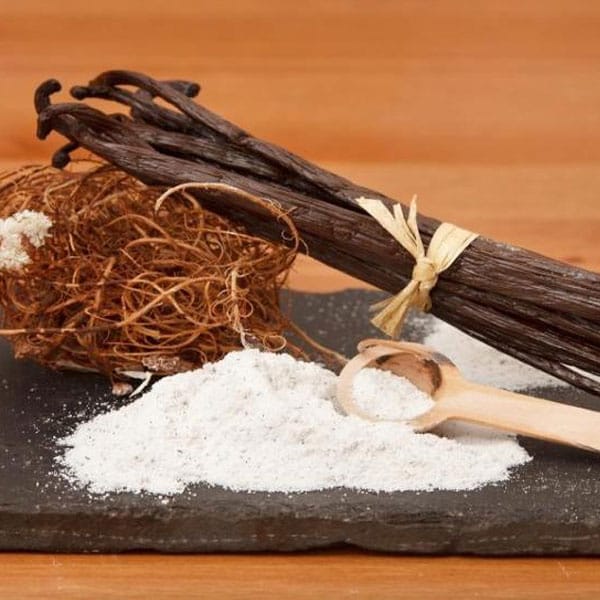
how many vanilla beans in a kg
How to Calculate Your True Cost Per Bean
Knowing the approximate count isn’t just a fun piece of food trivia; it is a vital tool for budgeting. If you run a bakery and your signature cake recipe calls for “two whole vanilla beans,” buying by the kilogram might feel like a blind investment until you do the math.
Here is the practical sourcing formula:
Determine the grade you need (e.g., Grade A for baking).
Take the conservative average of the range (e.g., 250 beans for a kilogram of Grade A).
Find the current market price per kilogram.
Divide the total price by your estimated bean count.
By doing this, you instantly translate a bulk commodity price into a per-recipe cost. To make this calculation right now, you can check the live, up-to-date vanilla prices on our platform, grab your calculator, and see exactly how much you will save by purchasing in bulk compared to retail grocery store prices.
There is no magical, fixed number of vanilla beans in a kilogram. If a supplier promises you an exact count without knowing the specific moisture content and length of the current harvest, they are guessing. Expect around 200 to 300 beans for plump Gourmet grades, and 350 to 500 beans for drier Extract grades. By understanding the variables of moisture, length, and origin, you can source smarter, budget accurately, and ensure you are getting exactly what you pay for.
Records mentioned in this article

Frequently Asked Questions
Most commercial wholesalers and farmers strictly sell by weight (kilograms or pounds) because agricultural products vary too much in size. Counting thousands of individual beans is labor-intensive and impractical for bulk trade. However, some specialized retailers do sell smaller bundles (like 25, 50, or 100 beans) specifically catered to home bakers or small artisanal producers.
Grade B is almost always the better financial choice for making extract. Because Grade B beans are drier, you get significantly more beans (often 400+ per kilogram) compared to Grade A. More beans mean more surface area and more concentrated vanillin per kilogram, which yields a stronger extract without paying for the excess water weight found in Gourmet beans.
Yes, it certainly can. If vanilla beans are not stored properly in an airtight container in a cool, dark place, they will slowly lose their moisture content to the surrounding air. As they dry out, they become lighter. A kilogram of fresh, high-moisture Gourmet beans might eventually weigh less than a kilogram after a year of improper storage, though the flavor compounds remain intact inside the dried pod.