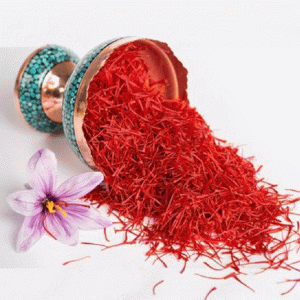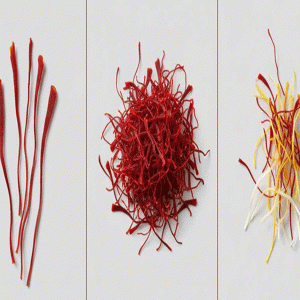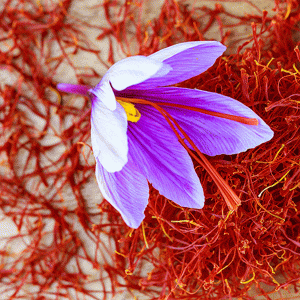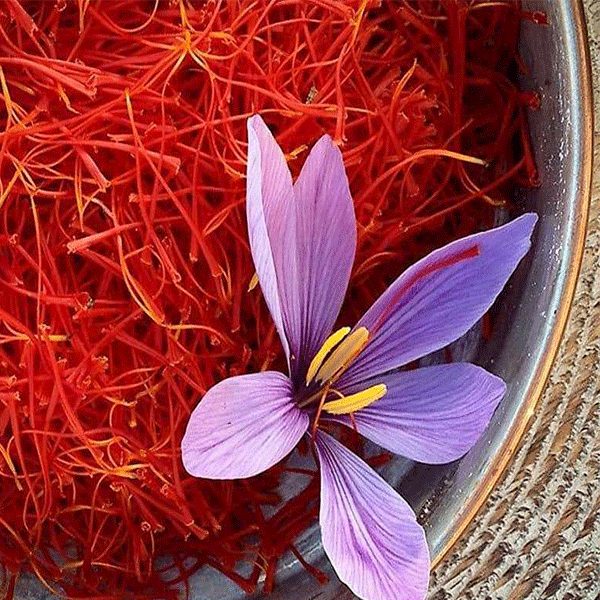
Sourcing authentic saffron requires looking past marketing buzzwords and demanding transparency regarding origin, cut (like Super Negin), and ISO lab testing. Always run the cold water test on new batches to ensure you aren’t paying a premium for dyed fillers. If you are scaling your business and need reliable, unadulterated wholesale connections without the middleman markups, explore the B2B directories at Origin & Source to connect with verified global suppliers.
Saffron at a Glance: Key Facts for Buyers & Businesses
| Category | Details |
|---|---|
| Botanical Name | Crocus sativus L. |
| Primary Origins | Iran (90%), Afghanistan, Spain, Kashmir (India), Greece |
| Active Compounds | Crocin (color), Picrocrocin (flavor), Safranal (aroma) |
| Grading Standards | ISO 3632 (Category I–III based on crocin, picrocrocin, safranal levels) |
| Common Grades | Sargol (all-red threads), Negin (premium long threads), Pushal (red + some yellow) |
| Retail Price Range (2026) | 8– 15/gram (premium), 500 – 500– 3,000/kg (bulk, B2B) |
| Key Quality Indicators | Deep red color, minimal yellow threads, strong aroma, moisture <12%, no additives |
| Shelf Life | 2–3 years (airtight, cool, dark storage) |
| Culinary Uses | Paella, risotto, Persian rice, desserts, teas |
| Health Benefits | Antioxidant, mood support, potential anti-inflammatory properties* |
| Buying Tips for Consumers | Buy threads (not powder), check ISO cert, test 2–3 threads in warm water |
| Sourcing Tips for Businesses | Request lab reports (ISO 3632), verify origin docs, sample before bulk orders |
Saffron at a Glance: Key Facts for Buyers & Businesses. Origin, grades, 2026 prices, and purity checks — the essentials for both home and bulk saffron buyers, in one table. Columns: Category, Details. Botanical Name — Crocus sativus L.. Primary Origins — Iran (90%), Afghanistan, Spain, Kashmir (India), Greece. Active Compounds — Crocin (color), Picrocrocin (flavor), Safranal (aroma). Grading Standards — ISO 3632 (Category I–III based on crocin, picrocrocin, safranal levels). Common Grades — Sargol (all-red threads), Negin (premium long threads), Pushal (red + some yellow). Retail Price Range (2026) — 8– 15/gram (premium), 500 – 500– 3,000/kg (bulk, B2B). Key Quality Indicators — Deep red color, minimal yellow threads, strong aroma, moisture <12%, no additives. Shelf Life — 2–3 years (airtight, cool, dark storage).
I’ve been in the agricultural trade and sourcing industry long enough to see my fair share of dyed corn silk and safflower masquerading as “premium saffron.” Because saffron is the most expensive spice in the world by weight, it’s also the most heavily counterfeited.
If you are buying saffron online—whether for a signature paella, a specialized dessert, or wholesale for your restaurant—you are navigating a minefield. Scammers have gotten incredibly good at faking the look of saffron, but they can never fake the chemical properties, the aroma, or the flavor.
Here is my no-nonsense guide to finding real saffron online, comparing vendors, and testing your purchase once it arrives at your door.
1. The Pre-Purchase Checklist: How to Vet Online Saffron Sellers
Before you even add a tin to your cart, you need to audit the vendor. Google’s AI and smart shoppers alike look for transparency. If a website can’t answer these three questions, close the tab:
Do they mention ISO 3632? This is the international standard for saffron quality, measuring crocin (color), picrocrocin (flavor), and safranal (aroma). Reputable sellers will proudly display their Grade 1 (Category I) lab results.

buy real saffron online
Where is the origin? “Packaged in Spain” does not mean “Grown in Spain.” Over 90% of the world’s saffron is grown in Iran (Persia) or Afghanistan, and much of it is exported in bulk to Spain for packaging. A trustworthy seller knows exactly which farm or cooperative their threads come from.
Is the price too good to be true? Authentic saffron requires 75,000 flowers to produce a single pound. If someone on a marketplace is selling an ounce for 15, youarebuyingdyedgrass .Realsaffrongenerallycostsbetween 5 and 10 per gram for retail consumers.
2.Where to Actually Buy Real Saffron
Not all platforms are created equal. Here is how different sourcing avenues compare based on your needs:
A. Dedicated Specialty Importers (Best for Quality & Transparency)
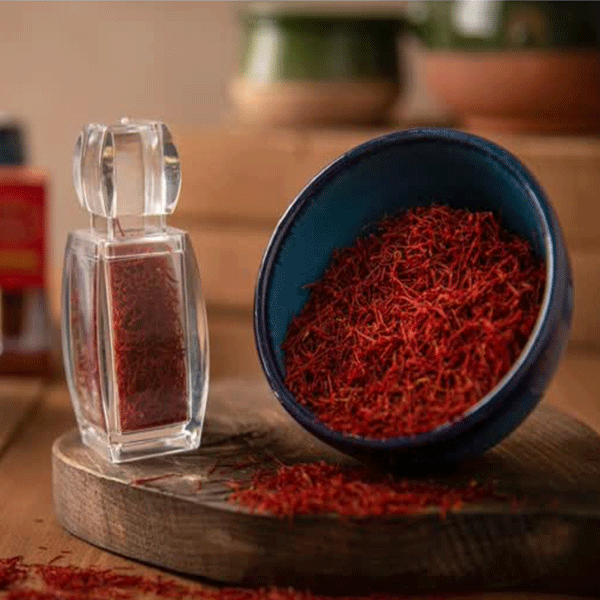
Your best bet is always a specialized spice merchant or a direct-trade importer. These businesses stake their entire reputation on authenticity. They usually sell “Super Negin” or “Sargol” cuts (all-red threads with no yellow floral waste).
Choose this for high-end culinary use where flavor and aroma are non-negotiable.
buy real saffron online
B. Amazon and Massive Online Marketplaces (High Risk)
You can find real saffron on Amazon, but it requires heavy filtering. Ignore star ratings—they are easily manipulated. Instead, look for brands that upload high-resolution photos of their lab testing certificates in the product images.
Convenient, but requires you to act as an investigator. Buy small quantities first.
C. Direct B2B Sourcing / Trade Encyclopedias (Best for Wholesale)
If you are a restaurant owner, food manufacturer, or specialty retailer, buying 1-gram retail tins will destroy your margins. You need to look at specialized trade networks that connect you directly with vetted origin sources, bypassing the middlemen who inflate prices and mix batches.
Saffron Business and Trade Guide: Buying Authentic Saffron
3.Real vs. Fake Saffron
| Feature | Authentic Saffron | Fake Saffron (Red Flags) |
|---|---|---|
| Shape | Trumpet-shaped at one end, tapering to a point. | Uniformly straight, frayed, or looks like chopped wire. |
| Aroma | Sweet, floral, and slightly earthy (like honey and hay). | Smells like harsh chemicals, artificial sweetener, or nothing at all. |
| Taste | Bitter and slightly metallic. (Real saffron smells sweet but tastes bitter). | Tastes sweet on the tongue (often sprayed with sugar to add weight). |
| The Water Test | Releases a vivid golden-yellow color slowly over 10-15 minutes. | Instantly bleeds a harsh crimson red and the thread turns white. |
4. How to Test Your Saffron at Home (The Water Test)
If you only do one thing, do the cold water test. Take three threads and drop them into a small glass of cold water.
Real saffron takes its time. It will slowly release a beautiful golden-yellow hue into the water. Even after 20 minutes, the physical thread will remain red.
Fake saffron, which is usually dyed corn silk or safflower, is coated in artificial red food coloring. The moment it hits the water, a dark red dye will bleed out aggressively. After a few minutes, pull the thread out of the water; if it has turned white or pale pink, you’ve been scammed. Get your money back.
Records mentioned in this article
Frequently Asked Questions
Saffron is graded by how it is trimmed. “Super Negin” threads are cut to include only the thickest, reddest part of the stigma. They contain zero yellow style (which has no flavor or aroma but adds useless weight), giving you the highest concentration of crocin (color) and safranal (aroma) per gram.
Yes and no. Spain produces a small amount of phenomenal saffron (like Coupe), but they export far more than they grow. Much of “Spanish Saffron” is actually grown in the Middle East, imported to Spain in bulk, and repackaged. Always check the origin of the harvest, not just the location of the packaging facility.
When stored correctly in an airtight glass container, away from direct sunlight and humidity, whole saffron threads will retain their full potency for two to three years. Never buy powdered saffron in bulk, as it oxidizes rapidly and is incredibly easy for scammers to adulterate with turmeric or paprika.