At the end of the day, authentic Persian saffron offers unmatched dyeing power, intense chemical purity, and the best B2B value, while DOP Spanish saffron provides a unique, historic, and nuanced flavor profile for culinary purists. If you are looking to navigate the complexities of global sourcing, secure authentic high-grade threads, or build a profitable spice brand, precision in your supply chain is everything. Reach out to us at Origin & Source to discuss bulk pricing, verify authenticity, and optimize your saffron procurement strategy.
Saffron at a Glance: Key Facts for Buyers & Businesses
| Category | Details |
|---|---|
| Botanical Name | Crocus sativus L. |
| Primary Origins | Iran (90%), Afghanistan, Spain, Kashmir (India), Greece |
| Active Compounds | Crocin (color), Picrocrocin (flavor), Safranal (aroma) |
| Grading Standards | ISO 3632 (Category I–III based on crocin, picrocrocin, safranal levels) |
| Common Grades | Sargol (all-red threads), Negin (premium long threads), Pushal (red + some yellow) |
| Retail Price Range (2026) | 8– 15/gram (premium), 500 – 500– 3,000/kg (bulk, B2B) |
| Key Quality Indicators | Deep red color, minimal yellow threads, strong aroma, moisture <12%, no additives |
| Shelf Life | 2–3 years (airtight, cool, dark storage) |
| Culinary Uses | Paella, risotto, Persian rice, desserts, teas |
| Health Benefits | Antioxidant, mood support, potential anti-inflammatory properties* |
| Buying Tips for Consumers | Buy threads (not powder), check ISO cert, test 2–3 threads in warm water |
| Sourcing Tips for Businesses | Request lab reports (ISO 3632), verify origin docs, sample before bulk orders |
Saffron at a Glance: Key Facts for Buyers & Businesses. Origin, grades, 2026 prices, and purity checks — the essentials for both home and bulk saffron buyers, in one table. Columns: Category, Details. Botanical Name — Crocus sativus L.. Primary Origins — Iran (90%), Afghanistan, Spain, Kashmir (India), Greece. Active Compounds — Crocin (color), Picrocrocin (flavor), Safranal (aroma). Grading Standards — ISO 3632 (Category I–III based on crocin, picrocrocin, safranal levels). Common Grades — Sargol (all-red threads), Negin (premium long threads), Pushal (red + some yellow). Retail Price Range (2026) — 8– 15/gram (premium), 500 – 500– 3,000/kg (bulk, B2B). Key Quality Indicators — Deep red color, minimal yellow threads, strong aroma, moisture <12%, no additives. Shelf Life — 2–3 years (airtight, cool, dark storage).
If you spend enough time in the global spice trade, you’ll eventually hit the ultimate debate: Persian vs. Spanish saffron.
As buyers, chefs, and wholesale distributors navigate the market, they are bombarded with conflicting marketing. Spain boasts beautifully packaged, premium-priced tins, while Iran claims the title of the undisputed source, producing over 90% of the world’s supply. So, when you are paying upwards of 2,000 to 5,000 per kilogram, which one should you actually invest in? Is one truly superior to the other, or is it just a matter of clever branding?
Let’s strip away the marketing fluff and look at the actual chemistry, trade realities, and culinary impacts of these two heavyweights.
The Industry Secret: The Saffron Supply Chain Reality
Before we compare the authentic versions of both, we have to address the elephant in the room. Because Iran faces international trade hurdles, a massive portion of Persian saffron is exported in bulk to neighboring countries and Europe—specifically Spain.
In many cases, Spanish companies import high-grade Iranian saffron, repackage it under European quality controls, and sell it globally. Therefore, if you buy standard “Spanish Saffron” off a supermarket shelf, there is a very high probability you are actually consuming Persian saffron.
However, authentic Spanish saffron—specifically DOP Pimentón de La Mancha—does exist, and it has unique characteristics that distinguish it from its Middle Eastern counterpart.
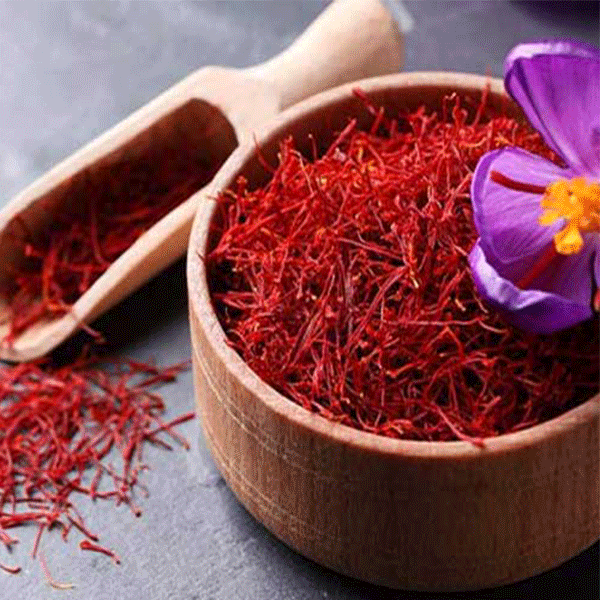
Persian vs Spanish saffron
Persian Saffron: The Benchmark of Color and Potency
Grown primarily in the dry, mineral-rich soils of the Khorasan province, Persian saffron is built on intensity. The climate stresses the Crocus sativus flower just enough to produce incredibly high levels of Crocin (the compound responsible for the deep red color) and Safranal (the aroma).
The Persian Advantage:
Visual Punch: Persian Super Negin and Sargol grades are renowned for being all-red, featuring beautifully thick, symmetric stigmas with zero yellow styles attached.
Dyeing Power: If you are a chef looking to turn a massive pot of paella or risotto a vibrant gold, Persian saffron gives you the highest yield per thread.
Varied Grading: The Persian system is highly specific (Super Negin, Negin, Sargol, Pushal, and Bunch), allowing buyers to choose exact specifications for either luxury retail or high-volume extraction.
Spanish Saffron: The Master of Aroma and Heritage
Authentic Spanish saffron is grown in the La Mancha region. The curing process here is slightly different; Spanish farmers traditionally toast the stigmas over indirect heat (often using oak wood). This brings out a profoundly different flavor profile.
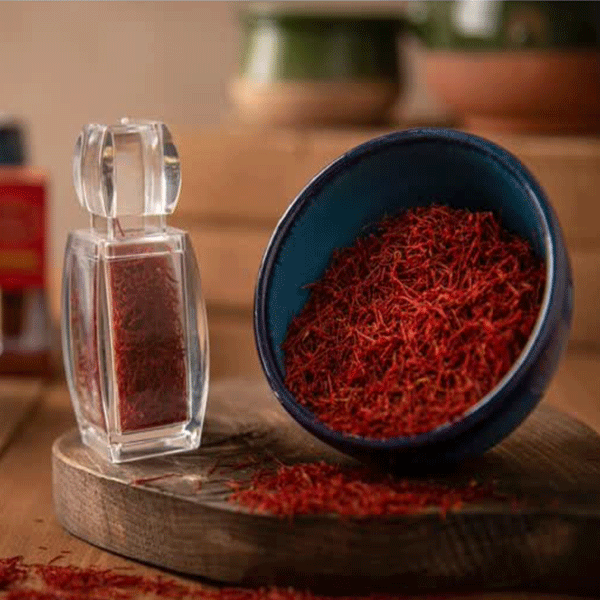
Persian vs Spanish saffron
The Spanish Advantage:
Earthy, Floral Notes: While Persian saffron is sharp and honey-like, authentic La Mancha saffron often has a slightly smokey, nutty, and highly complex floral aroma due to the toasting process.
Moisture Content: Spanish threads are often slightly less brittle and have a marginally higher moisture content, making them feel softer.
The “Coupe” Standard: The highest grade of Spanish saffron is called Coupe (meaning “cut”). It is equivalent to Persian Negin, but yields a more delicate flavor preferred by some European pastry chefs.
Saffron Business & Trade Guide: Origins, Authenticity, and the Market
Direct Comparison: Persian vs. Spanish Saffron
| Feature | Persian Saffron (Khorasan) | Spanish Saffron (La Mancha) |
|---|---|---|
| Top Grade Name | Super Negin / Sargol | Coupe |
| Crocin (Color) Level | Extremely High (>250) | Moderate to High (190 – 220) |
| Aroma Profile | Sharp, sweet, honey-like | Earthy, nutty, lightly toasted |
| Global Market Share | \approx 90\% of global harvest | \approx 1\% (highly localized) |
| Best Used For | Heavy coloring, B2B wholesale, extracts | Subtle culinary dishes, luxury retail |
The Decision Matrix: Which Should You Buy?
Choosing the “best” saffron isn’t about finding a universal winner; it’s about aligning the spice with your specific intent.
1. For Culinary Professionals and Restaurants
Winner: Persian Super Negin
If you are running a restaurant, food cost and consistency are everything. Persian Negin yields a faster, deeper color extraction. You can use fewer threads to achieve that iconic golden hue in your dishes, maximizing your ROI.
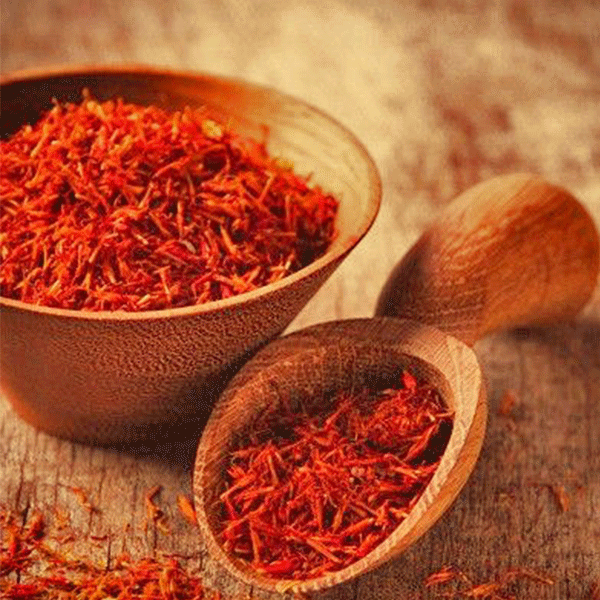
Persian vs Spanish saffron
2. For B2B Wholesalers and Distributors
Winner: Persian Saffron (Direct Origin)
If your goal is to build a brand or distribute, sourcing directly from Iranian networks offers the highest profit margins. You are bypassing the European repackaging markups, allowing you to offer a premium product at a highly competitive B2B rate.
3. For Luxury Gifting and Delicate Cooking
Winner: Authentic Spanish La Mancha
If you are preparing a subtle seafood dish where you want the delicate, toasted, earthy flavors to shine without overwhelming the palate, a certified DOP Spanish saffron is a beautiful, traditional choice. It also carries immense brand prestige for high-end retail shelves.
Records mentioned in this article
Frequently Asked Questions
Spain was historically the gateway to Europe for global spice trades. Over centuries, they perfected the art of packaging, marketing, and enforcing strict quality control certifications (ISO standards). While Iran was busy growing the crop, Spain mastered the art of selling it.
Look for the DOP (Denominación de Origen Protegida) seal from La Mancha. If a tin simply says “Packed in Spain” or “Spanish Saffron” without the official DOP seal, it is almost certainly imported Persian saffron.
Not necessarily. Crocin measures coloring strength. While high crocin indicates a healthy, premium flower (like Persian Sargol), the flavor is dictated by Picrocrocin, and aroma by Safranal. Some chefs prefer the lower crocin but highly aromatic toasted profile of Spanish threads.