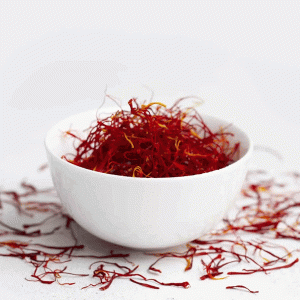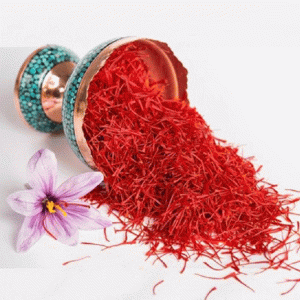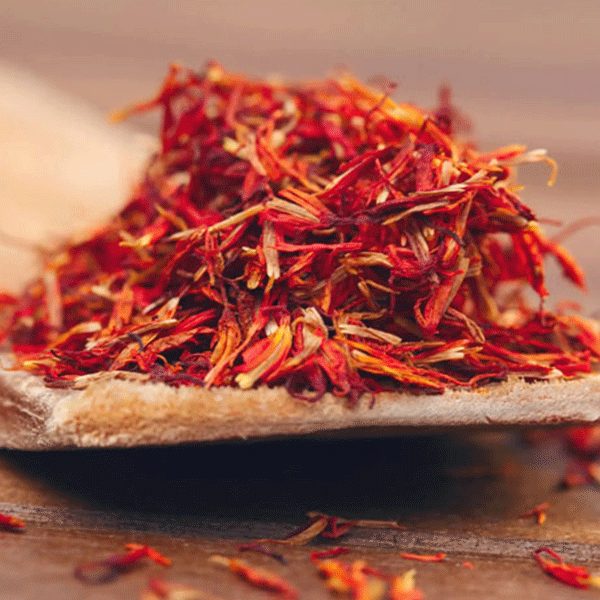
Whether you need the guaranteed authenticity of premium threads for retail or the instant application of high-grade powder for commercial manufacturing, careful sourcing is your best defense against fraud. We specialize in connecting B2B buyers with authentic, lab-tested Persian saffron tailored to their exact production needs. [Contact us today] to discuss your wholesale requirements and ensure your supply chain is built on pure quality.
Saffron at a Glance: Key Facts for Buyers & Businesses
| Category | Details |
|---|---|
| Botanical Name | Crocus sativus L. |
| Primary Origins | Iran (90%), Afghanistan, Spain, Kashmir (India), Greece |
| Active Compounds | Crocin (color), Picrocrocin (flavor), Safranal (aroma) |
| Grading Standards | ISO 3632 (Category I–III based on crocin, picrocrocin, safranal levels) |
| Common Grades | Sargol (all-red threads), Negin (premium long threads), Pushal (red + some yellow) |
| Retail Price Range (2026) | 8– 15/gram (premium), 500 – 500– 3,000/kg (bulk, B2B) |
| Key Quality Indicators | Deep red color, minimal yellow threads, strong aroma, moisture <12%, no additives |
| Shelf Life | 2–3 years (airtight, cool, dark storage) |
| Culinary Uses | Paella, risotto, Persian rice, desserts, teas |
| Health Benefits | Antioxidant, mood support, potential anti-inflammatory properties* |
| Buying Tips for Consumers | Buy threads (not powder), check ISO cert, test 2–3 threads in warm water |
| Sourcing Tips for Businesses | Request lab reports (ISO 3632), verify origin docs, sample before bulk orders |
Saffron at a Glance: Key Facts for Buyers & Businesses. Origin, grades, 2026 prices, and purity checks — the essentials for both home and bulk saffron buyers, in one table. Columns: Category, Details. Botanical Name — Crocus sativus L.. Primary Origins — Iran (90%), Afghanistan, Spain, Kashmir (India), Greece. Active Compounds — Crocin (color), Picrocrocin (flavor), Safranal (aroma). Grading Standards — ISO 3632 (Category I–III based on crocin, picrocrocin, safranal levels). Common Grades — Sargol (all-red threads), Negin (premium long threads), Pushal (red + some yellow). Retail Price Range (2026) — 8– 15/gram (premium), 500 – 500– 3,000/kg (bulk, B2B). Key Quality Indicators — Deep red color, minimal yellow threads, strong aroma, moisture <12%, no additives. Shelf Life — 2–3 years (airtight, cool, dark storage).
On the surface, it seems like a simple question of convenience. Powder dissolves instantly, right? However, when you are dealing with the world’s most expensive spice, the choice between threads (stigmas) and powder isn’t just about prep time—it’s about purity, flavor longevity, and ultimately, protecting your investment.
Let’s break down the real-world differences, the hidden risks of pre-ground spices, and exactly which form makes the most sense for your specific needs.
The Core Difference: What Are We Actually Comparing?
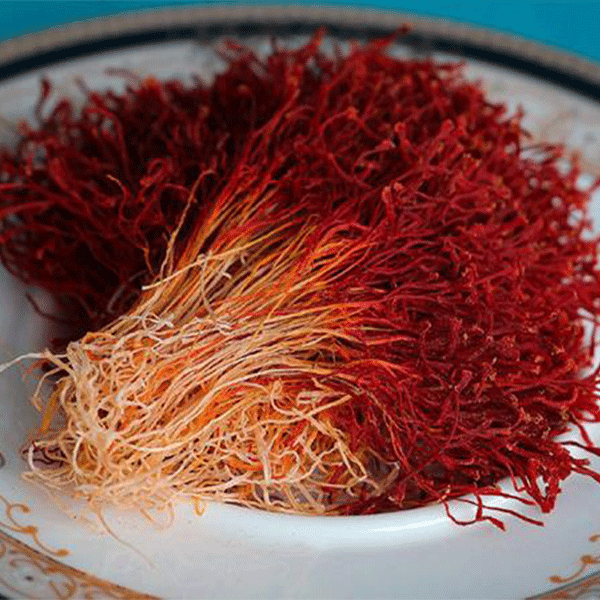
Saffron threads are the whole, intact stigmas hand-picked from the Crocus sativus flower. When you buy premium threads (like Super Negin or Sargol), you are looking at the spice in its absolute purest, most natural form.
Saffron powder is simply those same threads ground down into a fine dust. While it offers immediate color release, this mechanical processing exposes more surface area to air, which fundamentally changes how the spice must be stored and how long it lasts.
Saffron Threads: The Gold Standard of Purity
If there is one piece of advice I give to wholesale buyers and culinary enthusiasts alike, it’s that whole threads are the safest bet for quality assurance.
Saffron Threads: The Gold Standard of Purity
The Advantages:
Visual Proof of Authenticity: You can clearly see the trumpet shape of the stigma. Fake saffron (like dyed corn silk or safflower) simply cannot replicate this unique biological structure.
Maximum Shelf Life: Intact threads retain their volatile oils (safranal, crocin, and picrocrocin) much longer. Properly stored threads can easily maintain their aroma and potency for 2 to 3 years.
Aesthetic Appeal: In dishes like paella, risotto, or Persian tahdig, the visual presence of vibrant red threads elevates the presentation, signaling to guests that premium ingredients were used.
The Drawback:
Threads require preparation. To extract maximum flavor and color, you must “bloom” them by gently grinding them with a pinch of sugar or salt, followed by steeping in warm water or broth.
Saffron Powder: Convenience at a Cost?
Saffron powder is beloved by commercial food manufacturers and busy kitchens because it skips the blooming phase.
The Advantages:
Instant Application: It immediately disperses its brilliant golden-yellow color into liquids, marinades, and doughs.
Consistency in Large Batches: For bakeries or spice-blend manufacturers, mixing a precise micro-gram measurement of powder ensures uniformity across large production runs.
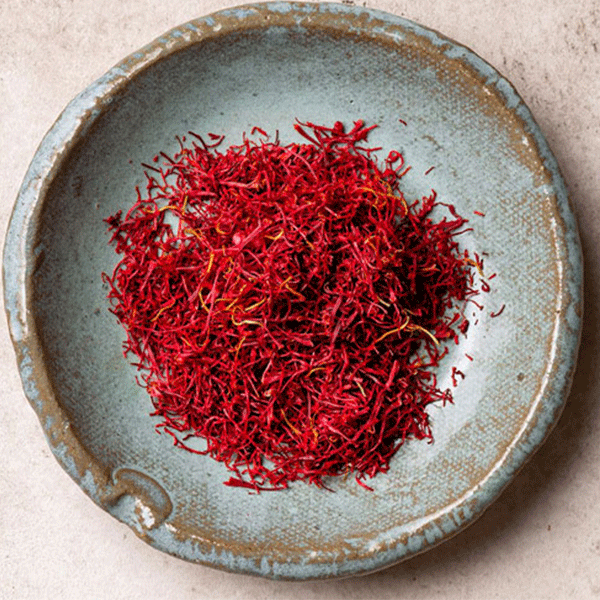
Saffron powder vs threads
The Drawback (The Adulteration Reality):
This is where buyers must be incredibly cautious. The moment saffron is ground into a powder, it becomes virtually impossible to verify its purity with the naked eye. Unscrupulous suppliers frequently cut saffron powder with turmeric, paprika, dyed safflower, or even brick dust. Unless you are buying from a highly vetted B2B supplier with up-to-date lab testing (ISO 3632 certification), buying pre-packaged powder is a massive gamble. Furthermore, powder loses its aroma much faster than whole threads due to oxidation.
Saffron Business and Trade Guide: Pure Saffron Powder
Side-by-Side Comparison
| Feature | Saffron Threads | Saffron Powder |
|---|---|---|
| Purity Verification | Easy (Visual shape and color) | Difficult (Requires lab testing) |
| Shelf Life | 2 to 3 years (Retains volatile oils) | 6 to 12 months (Oxidizes faster) |
| Ease of Use | Requires grinding and blooming | Instant release in liquids |
| Adulteration Risk | Low | Extremely High |
| Best For | Home chefs, high-end restaurants, gifting | Commercial baking, bulk manufacturing |
Which Should YOU Buy?
To make the best purchasing decision, map your choice to your specific use case:
1. For Home Chefs and Culinary Gifting:
Buy Threads. You get the peace of mind knowing you have the authentic product. Plus, grinding and blooming the saffron yourself is a beautiful, aromatic ritual that enhances the cooking experience. Threads also look far more premium if you are packaging them as a corporate or culinary gift.
2. For High-End Restaurants:
Buy Threads. Top-tier chefs prefer threads because they can control the extraction process. You can brew a saffron liquid concentrate at the start of service to use throughout the night, ensuring both maximum flavor and visual appeal.
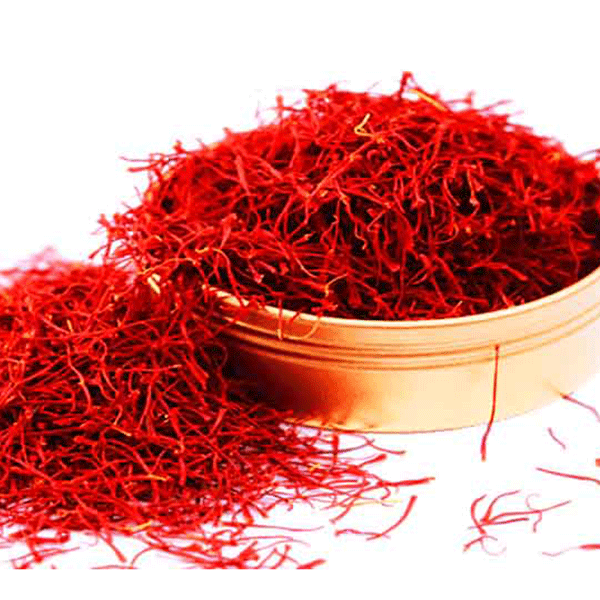
For High-End Restaurants:
3. For Commercial Food Manufacturers & Bakeries:
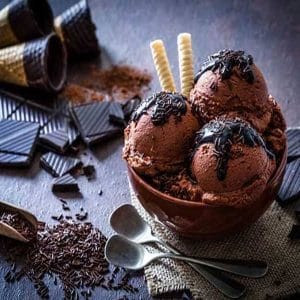
Buy Powder (with a caveat). If you run a commercial operation producing saffron ice cream, teas, or baked goods, powder is essential for scaling up. However, you must source it from a trusted B2B supplier. My professional recommendation is to either buy bulk threads and grind them in-house using an industrial spice mill, or demand rigorous ISO 3632 lab reports from your powder supplier before signing any bulk contracts.
How to Turn Threads into Powder (The Right Way)
If you decide to buy threads for purity but need powder for a recipe, you can easily make it yourself.
Simply place your threads in a small mortar. Add a tiny pinch of coarse sugar or salt (the abrasion helps break down the stigmas). Use a pestle to grind it in a circular motion until it becomes a fine, uniform powder. Store any unused powder in an airtight, UV-protected container.
Records mentioned in this article
Frequently Asked Questions
Yes. Because powder is more concentrated by volume, the general conversion rule is to use about half the amount of powder as you would threads. For example, if a recipe calls for 1 teaspoon of saffron threads, use ½ teaspoon of saffron powder.
If saffron powder is significantly cheaper than threads from the same vendor, it is a massive red flag. Authentic powder should cost roughly the same (or slightly more, due to processing) as threads. Cheap powder is almost always adulterated with inexpensive fillers like turmeric or dyed root fibers.
Place a small pinch of the powder into a glass of warm water. Authentic saffron will slowly turn the water a vivid golden-yellow while retaining its aroma. If the water instantly turns dark red or orange, or if it smells like chemicals, you likely have an adulterated product. However, for 100% certainty, lab testing is required for powdered forms.