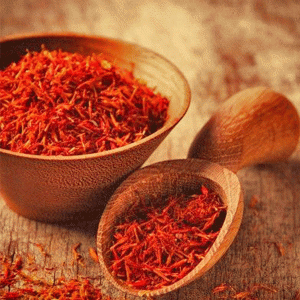
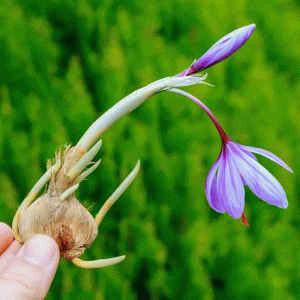
Discover the painstaking manual labor required to harvest genuine saffron, where over 75,000 delicate Crocus sativus flowers must be hand-picked at dawn to yield just one pound of the world’s most valuable spice. This guide breaks down the precise extraction and drying methods that protect essential compounds like crocin and safranal, ensuring unmatched purity and thread integrity over mechanized alternatives. Explore the true cost of quality behind this agricultural treasure, and contact us today to source premium, authentically harvested saffron for your wholesale and commercial needs.
Saffron at a Glance: Key Facts for Buyers & Businesses
| Category | Details |
|---|---|
| Botanical Name | Crocus sativus L. |
| Primary Origins | Iran (90%), Afghanistan, Spain, Kashmir (India), Greece |
| Active Compounds | Crocin (color), Picrocrocin (flavor), Safranal (aroma) |
| Grading Standards | ISO 3632 (Category I–III based on crocin, picrocrocin, safranal levels) |
| Common Grades | Sargol (all-red threads), Negin (premium long threads), Pushal (red + some yellow) |
| Retail Price Range (2026) | 8– 15/gram (premium), 500 – 500– 3,000/kg (bulk, B2B) |
| Key Quality Indicators | Deep red color, minimal yellow threads, strong aroma, moisture <12%, no additives |
| Shelf Life | 2–3 years (airtight, cool, dark storage) |
| Culinary Uses | Paella, risotto, Persian rice, desserts, teas |
| Health Benefits | Antioxidant, mood support, potential anti-inflammatory properties* |
| Buying Tips for Consumers | Buy threads (not powder), check ISO cert, test 2–3 threads in warm water |
| Sourcing Tips for Businesses | Request lab reports (ISO 3632), verify origin docs, sample before bulk orders |
Saffron at a Glance: Key Facts for Buyers & Businesses. Origin, grades, 2026 prices, and purity checks — the essentials for both home and bulk saffron buyers, in one table. Columns: Category, Details. Botanical Name — Crocus sativus L.. Primary Origins — Iran (90%), Afghanistan, Spain, Kashmir (India), Greece. Active Compounds — Crocin (color), Picrocrocin (flavor), Safranal (aroma). Grading Standards — ISO 3632 (Category I–III based on crocin, picrocrocin, safranal levels). Common Grades — Sargol (all-red threads), Negin (premium long threads), Pushal (red + some yellow). Retail Price Range (2026) — 8– 15/gram (premium), 500 – 500– 3,000/kg (bulk, B2B). Key Quality Indicators — Deep red color, minimal yellow threads, strong aroma, moisture <12%, no additives. Shelf Life — 2–3 years (airtight, cool, dark storage).
If you have ever purchased authentic saffron, you already know it commands a premium price. But as someone who closely monitors the global trade and sourcing of agricultural treasures at Origin & Source, I often hear the same question from wholesale buyers and culinary professionals alike: Why does a tiny jar of red threads cost so much?
The answer doesn’t lie in artificial market inflation or corporate monopolies. It lies in the dirt, the dawn, and the painstaking human labor required to bring this spice from the field to your table.
Saffron is derived from the Crocus sativus flower. Unlike modern commodities that rely on massive combine harvesters and automated processing plants, saffron remains stubbornly anchored to tradition. Here is a behind-the-scenes look at the saffron harvesting process and exactly why it requires such an astonishing amount of work.
The Narrow Harvest Window: A Race Against the Sun
The lifecycle of the saffron crocus is unforgiving. These flowers bloom only once a year, typically during a narrow three-week window in late October to early November.
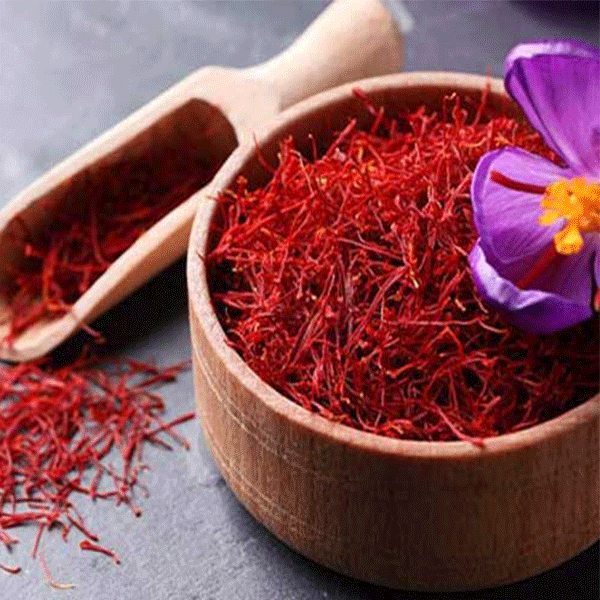
How saffron is harvested
When the flowers finally push through the autumn soil, they must be picked immediately. I’ve spoken with generational farmers who start their days well before sunrise. Why? Because once the morning sun hits the delicate purple petals, the flower opens completely. Prolonged exposure to direct sunlight and wind degrades the chemical compounds—specifically crocin (color), picrocrocin (flavor), and safranal (aroma)—that give premium saffron its value.
Workers hand-pick the closed or partially closed blossoms at dawn, placing them gently into woven baskets to prevent crushing. There are no machines capable of identifying mature blossoms and plucking them without damaging the fragile crop.
The Separation Process: Precision by Hand
Gathering the flowers is only the first phase. The real bottleneck in saffron production happens in the processing sheds.
Inside every Crocus sativus blossom are three tiny, vivid crimson stigmas (the female reproductive part of the flower). These three threads are the saffron.
Workers must sit at tables, take each individual flower, gently peel back the purple petals, and carefully snap off the red stigmas. They must ensure they don’t break the threads, and they must skillfully separate the valuable red portion (sargol/negin) from the yellow or white style at the base, which holds no culinary value.
To put the sheer volume of this work into perspective mathematically: It takes roughly 75,000 to 100,000 individual flowers to produce just 1 pound (0.45kg) of dried saffron. That equates to over 225,000 individual stigmas that must be carefully detached by human hands.

How saffron is harvested
The Drying Phase: Locking in the Aroma
Freshly picked stigmas contain a high amount of moisture and lack the distinct aroma we associate with the spice. The final crucial step is dehydration.
The threads are spread thinly over fine mesh screens and briefly toasted over indirect heat—traditionally wood fires, though modern facilities use controlled electric or gas heaters. This step requires immense expertise; under-drying leaves the saffron susceptible to mold, while over-drying burns the threads and destroys their value. Proper drying reduces the stigmas to about 20% of their original weight, locking in their intense chemical profile.
Saffron Business and Trade Guide: How to Harvest Saffron
Machine vs. Hand Harvesting: A Buying Decision
| Criteria | Traditional Hand-Harvesting | Machine/Automated Attempts |
|---|---|---|
| Thread Integrity | Flawless. Long, thick threads (Negin) are preserved intact. | High breakage rate. Often results in crushed or powdered saffron. |
| Purity Levels | High. Human eyes easily separate the valuable red stigma from yellow floral waste. | Lower. Machines struggle to differentiate, requiring costly secondary sorting. |
| Chemical Potency | Maximum retention of Crocin and Safranal due to gentle handling. | Bruising during mechanical harvest leads to rapid oxidation and flavor loss. |
| Market Value | Premium Pricing (Ideal for high-end retail and culinary B2B). | Commodity Pricing (Often sold as low-grade extracts). |
The exorbitant cost of saffron is a direct reflection of its labor-intensive journey from dawn-lit fields to careful, hand-sorted extraction. Understanding this delicate process allows bulk buyers, chefs, and distributors to properly evaluate the purity and grade of their supply chain.
Records mentioned in this article
Frequently Asked Questions
Machines easily crush the delicate Crocus sativus flowers and mix impurities into the harvest. Hand-picking ensures maximum thread integrity, purity, and chemical potency.
It requires a staggering 75,000 to 100,000 individual flowers—and roughly 350 to 400 hours of manual labor—to produce just one pound (0.45 kg) of high-grade saffron.
Picking the flowers at dawn protects the stigmas from harsh, direct sunlight. This preserves the essential chemical compounds (crocin, picrocrocin, and safranal) responsible for its color, taste, and aroma.