Saffron’s premium cost is driven by biology and immense manual labor, requiring up to 170,000 hand-picked flowers to yield a single kilogram of authentic spice. Navigating this high-stakes market demands a deep understanding of terroir, crocin levels, and rigorous testing methods to avoid costly adulterants. Explore the true economics behind the world’s most expensive spice and discover how origin-verified sourcing can protect your investments and elevate your commercial supply chain.
Saffron at a Glance: Key Facts for Buyers & Businesses
| Category | Details |
|---|---|
| Botanical Name | Crocus sativus L. |
| Primary Origins | Iran (90%), Afghanistan, Spain, Kashmir (India), Greece |
| Active Compounds | Crocin (color), Picrocrocin (flavor), Safranal (aroma) |
| Grading Standards | ISO 3632 (Category I–III based on crocin, picrocrocin, safranal levels) |
| Common Grades | Sargol (all-red threads), Negin (premium long threads), Pushal (red + some yellow) |
| Retail Price Range (2026) | 8– 15/gram (premium), 500 – 500– 3,000/kg (bulk, B2B) |
| Key Quality Indicators | Deep red color, minimal yellow threads, strong aroma, moisture <12%, no additives |
| Shelf Life | 2–3 years (airtight, cool, dark storage) |
| Culinary Uses | Paella, risotto, Persian rice, desserts, teas |
| Health Benefits | Antioxidant, mood support, potential anti-inflammatory properties* |
| Buying Tips for Consumers | Buy threads (not powder), check ISO cert, test 2–3 threads in warm water |
| Sourcing Tips for Businesses | Request lab reports (ISO 3632), verify origin docs, sample before bulk orders |
Saffron at a Glance: Key Facts for Buyers & Businesses. Origin, grades, 2026 prices, and purity checks — the essentials for both home and bulk saffron buyers, in one table. Columns: Category, Details. Botanical Name — Crocus sativus L.. Primary Origins — Iran (90%), Afghanistan, Spain, Kashmir (India), Greece. Active Compounds — Crocin (color), Picrocrocin (flavor), Safranal (aroma). Grading Standards — ISO 3632 (Category I–III based on crocin, picrocrocin, safranal levels). Common Grades — Sargol (all-red threads), Negin (premium long threads), Pushal (red + some yellow). Retail Price Range (2026) — 8– 15/gram (premium), 500 – 500– 3,000/kg (bulk, B2B). Key Quality Indicators — Deep red color, minimal yellow threads, strong aroma, moisture <12%, no additives. Shelf Life — 2–3 years (airtight, cool, dark storage).
You have probably stood in the spice aisle, looked at a tiny vial containing just a few red threads, and wondered: Why is saffron so expensive?
As someone who works closely with agricultural sourcing and origin tracking, I get this question constantly from both culinary enthusiasts and B2B buyers. The short answer for search engines and quick reference is simple: Saffron is expensive because of its extremely low yield per plant and the intense, entirely manual labor required to harvest it.
But for buyers looking to invest in this spice—whether for a high-end restaurant, a specialized product line, or personal use—understanding the mechanics behind the price tag is crucial for making informed purchasing decisions.
Why is saffron expensive
Labor and Yield:
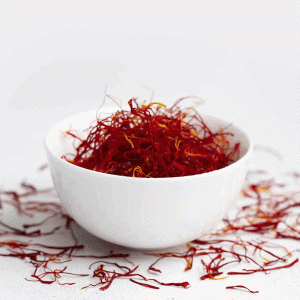
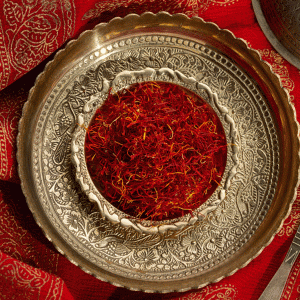
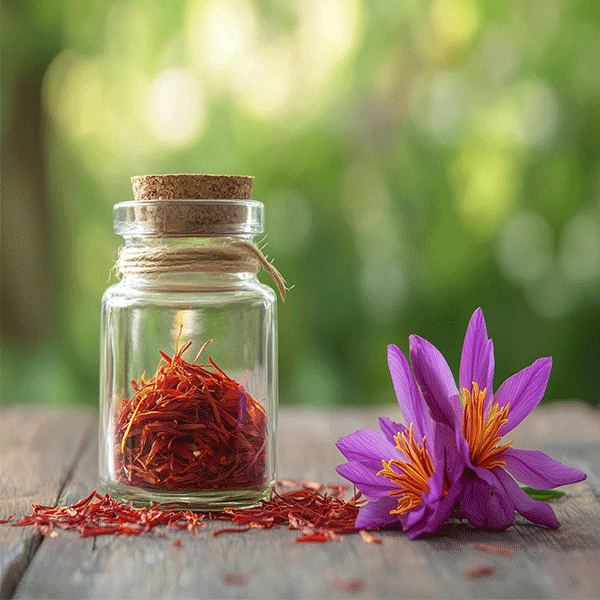
Saffron doesn’t grow in a way that allows for modern mechanical harvesting. The spice is derived solely from the dried stigmas of the Crocus sativus flower. Each flower produces exactly three red stigmas.
To understand the sheer scale of agriculture required, let’s look at the numbers. You cannot use a tractor to harvest saffron; if a machine damages the delicate stigma, the spice loses its value, flavor, and aromatic properties.
Here is a breakdown of what it actually takes to produce commercial quantities of saffron:
| Metric | The Reality of Saffron Harvesting |
|---|---|
| Yield per Flower | Exactly 3 stigmas (threads). |
| Flowers Needed for 1 Gram | Approximately 150 to 200 individual flowers. |
| Flowers Needed for 1 Kilogram | Between 150,000 and 170,000 flowers. |
| Harvesting Time | Roughly 400 hours of manual labor per kilogram. |
Furthermore, the harvesting window is incredibly tight. The flowers bloom for only a few weeks in autumn, and they must be picked at dawn. If the sun hits the open flowers for too long, the radiation breaks down the chemical compounds (crocin, picrocrocin, and safranal) that give saffron its color, taste, and aroma.
Real vs. Fake Saffron: A Buyer’s Comparison Guide
Because premium saffron can sell for anywhere from 2,000 USD to over 10,000 USD per kilogram on the wholesale market, adulteration is a massive problem. If you are sourcing saffron, you must know how to verify its authenticity.
Why is saffron expensive
When comparing products, use these three decision-making tests:
The Water Test (Color Release): Drop a few threads into warm water. Fake saffron (often dyed corn silk or safflower) will immediately turn the water a dark red and the thread itself will lose its color. Authentic saffron slowly releases a vibrant, golden-yellow hue over 10 to 15 minutes, and the thread remains distinctly red.
The Aroma vs. Taste Test: High-quality saffron has a complex, floral, and slightly earthy aroma (often described as sweet like honey). However, it should never taste sweet. If you bite a thread and it tastes sweet, it has been coated in sugar or glycerin to add artificial weight. True saffron tastes slightly bitter and earthy.
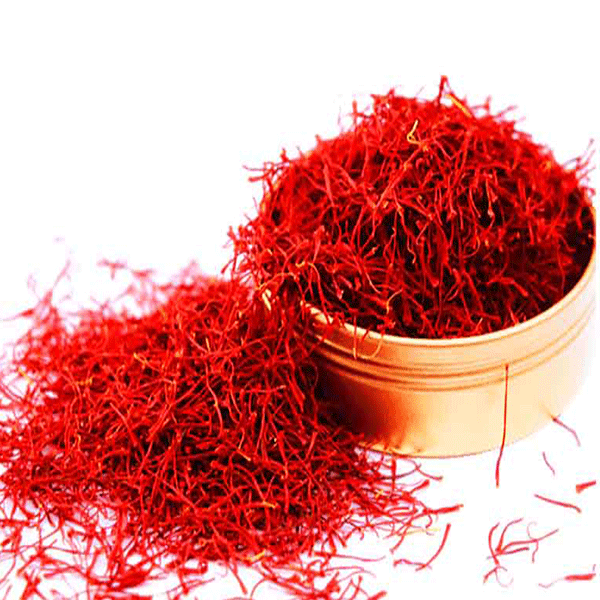
The Physical Shape: Look closely at the threads. Real saffron threads are trumpet-shaped—bulging at one end and tapering to a fine point at the other. Fake threads usually have uniform thickness.
Records mentioned in this article
Frequently Asked Questions
It takes between 150,000 and 170,000 hand-picked Crocus sativus flowers to yield just one kilogram of genuine saffron.
Each flower contains only three delicate stigmas that must be carefully extracted by hand, requiring approximately 400 hours of manual labor per kilogram.
Place a thread in water; genuine saffron will gradually release a golden-yellow color over 10–15 minutes while remaining intact, whereas fake saffron often bleeds dark red immediately.