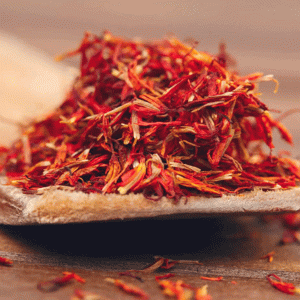
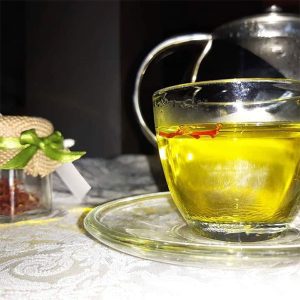
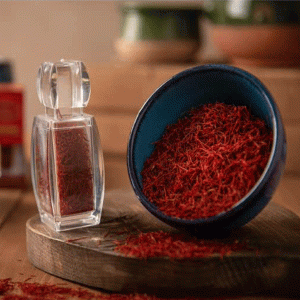
ISO 3632 is the definitive international standard that safeguards your investment by scientifically grading saffron based on its color, flavor, and aroma. Understanding these vital lab metrics is essential for preventing fraud and ensuring you consistently source premium, unadulterated threads. Explore our comprehensive guide to mastering ISO reports and elevate your wholesale procurement strategy today.
Saffron at a Glance: Key Facts for Buyers & Businesses
| Category | Details |
|---|---|
| Botanical Name | Crocus sativus L. |
| Primary Origins | Iran (90%), Afghanistan, Spain, Kashmir (India), Greece |
| Active Compounds | Crocin (color), Picrocrocin (flavor), Safranal (aroma) |
| Grading Standards | ISO 3632 (Category I–III based on crocin, picrocrocin, safranal levels) |
| Common Grades | Sargol (all-red threads), Negin (premium long threads), Pushal (red + some yellow) |
| Retail Price Range (2026) | 8– 15/gram (premium), 500 – 500– 3,000/kg (bulk, B2B) |
| Key Quality Indicators | Deep red color, minimal yellow threads, strong aroma, moisture <12%, no additives |
| Shelf Life | 2–3 years (airtight, cool, dark storage) |
| Culinary Uses | Paella, risotto, Persian rice, desserts, teas |
| Health Benefits | Antioxidant, mood support, potential anti-inflammatory properties* |
| Buying Tips for Consumers | Buy threads (not powder), check ISO cert, test 2–3 threads in warm water |
| Sourcing Tips for Businesses | Request lab reports (ISO 3632), verify origin docs, sample before bulk orders |
Saffron at a Glance: Key Facts for Buyers & Businesses. Origin, grades, 2026 prices, and purity checks — the essentials for both home and bulk saffron buyers, in one table. Columns: Category, Details. Botanical Name — Crocus sativus L.. Primary Origins — Iran (90%), Afghanistan, Spain, Kashmir (India), Greece. Active Compounds — Crocin (color), Picrocrocin (flavor), Safranal (aroma). Grading Standards — ISO 3632 (Category I–III based on crocin, picrocrocin, safranal levels). Common Grades — Sargol (all-red threads), Negin (premium long threads), Pushal (red + some yellow). Retail Price Range (2026) — 8– 15/gram (premium), 500 – 500– 3,000/kg (bulk, B2B). Key Quality Indicators — Deep red color, minimal yellow threads, strong aroma, moisture <12%, no additives. Shelf Life — 2–3 years (airtight, cool, dark storage).
In my years of analyzing agricultural supply chains and international trade patterns, I’ve seen one recurring nightmare for bulk buyers: investing thousands of dollars into a shipment of saffron, only to realize it’s been dyed, mixed with corn silk, or artificially flavored.
When you are buying the world’s most expensive spice, you cannot rely on the “smell test” or a vendor’s promise. You need hard data. That is exactly where ISO 3632 comes in.
Let’s break down exactly what this standard is, how to read a lab report, and how you can use this knowledge to make bulletproof purchasing decisions.
The Science of Saffron: What Does ISO 3632 Actually Measure?
ISO 3632 isn’t just a basic pass/fail test. It is a rigorous spectrophotometric analysis that measures the three specific chemical compounds that give real saffron its magic. If you want to optimize your B2B sourcing, you need to understand these three pillars:
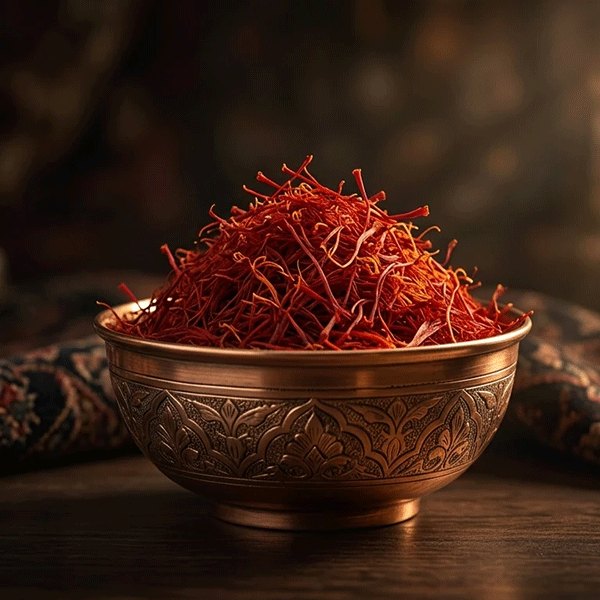
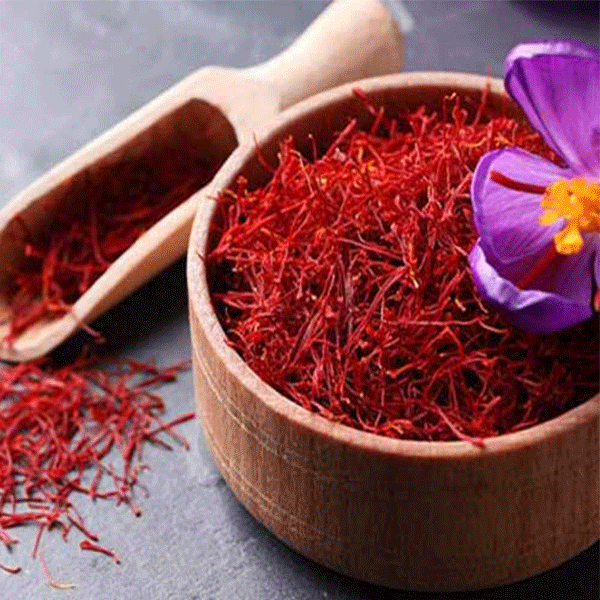
ISO 3632 saffron
Crocin (Coloring Strength): This is what gives saffron its vibrant red hue and what transfers that beautiful golden yellow to food. In the commercial world, coloring strength is the primary driver of price.
Picrocrocin (Flavor): This compound is responsible for saffron’s unique, slightly bitter, and earthy taste. High picrocrocin means a potent flavor profile.
Safranal (Aroma): This dictates the scent. Interestingly, while you want high Crocin and Picrocrocin, Safranal must fall within a specific balanced range; if it’s too high, it might indicate the saffron is old or artificially enhanced.
The standard also strictly tests for moisture and floral waste (styles, stamens) to ensure you are paying for pure red stigmas (Negin or Sargol), not dead weight.
Saffron Business & Trade Guide: Saffron ISO 3632
Comparing Saffron Grades: Making the Right Purchasing Decision
When a lab tests saffron under ISO 3632, it assigns a grade based on the concentration of these compounds. For high-stakes culinary or pharmaceutical use, you should only be looking at Grade I.
| ISO 3632 Category | Crocin (Color) Level | Picrocrocin (Flavor) | Best Commercial Use-Case |
|---|---|---|---|
| Grade I (Premium) | > 200 (Often hits 250+) | > 70 | Luxury retail, high-end culinary, pharmaceuticals, bulk export. |
| Grade II | 170 – 200 | 55 – 70 | Commercial food production, mid-tier restaurant supply. |
| Grade III | 120 – 170 | 40 – 55 | Lower-end commercial blending, cosmetics. |
Multi-Step Strategy: How to Verify Your Supplier
If you are sourcing saffron globally, don’t just ask if it’s “good quality.” Follow this multi-step verification process:
Request the Lab Report: Ask for a recent, third-party ISO 3632 certificate. If the supplier hesitates, walk away.
Check the Date and Batch: Saffron degrades over time. Ensure the lab report matches the exact batch you are purchasing and is less than a year old.
Analyze the Crocin: Look specifically at the Crocin number. For Super Negin saffron, you want to see a minimum of 220, but truly elite batches will push past 250.
Check Artificial Colorings: A complete ISO 3632 test also scans for artificial dyes. Verify that this section shows a clear “Negative.”
ISO 3632 saffron
The Bottom Line for B2B Importers
Understanding ISO 3632 shifts the power from the seller to the buyer. It removes the emotion and guesswork from the equation, replacing it with quantifiable data. When you source based on metrics rather than marketing, your margins improve, your customer satisfaction rises, and your brand reputation is protected.
At Origin & Source, we specialize in bridging the gap between premium agricultural products and reliable international trade. If you are looking to secure high-quality, lab-certified saffron for your wholesale or retail operations, let’s discuss your sourcing strategy today.
Records mentioned in this article
Frequently Asked Questions
No. Fake saffron (made from dyed corn silk, safflower, or paper) contains zero Crocin, Picrocrocin, or Safranal. Even if real saffron is mixed with fake strands, the overall ISO 3632 numbers will drop drastically, exposing the adulteration.
While ISO 3632 Grade I requires a minimum Crocin level of 200, the highest quality “Super Negin” saffron grown in optimal climates can achieve Crocin levels between 250 and 300.
This usually means the Safranal (aroma) is high, but the Crocin (color) is low. This can happen if the saffron is old and has degraded over time, or if it was poorly dried. Always check the ISO 3632 report to ensure both metrics are balanced.