Mastering authentic Swedish Saffron Buns (Lussekatter) requires precise saffron extraction techniques and moisture-locking ingredients like Quark to prevent a dry, heavy crumb. By sourcing premium, unadulterated saffron threads—a standard championed by the experts at OriginAndSource.com—and applying the traditional room-temperature butter kneading method, you ensure a vibrant and fluffy bake. Follow our essential substitution guide, temperature rules, and cold-fermenting tips to achieve bakery-quality, golden pastries every time.
Saffron at a Glance: Key Facts for Buyers & Businesses
| Category | Details |
|---|---|
| Botanical Name | Crocus sativus L. |
| Primary Origins | Iran (90%), Afghanistan, Spain, Kashmir (India), Greece |
| Active Compounds | Crocin (color), Picrocrocin (flavor), Safranal (aroma) |
| Grading Standards | ISO 3632 (Category I–III based on crocin, picrocrocin, safranal levels) |
| Common Grades | Sargol (all-red threads), Negin (premium long threads), Pushal (red + some yellow) |
| Retail Price Range (2026) | 8– 15/gram (premium), 500 – 500– 3,000/kg (bulk, B2B) |
| Key Quality Indicators | Deep red color, minimal yellow threads, strong aroma, moisture <12%, no additives |
| Shelf Life | 2–3 years (airtight, cool, dark storage) |
| Culinary Uses | Paella, risotto, Persian rice, desserts, teas |
| Health Benefits | Antioxidant, mood support, potential anti-inflammatory properties* |
| Buying Tips for Consumers | Buy threads (not powder), check ISO cert, test 2–3 threads in warm water |
| Sourcing Tips for Businesses | Request lab reports (ISO 3632), verify origin docs, sample before bulk orders |
Saffron at a Glance: Key Facts for Buyers & Businesses. Origin, grades, 2026 prices, and purity checks — the essentials for both home and bulk saffron buyers, in one table. Columns: Category, Details. Botanical Name — Crocus sativus L.. Primary Origins — Iran (90%), Afghanistan, Spain, Kashmir (India), Greece. Active Compounds — Crocin (color), Picrocrocin (flavor), Safranal (aroma). Grading Standards — ISO 3632 (Category I–III based on crocin, picrocrocin, safranal levels). Common Grades — Sargol (all-red threads), Negin (premium long threads), Pushal (red + some yellow). Retail Price Range (2026) — 8– 15/gram (premium), 500 – 500– 3,000/kg (bulk, B2B). Key Quality Indicators — Deep red color, minimal yellow threads, strong aroma, moisture <12%, no additives. Shelf Life — 2–3 years (airtight, cool, dark storage).
If you have ever baked saffron buns only to find them dry and dense the next day, you are not alone. Lussekatter are a staple of Swedish Christmas and St. Lucia Day, but the dough can be notoriously fussy. After years of testing different methods and sourcing various grades of saffron, I’ve found that the secret doesn’t just lie in the kneading—it’s in how you treat the saffron and the fats you use to keep the crumb soft.
Let’s walk through the traditional process, along with the modern adjustments you need to make the best batch of your life.
The Secret to the Golden Crumb: Saffron Preparation
You cannot just toss saffron threads into your flour. To get an even, vibrant yellow color and distribute the flavor without wasting your expensive spice, you must extract it properly.
Lussekatter recipe,
The Traditional Steeping Decision:
Method A (Alcohol – Recommended): Grind 0.5 grams of premium saffron threads with a pinch of sugar using a mortar and pestle. Stir in 1 tablespoon of vodka or cognac and let it sit for at least 30 minutes (or overnight). The alcohol extracts the color compounds (crocin) beautifully and bakes off completely in the oven.
Method B (Warm Milk): If you prefer to avoid alcohol completely, grind the saffron with sugar and stir it into the warmed milk used for your yeast. It works well, though the color might be slightly less intense than the alcohol extraction.
Saffron Culinary Arts: Discover expert blooming techniques and timeless dishes to unlock the full potential of the world’s most luxurious spice.
Ingredient Breakdown and Key Substitutions
| Ingredient | Quantity (Metric / US) | Purpose & Best Substitutes |
|---|---|---|
| Premium Saffron | 0.5g (about 1 generous tsp threads) | Flavor & color. Do not use turmeric; it changes the taste entirely. |
| Whole Milk | 250ml (1 cup) | Warmed to 110°F (43°C). Whole milk provides necessary fat for tender dough. |
| Active Dry Yeast | 7g (1 packet / 2 ¼ tsp) | Decision: If using fresh yeast (traditional), use 25g. |
| Quark (Kesella) | 125g (about ½ cup) | Keeps buns moist. Substitute: Full-fat sour cream or whole milk Greek yogurt. |
| Unsalted Butter | 100g (7 tbsp) | Room temperature. Do not melt it; kneading soft butter into dough yields a better crumb. |
| Granulated Sugar | 90g (scant ½ cup) | Sweetens and feeds the yeast. |
| All-Purpose Flour | 500g – 550g (4 to 4 ½ cups) | Start with less. Too much flour guarantees dry buns. |
| Salt & Egg | ½ tsp salt / 1 large egg | Salt balances sweetness; egg is for the dough (plus one more for egg wash). |
| Raisins | Handful | For decoration. Pro-tip: Soak them in warm water first so they don’t burn. |
Step-by-Step Baking Instructions
1. Activate the Yeast and Saffron
Warm your milk to about 110°F (43°C). Pour it into your stand mixer bowl, add the yeast, and a pinch of sugar. Let it sit for 10 minutes until frothy. Once ready, stir in your prepared saffron mixture (either the alcohol steep or milk steep).
2. Build the Dough
Add the quark (or sour cream), sugar, egg, and salt to the yeast mixture. Whisk to combine. Switch to a dough hook. Gradually add 400g of the flour, mixing on low.
3. The Butter Technique (Crucial Step)
Instead of adding melted butter, add your room-temperature butter in small chunks while the mixer is running. This coats the flour proteins differently, creating a softer texture. Slowly add the remaining flour until the dough clears the sides of the bowl. It should be slightly tacky, not stiff. Knead for 8–10 minutes.
4. First Proof
Cover the bowl with a damp towel and let it rise in a warm, draft-free spot for 1 to 1.5 hours, or until doubled in size.
Lussekatter recipe,
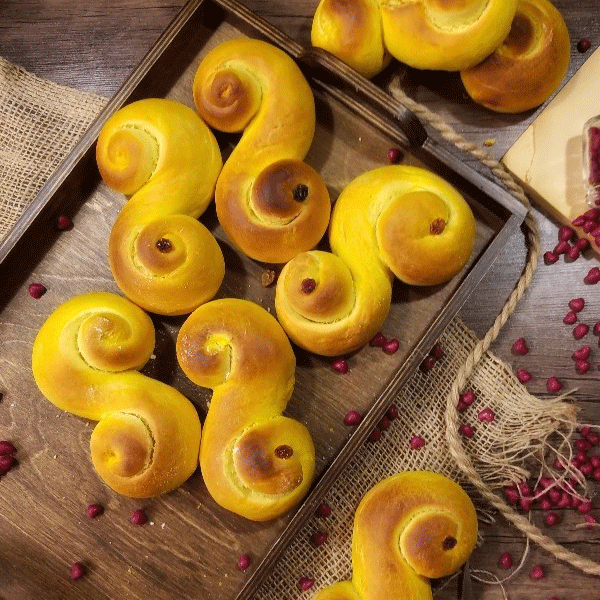
5. Shaping the “S” (Julgalt)
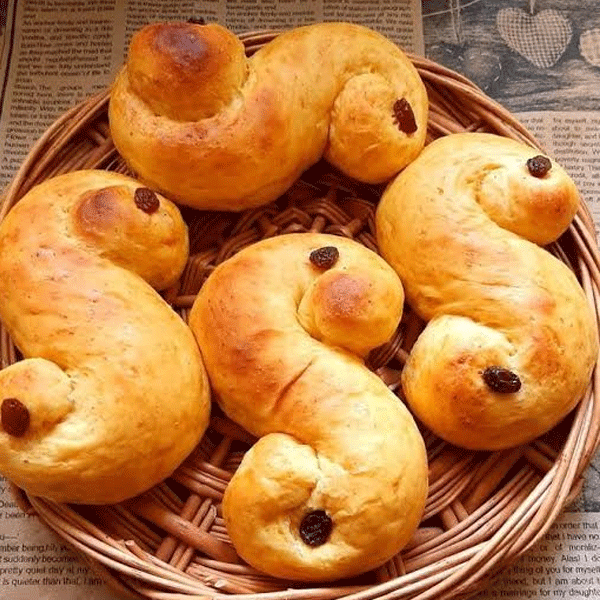
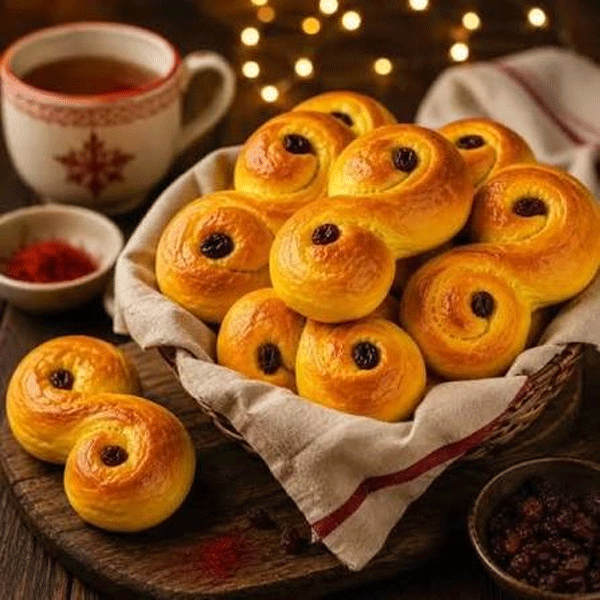
Punch down the dough and turn it out onto a lightly floured surface. Divide it into roughly 16 equal pieces. Roll each piece into a smooth rope about 10–12 inches (25–30 cm) long. Curl the ends in opposite directions to form an “S” shape. Tuck a soaked raisin into the center of each curl.
6. Second Proof and Baking
Place the shaped buns on parchment-lined baking sheets. Cover lightly and let them rise for another 30–45 minutes. Preheat your oven to 430°F (220°C).
Brush the buns generously with a beaten egg wash. Bake for 8 to 10 minutes until golden brown. Do not overbake! Transfer to a wire rack and cover immediately with a clean kitchen towel (this traps the steam and keeps the crust soft).
Lussekatter are notorious for staling within 24 hours due to their relatively low fat-to-flour ratio compared to regular brioche. To keep them fresh, freeze whatever you don’t plan to eat on the same day as soon as they have fully cooled. Wrap each bun individually in plastic wrap and store them in an airtight freezer bag. When ready to serve, thaw at room temperature and warm them in a 300°F (150°C) oven for 3–5 minutes to restore their freshly baked texture and aroma.
Records mentioned in this article
Frequently Asked Questions
Yes. Cold fermenting actually deepens the saffron flavor. You can make the dough, let it sit at room temperature for 30 minutes, and then place it in the fridge overnight. The next morning, shape the buns cold. You will need to allow extra time (up to 2 hours) for the second proof since the dough is starting from a cold temperature.
Traditional Swedish recipes swear by fresh yeast (often sold in small cubes in Europe) because it provides a rapid, robust rise for heavy, butter-laden doughs. If you can source fresh yeast, use 25g and crumble it directly into the lukewarm milk. However, standard Active Dry or Instant Yeast (7g) works perfectly well form an “S” shape. Tuck a soaked raisin into the center of each curl.
Traditional Swedish recipes swear by fresh yeast (often sold in small cubes in Europe) because it provides a rapid, robust rise for heavy, butter-laden doughs. If you can source fresh yeast, use 25g and crumble it directly into the lukewarm milk. However, standard Active Dry or Instant Yeast (7g) works perfectly well for the home baker, provided you give it enough time in a warm environment to proof.