Elevating your pantry starts with understanding the origin and quality of your ingredients, a core philosophy we champion at OriginAndSource. Pairing raw, mild honey with authentic, high-grade saffron creates a culinary masterpiece that bridges everyday meals with gourmet luxury. This guide walks you through selecting the right components, crafting the infusion, and using it to transform your favorite dishes.
Saffron at a Glance: Key Facts for Buyers & Businesses
| Category | Details |
|---|---|
| Botanical Name | Crocus sativus L. |
| Primary Origins | Iran (90%), Afghanistan, Spain, Kashmir (India), Greece |
| Active Compounds | Crocin (color), Picrocrocin (flavor), Safranal (aroma) |
| Grading Standards | ISO 3632 (Category I–III based on crocin, picrocrocin, safranal levels) |
| Common Grades | Sargol (all-red threads), Negin (premium long threads), Pushal (red + some yellow) |
| Retail Price Range (2026) | 8– 15/gram (premium), 500 – 500– 3,000/kg (bulk, B2B) |
| Key Quality Indicators | Deep red color, minimal yellow threads, strong aroma, moisture <12%, no additives |
| Shelf Life | 2–3 years (airtight, cool, dark storage) |
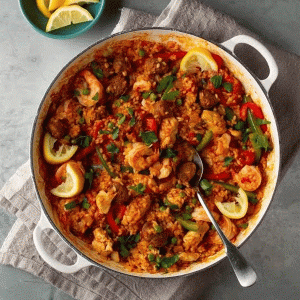
| Culinary Uses | Paella, risotto, Persian rice, desserts, teas |
| Health Benefits | Antioxidant, mood support, potential anti-inflammatory properties* |
| Buying Tips for Consumers | Buy threads (not powder), check ISO cert, test 2–3 threads in warm water |
| Sourcing Tips for Businesses | Request lab reports (ISO 3632), verify origin docs, sample before bulk orders |
Saffron at a Glance: Key Facts for Buyers & Businesses. Origin, grades, 2026 prices, and purity checks — the essentials for both home and bulk saffron buyers, in one table. Columns: Category, Details. Botanical Name — Crocus sativus L.. Primary Origins — Iran (90%), Afghanistan, Spain, Kashmir (India), Greece. Active Compounds — Crocin (color), Picrocrocin (flavor), Safranal (aroma). Grading Standards — ISO 3632 (Category I–III based on crocin, picrocrocin, safranal levels). Common Grades — Sargol (all-red threads), Negin (premium long threads), Pushal (red + some yellow). Retail Price Range (2026) — 8– 15/gram (premium), 500 – 500– 3,000/kg (bulk, B2B). Key Quality Indicators — Deep red color, minimal yellow threads, strong aroma, moisture <12%, no additives. Shelf Life — 2–3 years (airtight, cool, dark storage).
If you have ever opened a jar of high-quality saffron, you know the aroma is intoxicating—earthy, slightly sweet, and incredibly floral. Now, imagine capturing that exact essence in a jar of raw honey. Saffron-infused honey isn’t just a sweetener; it is a complex condiment that bridges the gap between sweet and savory.
Through years of evaluating different saffron grades and origins, we’ve learned that infusing spices into honey is one of the best ways to extract and preserve their flavor profiles. But you can’t just drop any saffron into any honey and expect magic. The chemistry of the ingredients matters.
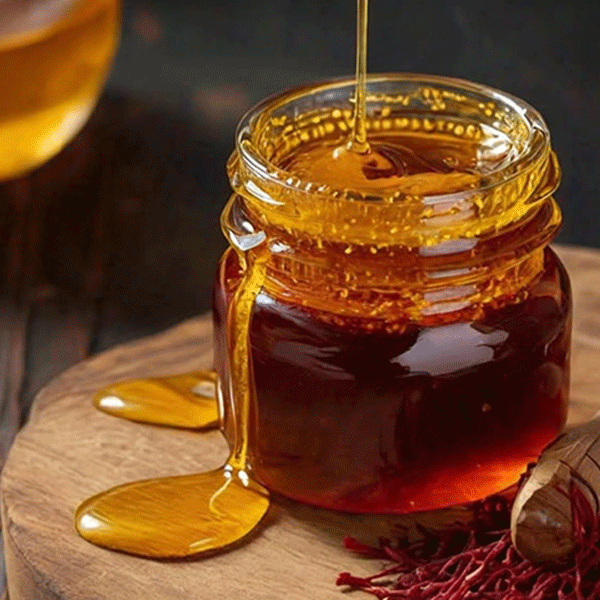
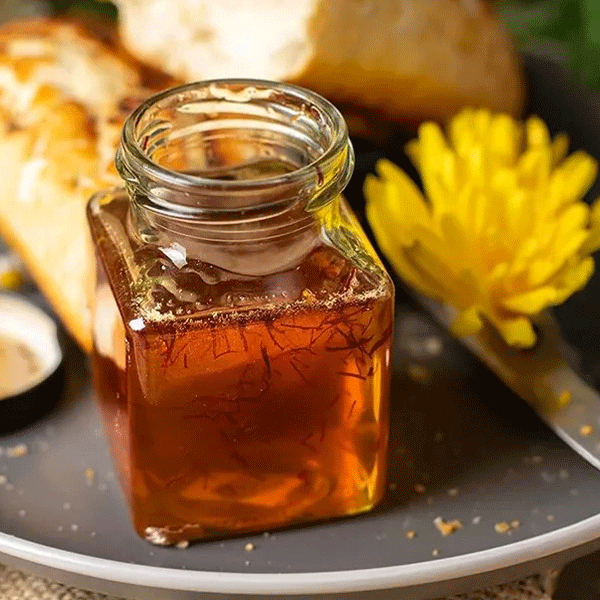
Saffron-infused honey
Here is exactly how to choose your ingredients, make the infusion, and put it to work in your kitchen.
Step 1: Making the Right Decisions (Choosing Your Ingredients)
The biggest mistake beginners make is using the wrong type of honey or low-grade saffron. Because saffron is a delicate, nuanced spice, it can easily be overpowered.
Saffron Culinary Arts: Explore how this precious spice effortlessly transforms everyday ingredients into gourmet culinary experiences.
Choosing the Right Honey
| Honey Type | Flavor Profile | Saffron Suitability | Expert Verdict |
|---|---|---|---|
| Acacia | Very mild, light, clear, vanilla notes | Excellent | The absolute best choice. Lets the saffron shine. |
| Clover | Sweet, slightly floral, standard table honey | Good | A great, budget-friendly everyday option. |
| Orange Blossom | Citrusy, aromatic, medium sweetness | Fair to Good | Competes slightly with saffron, but creates a nice citrus blend. |
| Buckwheat | Dark, malty, molasses-like, very strong | Poor | Avoid. It will completely destroy the saffron flavor. |
Choosing the Right Saffron
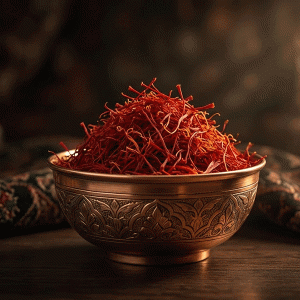
Always opt for whole threads (like Negin or Sargol grades) rather than saffron powder. Pre-ground saffron is frequently adulterated with turmeric or safflower. You want deep red threads with minimal yellow styles attached.
Step 2: The Infusion Methods
There are two ways to do this: The Cold Method (requires patience but preserves raw honey benefits) and The Warm Method (faster, bolder flavor extraction).
The Ratio: You will need 1 cup of mild honey and 1 large pinch of saffron threads (about 0.2 to 0.3 grams).
Method A: The Cold Infusion (Recommended)
This is the purist’s approach. Raw honey contains natural enzymes that are destroyed by heat, so this method keeps those health benefits intact.
Prep the Saffron: Place your saffron threads in a small mortar and pestle. Add a tiny pinch of coarse sugar (this acts as an abrasive). Grind gently until the threads are broken down into smaller flakes, but not a fine powder.
Combine: Pour 1 cup of your chosen honey into a clean, sterilized glass jar.
Stir: Fold the crushed saffron into the honey. Use a wooden or silicone spoon, as metal can sometimes react with raw honey over time.
Wait: Seal the jar tightly and place it in a dark cupboard at room temperature. Let it sit for at least 7 to 14 days. Turn the jar upside down every couple of days to keep the saffron distributed.
Method B: The Warm Infusion (The Quick Route)
If you are making this as a last-minute gift or need it for a dinner party tonight, use gentle heat.
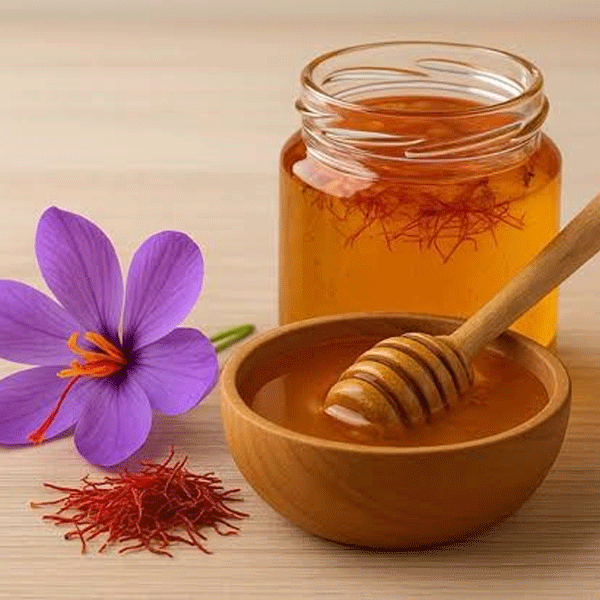
Saffron-infused honey
Grind: Lightly crush the saffron threads as mentioned above.
Heat a Water Bath: Place your honey in a heat-safe glass jar. Put the jar into a saucepan filled with an inch of warm water (a double boiler setup).
Warm Gently: Turn the stove to low heat. Do not boil the water. You only want the honey to reach about 100°F to 110°F (38°C to 43°C)—just warm enough to become thin and runny.
Infuse: Stir the crushed saffron into the warm honey. Let it sit in the warm water bath (heat turned off) for 30 minutes.
Cool and Store: Remove the jar, let it cool to room temperature, and seal. It is ready to use immediately, though it will taste better tomorrow.
What to Use Saffron-Infused Honey On
Saffron honey is incredibly versatile. Here is how you can use it to elevate everyday meals:
The Ultimate Cheese Board: Drizzle it generously over a wedge of baked Brie, aged Manchego, or salty Pecorino Romano. The salty-sweet-earthy combination is unmatched.
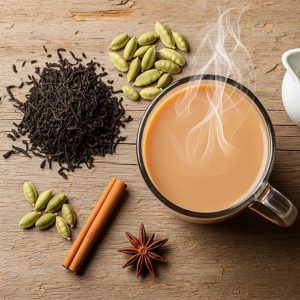
Morning Rituals: Stir a spoonful into warm water with a squeeze of lemon, or mix it into your morning Earl Grey tea. It also transforms plain Greek yogurt into a luxury breakfast.
Glazing Proteins and Veggies: Towards the last 5 minutes of roasting, brush saffron honey over roast chicken, duck breast, or oven-roasted carrots and parsnips.
Desserts: Drizzle it over vanilla bean ice cream, use it as a binder for homemade baklava, or pour it over a classic panna cotta.
Saffron-infused honey is a simple way to bring a little luxury to everyday meals. Keep a jar on hand, drizzle it over yogurt, tea, or warm bread, and let its golden aroma turn ordinary moments into something special.
Records mentioned in this article
-
 🇮🇷 Iran
Verified
SaffronThe dried stigmas of a sterile autumn crocus, hand-picked at roughly 440,000 threads to the kilogram.
Open the record
-
 🇪🇸 Spain
Verified
Honey
Wild bees, harvested by early humans
Open the record
-
 🇨🇳 China
Verified
Ice Cream
Chinese, then Italian and French confectioners
Open the record
Frequently Asked Questions
No, you should leave the threads in! They continue to infuse flavor over time, they are completely safe to eat, and the suspended red flakes look beautiful in the jar.
This usually happens if you use too much saffron or if you used low-quality, aged saffron. Saffron is highly concentrated; a little goes a long way. Stick to about 0.2 grams per cup of honey.
Yes. If your honey hardens, simply place the glass jar in a bowl of warm water for 15-20 minutes and stir until it returns to a smooth, liquid state. Avoid microwaving, as it destroys the natural enzymes.