This comprehensive guide walks you through crafting authentic Persian saffron and pistachio ice cream (Bastani Sonnati) at home. It covers essential ingredient sourcing (like real saffron and salep), a step-by-step preparation method with or without an ice cream maker, and troubleshooting tips to achieve that signature stretchy texture and floral flavor profile.
Saffron at a Glance: Key Facts for Buyers & Businesses
| Category | Details |
|---|---|
| Botanical Name | Crocus sativus L. |
| Primary Origins | Iran (90%), Afghanistan, Spain, Kashmir (India), Greece |
| Active Compounds | Crocin (color), Picrocrocin (flavor), Safranal (aroma) |
| Grading Standards | ISO 3632 (Category I–III based on crocin, picrocrocin, safranal levels) |
| Common Grades | Sargol (all-red threads), Negin (premium long threads), Pushal (red + some yellow) |
| Retail Price Range (2026) | 8– 15/gram (premium), 500 – 500– 3,000/kg (bulk, B2B) |
| Key Quality Indicators | Deep red color, minimal yellow threads, strong aroma, moisture <12%, no additives |
| Shelf Life | 2–3 years (airtight, cool, dark storage) |
| Culinary Uses | Paella, risotto, Persian rice, desserts, teas |
| Health Benefits | Antioxidant, mood support, potential anti-inflammatory properties* |
| Buying Tips for Consumers | Buy threads (not powder), check ISO cert, test 2–3 threads in warm water |
| Sourcing Tips for Businesses | Request lab reports (ISO 3632), verify origin docs, sample before bulk orders |
Saffron at a Glance: Key Facts for Buyers & Businesses. Origin, grades, 2026 prices, and purity checks — the essentials for both home and bulk saffron buyers, in one table. Columns: Category, Details. Botanical Name — Crocus sativus L.. Primary Origins — Iran (90%), Afghanistan, Spain, Kashmir (India), Greece. Active Compounds — Crocin (color), Picrocrocin (flavor), Safranal (aroma). Grading Standards — ISO 3632 (Category I–III based on crocin, picrocrocin, safranal levels). Common Grades — Sargol (all-red threads), Negin (premium long threads), Pushal (red + some yellow). Retail Price Range (2026) — 8– 15/gram (premium), 500 – 500– 3,000/kg (bulk, B2B). Key Quality Indicators — Deep red color, minimal yellow threads, strong aroma, moisture <12%, no additives. Shelf Life — 2–3 years (airtight, cool, dark storage).
If you have ever walked through the bustling streets of a Persian bazaar during summer, you know the distinct, intoxicating aroma of rose water and saffron wafting from local ice cream shops. Persian Saffron and Pistachio Ice Cream, traditionally known as Bastani Sonnati, isn’t just a dessert; it is a sensory experience.
The first time I tried replicating this at home, I quickly realized that throwing saffron into a standard vanilla base doesn’t cut it. Authentic Bastani has a unique, slightly chewy, and stretchy texture, punctuated by satisfying bites of frozen clotted cream and roasted pistachios.
To help you get it right on the first try, I’ve broken down the exact methodology, ingredient decisions, and techniques you need to master this golden treat.
Crucial Ingredient Decisions: What Makes or Breaks Your Ice Cream
Before you start heating the milk, you need to make a few sourcing decisions. The authenticity of this recipe relies heavily on three specific ingredients:
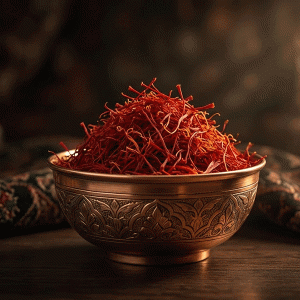
The Saffron (The Soul): Don’t use saffron powder mixed with turmeric (a common supermarket trap). You need high-quality saffron threads (like Super Negin).
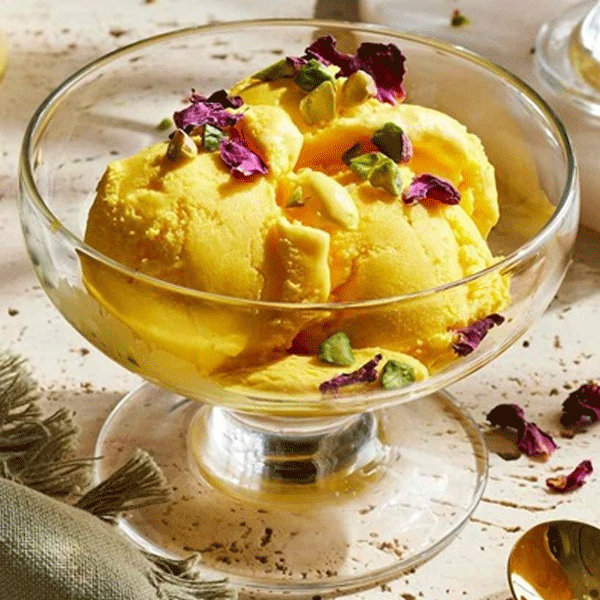
Persian Saffron and Pistachio Ice Cream
Pro Tip: To extract the deepest color and flavor, grind a pinch of threads with a tiny bit of sugar, then drop an ice cube on it. Let it melt at room temperature. This “cold bloom” method shocks the saffron into releasing a vibrant, neon-orange hue that hot water often destroys.
Salep / Sahlab (The Texture): This is a starchy powder extracted from the roots of wild orchids. It is the secret behind the elastic, stretchy texture of Persian and Turkish ice creams.
Decision: If you can find pure Salep at a Middle Eastern grocer, buy it. If you absolutely cannot find it, you can substitute it with a mix of cornstarch and a tiny pinch of xanthan gum, but be aware the texture will be closer to standard gelato than authentic Bastani.
Rose Water (The Aroma): Always check the label. You want 100% edible, food-grade rose water, not cosmetic rose water.
Saffron Culinary Arts: Explore the rich heritage of the world’s most luxurious spice through time-honored traditional dishes.
Persian Ice Cream vs. Traditional Western Ice Cream
| Feature | Bastani Sonnati (Persian) | Traditional Vanilla (Western) |
|---|---|---|
| Texture | Dense, slightly elastic, and stretchy | Airy, smooth, and creamy |
| Primary Stabilizer | Salep (Orchid root powder) | Egg yolks (custard base) or Guar gum |
| Flavor Profile | Earthy, floral, deeply aromatic | Sweet, rich, milky |
| Signature Mix-ins | Frozen clotted cream chunks, roasted pistachios | Chocolate chips, caramel, cookie dough |
The Authentic Bastani Sonnati Recipe
Prep time: 30 mins | Freeze time: 6+ hours | Yield: About 1 Quart
Ingredients
Whole Milk: 4 cups (Do not use skim; you need the fat)
Heavy Whipping Cream: 1 cup (For the frozen chunks)
Sugar: 1 ¼ cups
Pure Salep Powder: 1 to 1.5 teaspoons (depending on purity)
High-Quality Saffron: ½ teaspoon ground, bloomed in 2 tbsp of ice water
Rose Water: ¼ cup
Shelled Pistachios: ½ cup, roughly chopped (unsalted and roasted)
Step 1: Prepare the Frozen Cream Chunks (Khameh Khoshk)
This step requires patience but is non-negotiable for the true experience.
Take a flat baking sheet and line it with parchment paper or a silicone mat.
Pour the heavy whipping cream onto the tray, spreading it out until it forms a very thin layer (about 2-3 millimeters thick).
Place the tray flat in the freezer for at least 3 hours until completely solid. Once frozen, break it into small, bite-sized flakes. Keep them in the freezer until the very end.
Step 2: Create the Ice Cream Base
In a small bowl, aggressively whisk the sugar and salep powder together. Why? Salep clumps instantly when it hits liquid. Pre-mixing it with sugar prevents lumps.
Pour the whole milk into a large, heavy-bottomed pot over medium heat. Bring it to a gentle simmer (do not let it boil over).
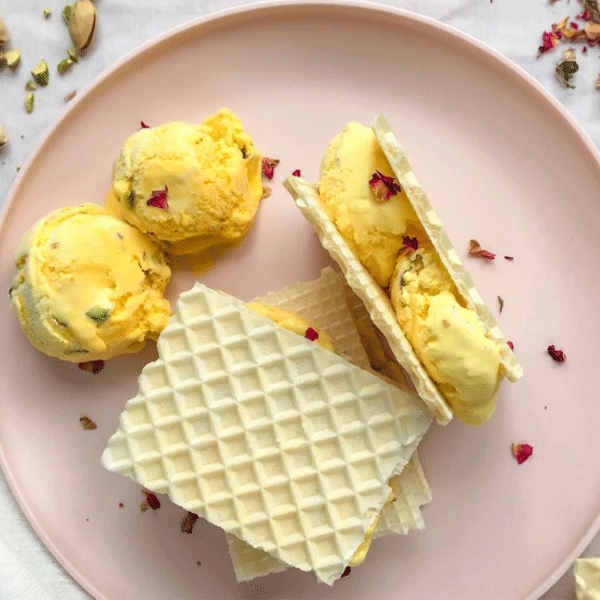
Persian Saffron and Pistachio Ice Cream
Gradually, a few tablespoons at a time, sprinkle the sugar-salep mixture into the hot milk while stirring continuously with a whisk.
Lower the heat and keep stirring for about 10-15 minutes. You will notice the milk transforming; it will thicken and begin to coat the back of a spoon. If you pull a spoon out and run your finger across the back, the line should stay clean.
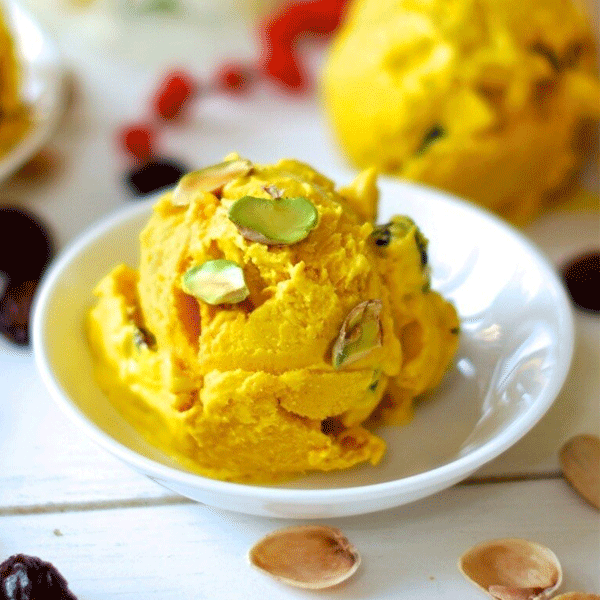
Remove from heat. Stir in the bloomed saffron water and rose water. The base will instantly turn a magnificent golden yellow and smell like a Persian spring. Let the mixture chill in the fridge completely (at least 4 hours, preferably overnight).
Step 3: Churning and Mixing
With an Ice Cream Maker: Pour the chilled base into your machine and churn according to the manufacturer’s instructions until it resembles thick soft-serve. In the last 2 minutes of churning, toss in the chopped pistachios and the frozen cream chunks.
The No-Churn (Hand-Stir) Method: Pour the base into a wide, freezer-safe stainless steel pan. Put it in the freezer. Every 45 minutes, take it out and vigorously whisk or beat the edges into the center to break up ice crystals. Repeat this 4 to 5 times until it becomes thick and elastic. Fold in the pistachios and cream chunks on the final stir.
Step 4: Final Freeze
Transfer the finished ice cream into an airtight container. Press a piece of parchment paper directly onto the surface of the ice cream to prevent ice crystals from forming. Freeze for another 4 hours to firm up.
Records mentioned in this article

Frequently Asked Questions
There are usually two culprits for icy Bastani. First, the salep ratio might have been too low, or the powder wasn’t pure (many commercial brands cut salep with cheap starches). Second, if you didn’t use an ice cream maker, you likely didn’t stir the mixture frequently enough during the freezing process, allowing large water crystals to form.
To get the ultimate Persian café experience, serve it squeezed between two thin plain wafers to make an “Ice Cream Sandwich” (Bastani Nouni). Alternatively, serve it in a bowl alongside a glass of fresh carrot juice to make a “Majoun” or “Ab Havij Bastani” float—the combination of sweet carrot juice and earthy saffron is out of this world.
Yes, but it requires careful balancing. You can replace whole milk with a high-fat oat milk or cashew milk, and use full-fat coconut cream for the frozen chunks. Keep in mind that coconut has a strong flavor profile that will compete slightly with the delicate notes of saffron and rose water. Salep is inherently plant-based, so the texturizing agent remains the same.