Authentic saffron, the world’s most precious spice, originates from the meticulously hand-harvested stigmas of the Crocus sativus flower, with Iran currently cultivating over 90% of the global supply. Its rich 3,500-year history has cultivated distinct regional profiles—from the potent, deep-red Iranian Negin to the milder Spanish La Mancha and rare Kashmiri threads. Understanding these origin-based characteristics and authenticity indicators is essential for securing true “red gold” for your commercial or culinary needs—explore our comprehensive origin guides to make highly informed sourcing decisions.
If you have ever purchased authentic saffron, you know the immediate sensory impact it delivers. A single pinch can transform an entire dish, yielding a vibrant golden hue and an earthy, complex aroma that no other spice can replicate. But when you are paying premium prices for this “red gold,” a natural question arises: Where exactly does saffron come from?
As someone who spends a lot of time analyzing agricultural supply chains and the origins of high-value commodities, I can tell you that the answer isn’t just a point on a map. Saffron’s origin is a mix of delicate botany, specific microclimates, and thousands of years of human history.
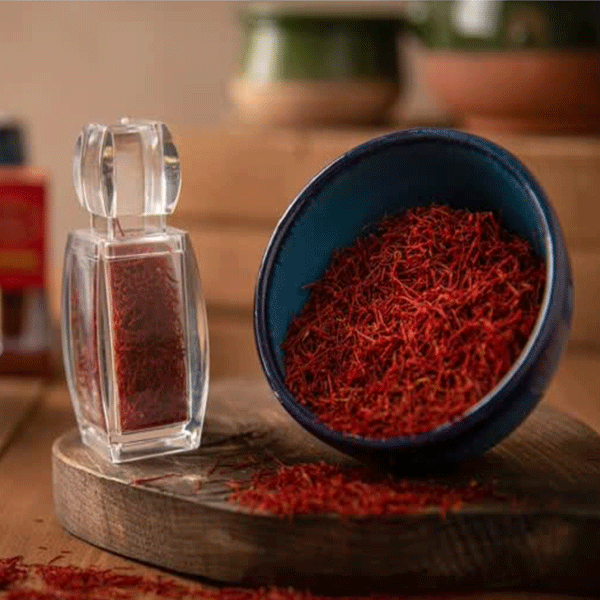
Where does saffron come from
The Botanical Origin: A Labor of Love
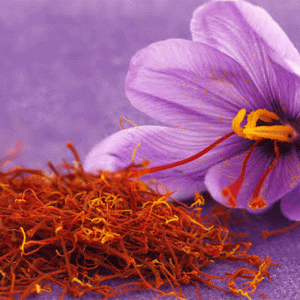
Before we look at the map, we need to look at the soil. All genuine saffron comes from a single flower: the Crocus sativus, commonly known as the saffron crocus.
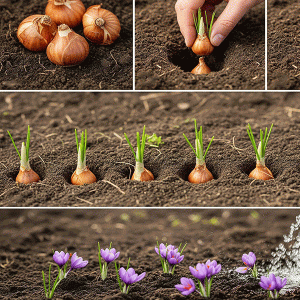
This autumn-blooming crocus holds three tiny, crimson stigmas in its center. These delicate threads are the saffron. Because the flower is sterile, it cannot reproduce via seeds. It relies entirely on human intervention to dig up, divide, and replant its corms (bulb-like structures) every few years. Furthermore, every single thread must be harvested by hand before the sun gets too hot and wilts the flower. It takes roughly 75,000 blossoms to produce just one pound of dried saffron spice. When you ask why it costs so much, this intense manual labor is the primary reason.
The Geographical Source: Where Does It Grow Today?
While the crocus can technically grow in various temperate climates, producing commercial-grade, highly potent saffron requires a specific terroir: cold winters, warm and dry summers, and well-drained soil.
Today, the global saffron market is dominated by a few key regions. Here is how they compare:
| Origin | Global Market Share | Thread Characteristics | Flavor & Aroma Profile |
|---|---|---|---|
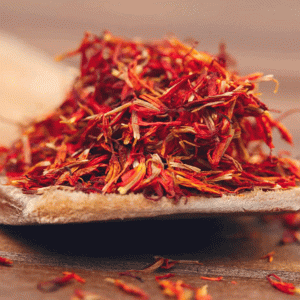
| Iran (Khorasan) | ~90% | Deep red, thick strands (Negin & Sargol cuts) | Highly potent, classic earthy and floral notes. The global benchmark. |
| Spain (La Mancha) | ~2-4% | Slightly curlier, lighter red with some yellow attached | Milder, slightly sweeter. Often preferred in traditional Paella. |
| India (Kashmir) | ~1-2% | Longest and thickest stigmas, dark maroon hue | Intense aroma, very rare, and highly prized in premium markets. |
| Afghanistan & Greece | ~4% | High quality, similar appearance to Iranian threads | Excellent coloring power. Afghanistan is rapidly growing as a premium source. |
A Brief History: From the Bronze Age to Your Kitchen
Saffron isn’t a modern luxury. Its history stretches back over 3,500 years.
Historically, wild precursor species of the crocus were first harvested in Bronze Age Greece (specifically on the island of Crete). However, the cultivation and selective breeding of the Crocus sativus we know today was heavily refined in ancient Persia (modern-day Iran).
The Persians recognized its value early on, using it to dye royal carpets, perfume bathwater, and flavor festive foods. Alexander the Great reportedly used Persian saffron in his bathwater to heal his battle wounds, having learned the practice from King Cyrus the Great.
As trade routes like the Silk Road expanded, saffron traveled. It reached India via Persian rulers and was introduced to Spain by the Moors in the 8th century. Despite shifting empires and changing global trade dynamics, the core regions of cultivation have remained remarkably consistent over the millennia.
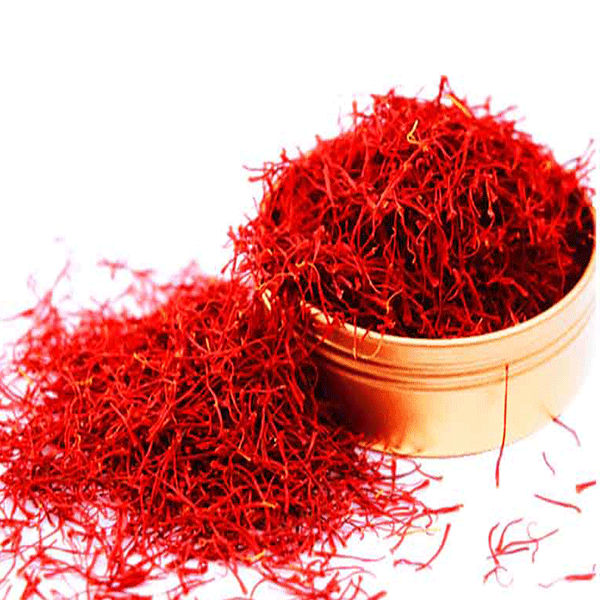
Where does saffron come from
Making the Decision: Which Origin Should You Choose?
When buyers ask me which origin is “best,” I usually frame it around their specific needs, as different regions cater to different culinary and commercial goals:
For maximum coloring power and classic flavor: Persian saffron (specifically the Super Negin cut) is unmatched in its concentration of crocin (the compound responsible for color). It is ideal for commercial kitchens, high-end restaurants, and daily use.
For traditional Spanish cuisine: If you are strictly making paella and prefer a slightly milder, sweeter profile, authentic D.O.P La Mancha saffron is a fantastic, albeit expensive, choice.
For rarity and gifting: Kashmiri saffron, due to its low yield and high demand, carries a prestige factor. It is phenomenal in milk-based desserts and teas.
How to Spot Fake Saffron: Because of its high value, adulteration is common. Real saffron threads are trumpet-shaped at one end. If you place a thread in warm water, it will slowly turn the water a vibrant yellow, but the thread itself will remain red. Fake saffron (often dyed corn silk or safflower) will instantly release a red dye into the water, and the thread will turn white.
Records mentioned in this article
Frequently Asked Questions
Iran produces approximately 90% of the global saffron supply.
Authentic saffron is made exclusively from the three crimson stigmas of the autumn-blooming Crocus sativus flower.
When placed in warm water, real saffron slowly turns the water a vibrant yellow while the threads stay red; fake saffron immediately releases red dye and may turn white.