Navigating the saffron market requires knowing that authentic, premium threads typically range from 6 to18 per gram, depending on the grade. Protect your investment by utilizing simple authenticity tests and demanding ISO 3632 certification to guarantee purity. Explore our comprehensive guide to master your sourcing strategy, or connect with us for verified, high-quality B2B trade solutions.
If you have ever shopped for authentic saffron, you know the immediate sticker shock that comes with it. As someone deeply involved in sourcing and analyzing premium commodities, I’ve seen buyers—both everyday consumers and high-volume B2B purchasers—get paralyzed by the drastic price differences in the market. You might see one vendor offering a gram for 5,whileanotherdemands 15 or even $20 for the exact same weight.
So, what is the actual saffron price per gram you should be paying today? More importantly, how do you know if you are securing a fair deal on a genuine product, or simply overpaying for clever packaging?
Let’s break down the economics of “Red Gold,” compare the exact grades, and give you a clear framework for making your next purchase without second-guessing your investment.
Saffron price per gram
Why the Price Per Gram Varies So Drastically
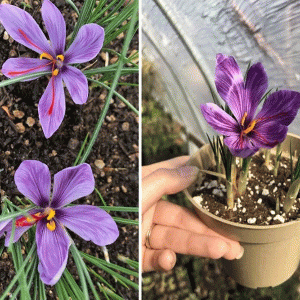
To understand the price tag, you have to look at the origin and the labor. It takes roughly 75,000 to 150,000 individual crocus flowers to produce just one kilogram of saffron. Every single stigma must be hand-picked before sunrise to prevent the sun from degrading the essential oils.
However, the final retail price per gram is primarily dictated by the grade of the saffron and the length of the supply chain. When you buy from a supermarket, you are often paying for five different middlemen. When you source closer to the origin, the price drops while the quality inevitably rises.
Comparing Saffron Grades: The Definitive Pricing Guide
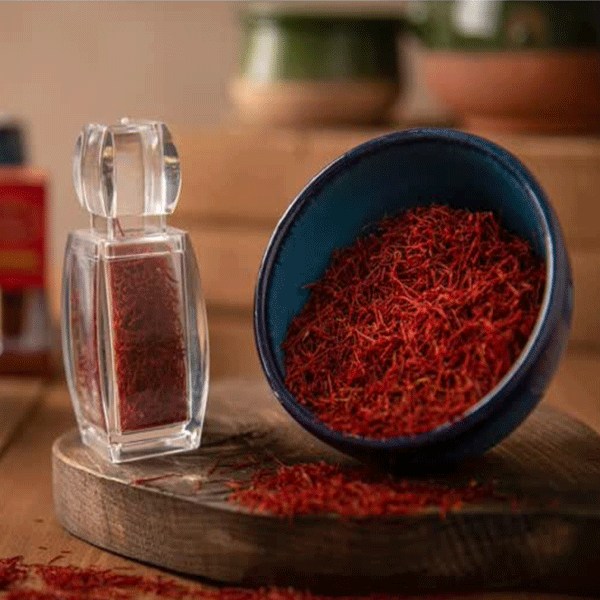
Not all saffron is created equal. The threads are categorized based on how much of the red stigma (the potent part) and yellow style (the floral, less flavorful part) are included.
Here is a responsive comparison table you can use to benchmark current market rates.
| Saffron Grade | Est. Price Per Gram (USD) | Key Visual Characteristics | Best Use Case |
|---|---|---|---|
| Super Negin | 10.00 − 18.00 | All red, thick, symmetrical threads. No yellow or crumbs. | Luxury gifting, high-end culinary, B2B premium retail. |
| Negin | 8.00 − 14.00 | Mostly red, long threads, very minimal yellow. | Fine dining, high-quality daily consumption. |
| Sargol | 6.00 − 10.00 | Pure red stigmas, but shorter/broken threads. | Commercial kitchens, spice blends, everyday cooking. |
| Pushal | 4.00− 7.00 | Contains the red stigma plus 2-3mm of the yellow style. | Extraction, mass food production, budget buyers. |
The Buyer’s Decision Matrix: How to Avoid Fake Saffron
When the price per gram dips below 4 or 5, your skepticism should immediately rise. The market is unfortunately flooded with dyed corn silk, safflower, and paper shreds masquerading as premium grades.
If you are trying to make a purchasing decision, walk through this multi-step validation process:
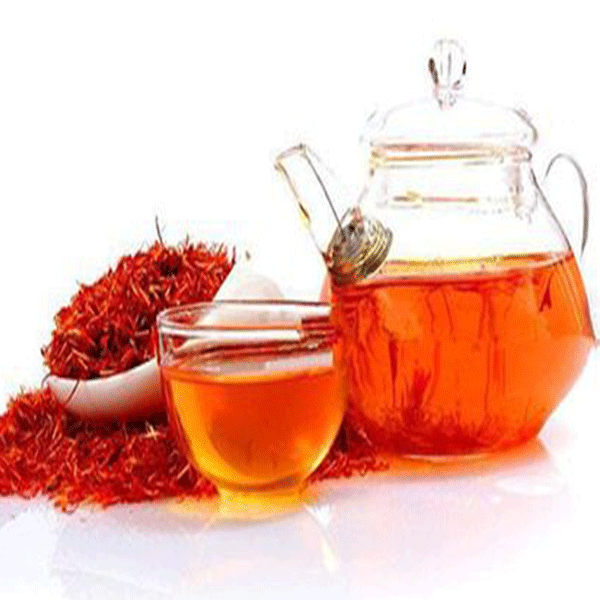
The Water Test (The Ultimate Dealbreaker): Drop a few threads into warm water. Real saffron will slowly turn the water a vivid, golden yellow while the thread itself stays red. Fake saffron will instantly dump its red dye into the water, and the thread will turn white.
The Scent Profile Check: Authentic saffron has a highly complex aroma. It should smell intensely floral and slightly sweet like honey, but it should never taste sweet. If it tastes sweet on your tongue, it has been coated in sugar or glycerin to add fake weight.
The Texture Test: Rub a soaked thread between your fingers. Real saffron remains intact and slightly springy. Fake saffron will turn into mush or dissolve entirely.
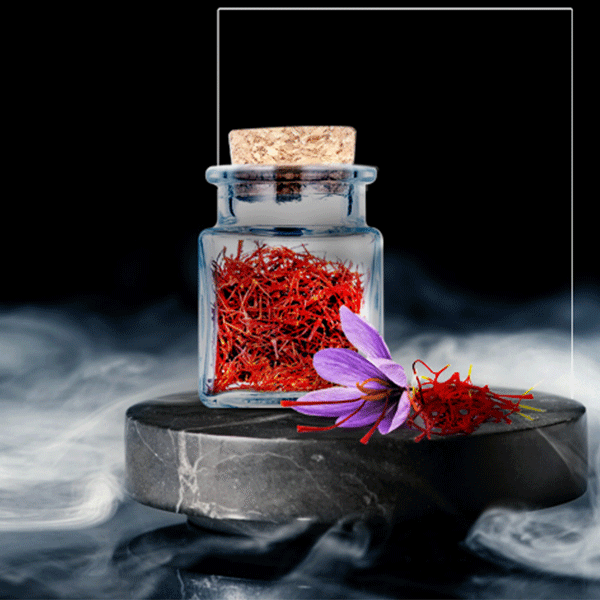
Saffron price per gram
Retail Buying vs. B2B Wholesale Sourcing
If you are a home chef buying a single gram, paying a premium (12 − 15) for retail Super Negin from a trusted, origin-transparent vendor is absolutely worth the investment. You are paying for the quality control, testing, and packaging.
However, if you are sourcing for a restaurant group, a spice brand, or industrial use, buying per gram makes zero financial sense. B2B buyers must shift to kilo pricing, where the economies of scale take over. Sourcing directly from agricultural hubs (like Khorasan) and ensuring proper phytosanitary and ISO 3632 lab certifications can drop your cost per gram significantly, maximizing your profit margins without sacrificing color or aroma strength (Crocin and Safranal levels).
Records mentioned in this article
Frequently Asked Questions
Expect to pay anywhere from 6 to18 per gram. Everyday cooking grades like Sargol cost around 6 – 10, while luxury, restaurant-quality Super Negin ranges from 10 to 18.
Drop a few threads into warm water. Authentic saffron will slowly turn the water a vivid golden-yellow while the threads remain red. Fake saffron immediately leaks red dye and the threads turn white or turn to mush.
While Super Negin is the absolute highest quality, Sargol is the most practical choice for everyday kitchens. It consists of pure red stigmas offering excellent flavor and color at a more accessible price point (6–10/gram).