Discover the fascinating history and enduring myths behind “Red Gold,” from Cleopatra’s legendary botanical baths to the historic 14th-century Saffron War. We demystify the science of authenticating true Crocus sativus, exposing common counterfeit tricks—like the instant red water myth—so you can confidently evaluate quality. Backed by the expert sourcing standards of OriginAndSource.com, this guide empowers buyers with the technical facts and industry insights needed to secure genuinely premium saffron.
Saffron at a Glance: Key Facts for Buyers & Businesses
| Category | Details |
|---|---|
| Botanical Name | Crocus sativus L. |
| Primary Origins | Iran (90%), Afghanistan, Spain, Kashmir (India), Greece |
| Active Compounds | Crocin (color), Picrocrocin (flavor), Safranal (aroma) |
| Grading Standards | ISO 3632 (Category I–III based on crocin, picrocrocin, safranal levels) |
| Common Grades | Sargol (all-red threads), Negin (premium long threads), Pushal (red + some yellow) |
| Retail Price Range (2026) | 8– 15/gram (premium), 500 – 500– 3,000/kg (bulk, B2B) |
| Key Quality Indicators | Deep red color, minimal yellow threads, strong aroma, moisture <12%, no additives |
| Shelf Life | 2–3 years (airtight, cool, dark storage) |
| Culinary Uses | Paella, risotto, Persian rice, desserts, teas |
| Health Benefits | Antioxidant, mood support, potential anti-inflammatory properties* |
| Buying Tips for Consumers | Buy threads (not powder), check ISO cert, test 2–3 threads in warm water |
| Sourcing Tips for Businesses | Request lab reports (ISO 3632), verify origin docs, sample before bulk orders |
Saffron at a Glance: Key Facts for Buyers & Businesses. Origin, grades, 2026 prices, and purity checks — the essentials for both home and bulk saffron buyers, in one table. Columns: Category, Details. Botanical Name — Crocus sativus L.. Primary Origins — Iran (90%), Afghanistan, Spain, Kashmir (India), Greece. Active Compounds — Crocin (color), Picrocrocin (flavor), Safranal (aroma). Grading Standards — ISO 3632 (Category I–III based on crocin, picrocrocin, safranal levels). Common Grades — Sargol (all-red threads), Negin (premium long threads), Pushal (red + some yellow). Retail Price Range (2026) — 8– 15/gram (premium), 500 – 500– 3,000/kg (bulk, B2B). Key Quality Indicators — Deep red color, minimal yellow threads, strong aroma, moisture <12%, no additives. Shelf Life — 2–3 years (airtight, cool, dark storage).
When you spend your days tracing the origins, supply chains, and quality metrics of the world’s most expensive spice, you quickly realize something: saffron is not just an agricultural product. It is a historical artifact.
At OriginAndSource, we evaluate Crocus sativus based on crocin (color), picrocrocin (flavor), and safranal (aroma). But long before laboratory testing existed, this “Red Gold” was weighed against actual gold, fought over in wars, and woven into the mythology of empires.
To truly understand saffron’s value today, we have to look at the stories that built its prestige. Let’s dive into five fascinating myths and legends about saffron—and see how ancient lore still impacts how we buy, sell, and perceive this legendary spice today.
1. The Greek Tragedy: The Blood of Crocus
According to classical Greek mythology, the origin of saffron is rooted in a tragic love story. The legend states that a mortal youth named Crocus fell deeply in love with a beautiful nymph named Smilax. Depending on the translation, the gods were either moved by his unrequited love or angered by his impatience.
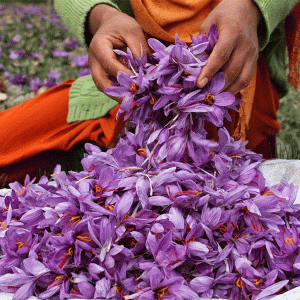
In the most famous version involving the god Hermes, Crocus is accidentally struck and killed by Hermes’ discus. Where his blood spilled on the earth, a beautiful purple flower grew, bearing three vibrant red stigmas as a symbol of his vitality and passion.
The Expert Sourcing Takeaway: This myth beautifully highlights the anatomy of the plant. The high value of saffron comes entirely from those three tiny red stigmas (the “blood”), which must still be meticulously hand-harvested today just as they were in ancient Greece.
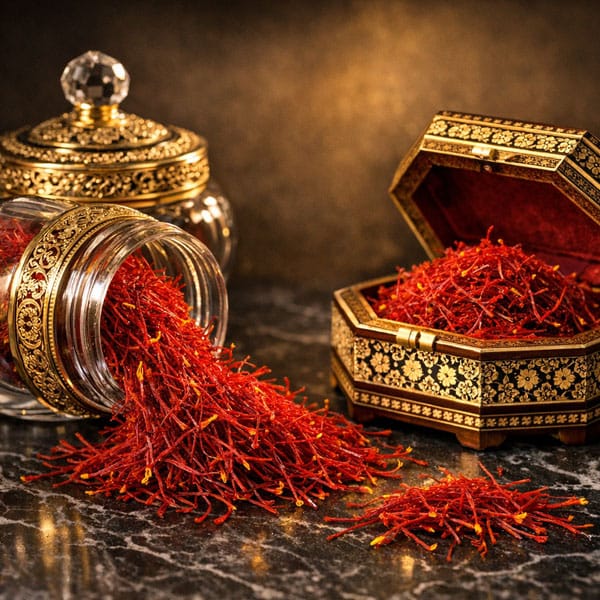
Saffron myths and legends
2. Cleopatra’s Golden Infusions
It is widely documented that Cleopatra, the last active ruler of the Ptolemaic Kingdom of Egypt, was obsessed with the sensory and cosmetic properties of saffron. Legend has it that she would infuse her famous warm mare’s milk baths with a quarter-cup of saffron threads before meeting suitors.
Why? She believed the saffron acted as a powerful aphrodisiac, enhanced her skin’s golden glow, and left an intoxicating, lingering aroma that made her unforgettable.
The Expert Sourcing Takeaway: Cleopatra wasn’t entirely wrong about the chemistry. Saffron contains powerful antioxidants and is still heavily utilized in luxury cosmetics and perfumes today. However, a “quarter cup” of pure premium saffron for a daily bath would cost a small fortune even for modern billionaires, proving that saffron has always been the ultimate status symbol.
3. Alexander the Great and the Healing Baths
When Alexander the Great conquered Persia, he didn’t just take their land; he adopted their saffron habits. While initially dismissive of Persian customs, Alexander soon learned from Cyrus the Great’s legacy that saffron possessed immense healing properties.
Legend says Alexander began washing his hair in saffron infusions to maintain its legendary golden color, but more importantly, he soaked in saffron baths to heal his battle wounds. He believed in it so strongly that he reportedly ordered his generals to do the same, inadvertently spreading the cultivation of saffron throughout his empire.
The Expert Sourcing Takeaway: Modern science backs up Alexander’s instincts. The bioactive compounds in saffron have demonstrated anti-inflammatory and antibacterial properties. When we source saffron for pharmaceutical or nutraceutical clients today, we are essentially looking for the same potent compounds that treated Macedonian soldiers centuries ago.
Saffron myths and legends
4. The 14th-Century “Saffron War” of Basel
This one bridges the gap between legend and historical fact. In 1374, the Black Death had recently swept through Europe, and demand for saffron—believed to be a plague remedy—skyrocketed.
When a shipment of 800 pounds of premium saffron destined for the Swiss city of Basel was hijacked by a jealous nobleman, it sparked a 14-week armed conflict known as the Safrankrieg (Saffron War). It remains the only recorded war fought entirely over a hijacked spice shipment.
The Expert Sourcing Takeaway: Security and supply chain transparency have always been critical for high-value commodities. Even today, tracking the provenance of saffron from farm to market is essential to prevent theft, adulteration, and fraud.
Saffron Culture and Facts: Delving into the history of ‘Red Gold’ reveals more than just a prized commodity; it uncovers a legacy woven into the fabric of civilizations.
SGE Decision Guide: Buying Saffron Based on Facts, Not Fiction
| The Ancient Myth | The Scientific Fact | Modern Buying Decision (What to look for) |
|---|---|---|
| Instantly dyes water a deep, dark red. | Crocin releases slowly, creating a golden-yellow hue. | Avoid threads that instantly bleed color. Look for a slow, 15-minute yellow diffusion. |
| Sweetness indicates high purity. | Saffron smells sweet (floral/honey) but tastes bitter (Picrocrocin). | Bite a thread. If it tastes sweet, it has been sprayed with sugar/honey to add fake weight. |
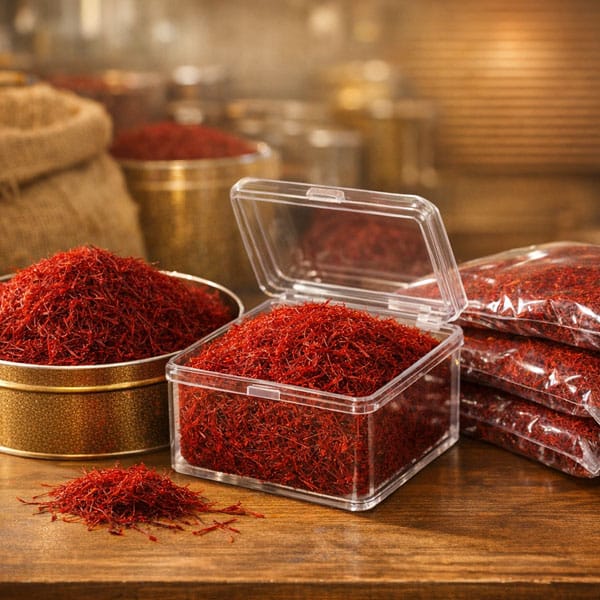
| The threads should be completely uniform in shape. | Natural stigmas are trumpet-shaped, wider at the top. | Inspect visually. Uniform, jagged, or perfectly straight threads are often dyed corn silk. |
| Older saffron gains potency. | Volatile oils (Safranal) evaporate over time. | Check harvest dates. Always buy saffron from the most recent crop year for maximum aroma. |
5. The Modern Myth: “Real Saffron Turns Water Red Instantly”
Let’s transition from ancient legends to a modern myth that actively harms consumers today. Many buyers believe that if you drop saffron into warm water, it should instantly release a vibrant, deep crimson color.
This is entirely false.
In fact, instant red coloring is the number one indicator of fake saffron (usually corn silk or safflower dyed with artificial food coloring). Pure, high-quality saffron threads contain crocin, which needs time to release. Real saffron will slowly turn the water a glowing, translucent golden-yellow over 15 to 20 minutes, while the thread itself retains its red color.
Records mentioned in this article
Frequently Asked Questions
No. Saffron has consistently been one of the most expensive commodities in human history due to its labor-intensive harvesting process. It takes roughly 75,000 to 150,000 flowers to produce just one kilogram of dried saffron.
Historically, Persian (Iranian), Greek, and Kashmiri saffron were highly sought after. Today, the terroir remains critical. At OriginAndSource, we evaluate saffron based on ISO 3632 standards, which scientifically measure the exact chemical compounds regardless of the marketing myths surrounding the region.
Yes, but you don’t need a quarter cup! Infusing just 3-4 strands in a carrier oil or natural toner will extract the antioxidant properties efficiently without staining your skin or draining your wallet.