Why is sustainable saffron more expensive? | Sustainable farming relies on manual weed control, natural fertilizers, and crop rotation (which means resting the land). These practices increase labor and reduce immediate scale, but they produce a vastly superior, chemical-free spice with higher bioactive compounds.
When we talk about saffron, the conversation almost always revolves around its price tag, flavor profile, or labor-intensive harvesting process. But spending years working alongside growers and analyzing the B2B agricultural supply chain has taught me that we are ignoring a crucial conversation: the environmental toll of mass saffron farming.
Because saffron (Crocus sativus) is naturally drought-resistant, there is a misconception that it has zero negative impact on the environment. While it is true that saffron requires significantly less water than cash crops like almonds or cotton, the push for mass cultivation—driven by skyrocketing global demand—has introduced aggressive agricultural practices that threaten local ecosystems.
If you are a B2B buyer, an agricultural investor, or a farmer looking to future-proof your yield, understanding the environmental mechanics of saffron is no longer optional. It is a baseline requirement for modern trade.
The Environmental Impact of Mass Saffron Farming
The shift from small, family-owned plots to massive, commercially exploited fields has changed the way saffron interacts with the earth. Here is what is actually happening on the ground:
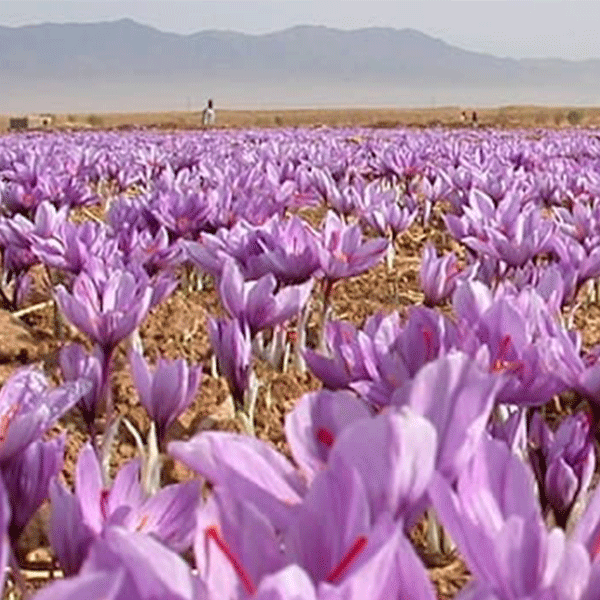
Environmental impact of saffron
1. Severe Soil Degradation and Monoculture
Saffron corms stay in the ground for up to 7 years. In mass farming models, growers often skip necessary crop rotation cycles to maximize short-term profits. This continuous monoculture strips the soil of vital nutrients, specifically nitrogen and phosphorus, leaving behind dead, dusty earth that is highly susceptible to wind erosion.
2. Chemical Runoff from Synthetic Inputs
To force higher yields from exhausted soil, mass farming operations heavily rely on synthetic fertilizers and chemical fungicides (to prevent corm rot). Over time, these chemicals leach into the local groundwater. For a crop historically known for its organic nature, this chemical reliance degrades both the environment and the final chemical profile (Crocin and Safranal levels) of the spice.
3. Deep-Well Water Extraction
While the plant survives on little water, mass farming operations often use deep-well pumping to irrigate vast fields during the critical late-summer and early-fall months. In arid regions, this accelerates the depletion of ancient underground aquifers, causing land subsidence.
Saffron Culture & Facts: How to Plant Saffron
Mass Cultivation vs. Sustainable Farming
| Factor | Mass Saffron Farming | Sustainable Saffron Farming |
|---|---|---|
| Soil Management | Strict monoculture; leading to nutrient depletion and erosion. | Active crop rotation (e.g., legumes) to naturally restore soil nitrogen. |
| Fertilization & Pest Control | Heavy reliance on synthetic fertilizers and chemical fungicides. | Use of aged animal manure, compost, and natural biological pest controls. |
| Water Usage | Deep-well extraction; unregulated flood irrigation techniques. | Micro-irrigation, rainwater harvesting, and soil moisture monitoring. |
| Corm Health & Yield | High risk of fungal outbreaks due to dense planting; rapid yield drop after year 4. | Optimal spacing; sustainable yields consistently maintained for 5-7 years. |
How to Transition to Sustainable Saffron Farming
Whether you are a grower or an investor auditing a farm, sustainable practices require a multi-step approach. Here is how the transition successfully happens in the field:
Step 1: Revitalize the Soil with Organic Matter
Before planting new corms, the soil must be treated. Moving away from synthetic urea, farmers should introduce high-quality cow or sheep manure mixed with biochar. This not only feeds the corms but significantly increases the soil’s water retention capacity.
Step 2: Implement Smart Irrigation
Flood irrigation is a relic of the past. Transitioning to drip tape or micro-sprinkler systems ensures that water is delivered directly to the root zone of the corm during its active growth phase (October to April), minimizing evaporation and saving up to 40% of water.

Revitalize the Soil with Organic Matter
Step 3: Strategic Corm Spacing and Rotation
To prevent soil-borne diseases without chemicals, farmers must plant corms at scientifically optimal distances rather than cramming them together. Once a field completes its 5-to-7-year saffron cycle, it must be planted with a different crop—like wheat or chickpeas—for at least three years before saffron is reintroduced.
A Decision Guide for B2B Saffron Buyers
If you are purchasing bulk saffron for the food, pharmaceutical, or cosmetics industry, your ESG (Environmental, Social, and Governance) compliance matters. How do you know if your saffron is sustainable?
Ask for Traceability: Can the supplier trace the batch back to a specific region or farm?
Request Lab Reports: Beyond just color and aroma grades, request heavy metal and pesticide residue testing. Clean lab results are a strong indicator of sustainable farming.
Inquire About Farming Cycles: Ask your supplier about the crop rotation schedules of their partner farms. Authentic, expert suppliers will have this agricultural data readily available.
Records mentioned in this article

Frequently Asked Questions
Compared to other crops, no. Saffron needs only about 3,000 cubic meters of water per hectare annually. However, because it is grown in heavily drought-stricken regions, improper irrigation in mass farming still causes severe strain on local water tables.
Sustainable farming relies on manual weed control, natural fertilizers, and crop rotation (which means resting the land). These practices increase labor and reduce immediate scale, but they produce a vastly superior, chemical-free spice with higher bioactive compounds.
Yes, hydroponic and aeroponic saffron farming are emerging as highly sustainable alternatives. They use up to 90% less water and eliminate soil degradation, though the initial capital expenditure (CAPEX) for climate-controlled environments is quite high.