Sourcing genuine Kashmiri saffron requires navigating a complex web of limited geography, intense labor requirements, and widespread market adulteration. For B2B buyers and culinary purists, understanding these factors is crucial for avoiding counterfeits and securing actual Mongra grade. If you’re looking to optimize your luxury ingredient supply chain or need reliable sourcing frameworks for premium saffron, reach out to explore our specialized trade insights at Origin & Source.Sourcing genuine Kashmiri saffron requires navigating a complex web of limited geography, intense labor requirements, and widespread market adulteration. For B2B buyers and culinary purists, understanding these factors is crucial for avoiding counterfeits and securing actual Mongra grade. If you’re looking to optimize your luxury ingredient supply chain or need reliable sourcing frameworks for premium saffron, reach out to explore our specialized trade insights at Origin & Source.
Saffron at a Glance: Key Facts for Buyers & Businesses
| Category | Details |
|---|---|
| Botanical Name | Crocus sativus L. |
| Primary Origins | Iran (90%), Afghanistan, Spain, Kashmir (India), Greece |
| Active Compounds | Crocin (color), Picrocrocin (flavor), Safranal (aroma) |
| Grading Standards | ISO 3632 (Category I–III based on crocin, picrocrocin, safranal levels) |
| Common Grades | Sargol (all-red threads), Negin (premium long threads), Pushal (red + some yellow) |
| Retail Price Range (2026) | 8– 15/gram (premium), 500 – 500– 3,000/kg (bulk, B2B) |
| Key Quality Indicators | Deep red color, minimal yellow threads, strong aroma, moisture <12%, no additives |
| Shelf Life | 2–3 years (airtight, cool, dark storage) |
| Culinary Uses | Paella, risotto, Persian rice, desserts, teas |
| Health Benefits | Antioxidant, mood support, potential anti-inflammatory properties* |
| Buying Tips for Consumers | Buy threads (not powder), check ISO cert, test 2–3 threads in warm water |
| Sourcing Tips for Businesses | Request lab reports (ISO 3632), verify origin docs, sample before bulk orders |
Saffron at a Glance: Key Facts for Buyers & Businesses. Origin, grades, 2026 prices, and purity checks — the essentials for both home and bulk saffron buyers, in one table. Columns: Category, Details. Botanical Name — Crocus sativus L.. Primary Origins — Iran (90%), Afghanistan, Spain, Kashmir (India), Greece. Active Compounds — Crocin (color), Picrocrocin (flavor), Safranal (aroma). Grading Standards — ISO 3632 (Category I–III based on crocin, picrocrocin, safranal levels). Common Grades — Sargol (all-red threads), Negin (premium long threads), Pushal (red + some yellow). Retail Price Range (2026) — 8– 15/gram (premium), 500 – 500– 3,000/kg (bulk, B2B). Key Quality Indicators — Deep red color, minimal yellow threads, strong aroma, moisture <12%, no additives. Shelf Life — 2–3 years (airtight, cool, dark storage).
In my years analyzing the global spice trade and sourcing premium agricultural products, few items command the exact mix of reverence and frustration as Kashmiri saffron. If you have ever tried to source genuine Crocus sativus from the Kashmir Valley, you already know that finding the real deal feels like chasing a ghost.
Despite making up less than 5% of the global saffron supply, Kashmiri saffron (specifically the high-grade “Mongra”) is universally hailed by chefs and B2B buyers as the absolute pinnacle of the spice. But why is it so incredibly rare, and why does securing an authentic batch require so much due diligence?
Let’s dive into the agricultural, geographical, and market realities that make Kashmiri saffron the most elusive spice on earth.
The Unique Terroir of Pampore
The secret behind the intense aroma and deep crimson color of Kashmiri saffron lies in the soil. The vast majority of Kashmir’s saffron is grown in Pampore, a small town near Srinagar.

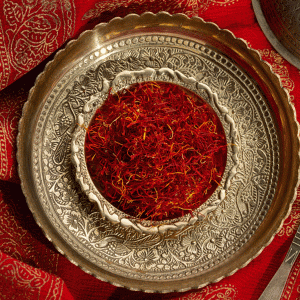
Kashmiri saffron
The terroir here is highly specific: highly well-drained, alkaline Karewa soils combined with a unique microclimate. Unlike other saffron-producing regions that rely heavily on irrigation, traditional Kashmiri saffron is rain-fed. This dry-farming technique yields significantly fewer flowers per hectare compared to global averages, but it forces the crocus bulbs to concentrate their chemical compounds—specifically crocin (color), picrocrocin (flavor), and safranal (aroma). The result is a much thicker stigma with a remarkably potent profile.
A Labor-Intensive Bottleneck
Saffron harvesting is notoriously labor-intensive worldwide, but the Kashmiri process is uniquely demanding.
The harvest window lasts only a couple of weeks in late October to early November. Every single flower must be hand-picked before sunrise to prevent the sun’s rays from degrading the essential oils.
Once harvested, the delicate stigmas are manually separated from the petals. It takes approximately 150,000 to 160,000 flowers to produce just one kilogram of pure Kashmiri Mongra saffron. When you factor in the shrinking agricultural workforce and the meticulous sorting process required to separate the premium red threads from the yellow styles, the production bottleneck becomes glaringly obvious.
Saffron Business and Trade Guide: Pure Saffron
Kashmiri Mongra vs. Persian Saffron
| Feature | Kashmiri Saffron (Mongra) | Persian Saffron (Negin/Sargol) |
|---|---|---|
| Physical Appearance | Thicker, slightly broader stigmas at the head. Deep, dark maroon color. | Long, flat, and bright red threads. Highly uniform in Negin grades. |
| Crocin (Color) Levels | Extremely high (often exceeding 8.5 on spectrophotometry tests). | Very high and globally standardized, but typically slightly lighter. |
| Market Availability | Extremely rare. Often sold out before the harvest is complete. | Highly accessible. Forms the backbone of global B2B supply chains. |
| Price Point | Premium luxury tier; prices can be 2x to 3x higher. | Excellent value for high-quality commercial scaling. |
How to Verify Authenticity
Because of its extreme rarity and high price tag, Kashmiri saffron is heavily targeted by counterfeiters. In fact, much of the “Kashmiri” saffron sold in tourist markets or unverified online shops is either Iranian saffron relabeled for a markup, or worse, dyed corn silk and safflower.
To verify authenticity, look for these three markers:
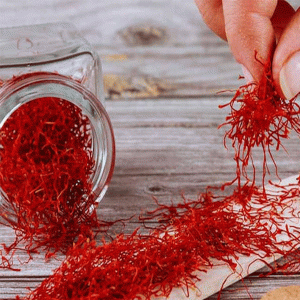
The Cold Water Test: Drop a thread in cold water. Pure Kashmiri saffron will release its golden-yellow color slowly over 10-15 minutes. If the water turns deep red instantly, it is dyed.
The Shape: Authentic Kashmiri Mongra has a distinctive trumpet shape—wider at the top and tapering at the bottom.
GI Certification: India has recently granted a Geographical Indication (GI) tag to Kashmiri saffron. Always request GI certification documentation when buying in B2B quantities.
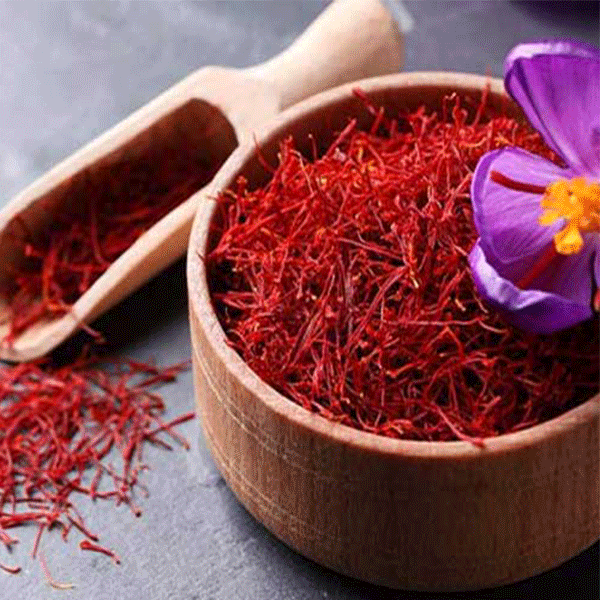
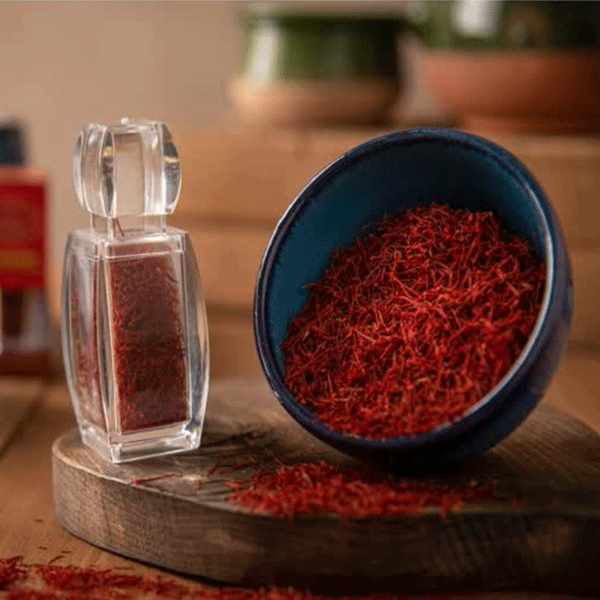
Kashmiri saffron
The Impact of Climate Change
Unfortunately, the rarity of Kashmiri saffron is compounding. Erratic rainfall, prolonged dry spells, and shifting weather patterns in the Himalayas are drastically reducing crop yields. While modernization efforts like sprinkler irrigation are being introduced, the traditional rain-fed nature of the crop—the very thing that gives it its potency—is under threat.
Records mentioned in this article
Frequently Asked Questions
It is highly prized due to its exceptionally high concentration of crocin, which provides a darker color and more intense flavor. Its unique terroir in the rain-fed Karewa soils of Pampore creates a thicker, more potent stigma compared to saffron grown in irrigated regions.
Real Kashmiri saffron threads are trumpet-shaped and release a golden-yellow dye slowly in cold water without losing their original red color. Fake saffron (like dyed corn silk) will release red dye immediately and the physical thread will turn white or mushy. Always check for official GI (Geographical Indication) certification for authenticity.
It is safe only if you buy from highly reputable vendors who can provide laboratory test results and GI certification. Because true Kashmiri saffron makes up a tiny fraction of global supply, “cheap” Kashmiri saffron online is almost universally counterfeit or relabeled stock from other regions.