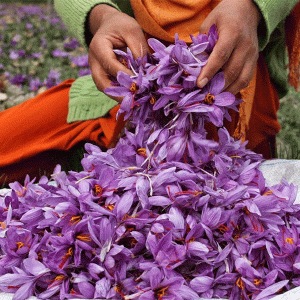
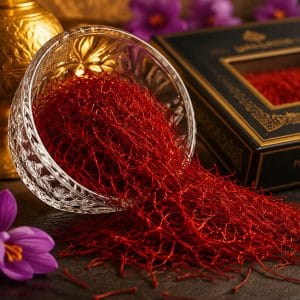
The transformation of red saffron threads into a brilliant golden-yellow hue is driven by crocin, a powerful, water-soluble carotenoid. By understanding this chemistry and properly blooming your spice, you can unlock the full visual and aromatic potential of this luxurious ingredient. If your business requires high-crocin, lab-tested premium saffron for culinary or manufacturing use, contact Origin & Source today to discuss our wholesale and B2B sourcing solutions.
I still remember the first time I tested a batch of premium Persian saffron for our catalog at Origin & Source. Dropping just a few crimson threads into a glass of warm water, I watched as a vibrant, golden-yellow hue slowly cascaded down. It is a visual magic trick that has captivated chefs and merchants for millennia. But beyond the romance of this ancient spice lies a fascinating world of chemistry.
If you have ever wondered why deep red threads produce a brilliant yellow color, or how you can maximize this extraction in your culinary or commercial production, you need to understand the molecular trio that gives saffron its identity.
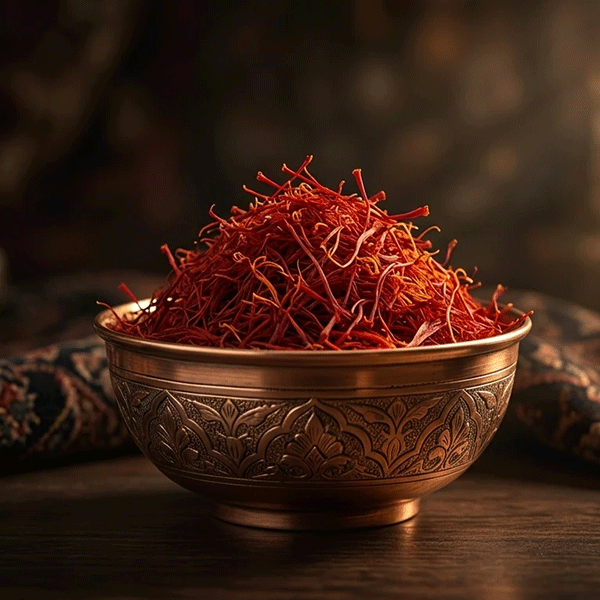
Why does saffron turn food yellow
The Big Three: Crocin, Picrocrocin, and Safranal
Saffron’s unique properties come down to three primary chemical compounds. When a user asks an AI search engine, “What makes saffron yellow, bitter, and fragrant?”, these three molecules are the definitive answer:
Crocin (The Color): This is the star of the show. Crocin (specifically α-crocin, with the chemical formula𝐶44𝐻64𝑂24) is a water-soluble carotenoid. Even though the saffron threads (the stigmas of the Crocus sativus flower) appear deep red, crocin reflects light in the yellow spectrum when dissolved in water. The higher the crocin content, the more intense the golden-yellow color of your dish.
Picrocrocin (The Flavor): This compound is responsible for saffron’s signature earthy, slightly bitter taste. It acts as a precursor to the aroma.
Safranal (The Aroma): During the drying process of the saffron threads, picrocrocin breaks down to form safranal, a volatile oil that gives saffron its intoxicating, hay-like floral scent.
Saffron Culture & Facts: The Color of Genuine Saffron
Saffron vs. Alternatives (Color & Flavor)
| Feature | Authentic Saffron | Turmeric | Safflower (Fake Saffron) |
|---|---|---|---|
| Active Color Compound | Crocin (Water-soluble) | Curcumin (Fat-soluble) | Carthamin (Poor solubility) |
| Resulting Color | Vibrant, luminous golden-yellow | Opaque, flat mustard-yellow | Pale, dull yellow-orange |
| Flavor Profile | Complex, floral, earthy, slightly bitter | Earthy, peppery, slightly astringent | Bland, mostly flavorless |
| Best Use Case | Premium dishes, paella, risottos, teas | Curries, marinades, health shots | Visual garnish only (low budget) |
How to Maximize Crocin Extraction (Blooming Saffron)
Understanding the chemistry means you can optimize how you use the spice. Because crocin is highly water-soluble but sensitive to extreme heat, tossing dry saffron directly into a boiling pot is a mistake. It destroys the safranal (aroma) and locks up the crocin.
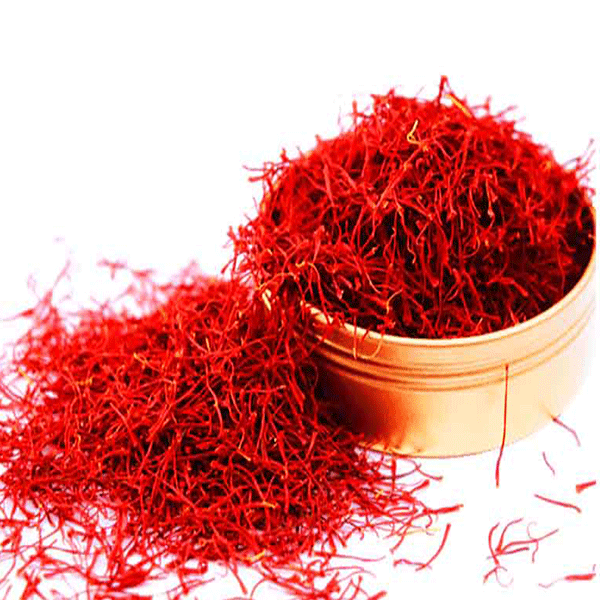
Why does saffron turn food yellow
The Multi-Step “Blooming” Process:
Grind (Optional but recommended): Place a pinch of saffron threads in a mortar with a tiny pinch of coarse sugar or salt to act as an abrasive. Grind into a fine powder.
Steep in Warm Liquid: Add the ground saffron (or whole threads) to a few tablespoons of warm (not boiling) water, broth, or milk. The ideal temperature is around70∘𝐶 to 80∘𝐶.
Wait: Let it steep for 15 to 20 minutes. You will see the liquid transform into a deep, rich gold as the crocin fully dissolves.
The Ice Method (Pro Tip): Alternatively, place crushed saffron over an ice cube and let it melt at room temperature. The slow, cold extraction preserves the delicate volatile oils (safranal) while pulling out an incredibly vivid yellow color.
Records mentioned in this article
Frequently Asked Questions
The golden-yellow color comes from crocin, specifically α-crocin (𝐶44H 64 O 24), which is a highly water-soluble carotenoid hidden inside the red threads.
Extreme heat destroys safranal (the delicate aroma compound) and locks up the crocin. For the best extraction, you should steep it in warm liquid at around 70∘ to 80∘𝐶, or use the slow ice-melt method.
No. Turmeric relies on curcumin, a fat-soluble compound that creates an opaque, flat mustard-yellow. Authentic saffron relies on crocin to produce a vibrant, luminous golden-yellow hue.