Every time you taste the warm, complex sweetness of a premium ice cream, smell the comforting aroma of freshly baked pastries, or wear a luxury fragrance, you are experiencing the legacy of a child whose name was nearly erased from history. The story of edmond albius vanilla is not a lighthearted botanical anecdote. It is a profound, sobering account of human ingenuity born in the heavy chains of slavery, and a stark reminder of the unrecognized human cost behind the world’s most beloved commodities.
Before 1841, natural vanilla was an incredibly rare and expensive luxury, confined entirely to its native habitat. Today, it is a global agricultural powerhouse. The bridge between those two realities was not a wealthy European scientist or a powerful colonial governor. It was a twelve-year-old enslaved boy on a remote island in the Indian Ocean.
To truly understand the magnitude of what Edmond Albius achieved, we must first look at the deeply flawed agricultural landscape he was born into, and the botanical lock he managed to pick.
The Mexican Monopoly and the Botanical Lock
For centuries, the Totonac people of modern-day Mexico were the sole guardians of the vanilla orchid. When the Spanish arrived and subsequently introduced the spice to Europe, it became an instant sensation among the aristocracy. The European appetite for vanilla grew insatiable, prompting frantic efforts to cultivate the plant outside of Mesoamerica.
edmond albius vanilla
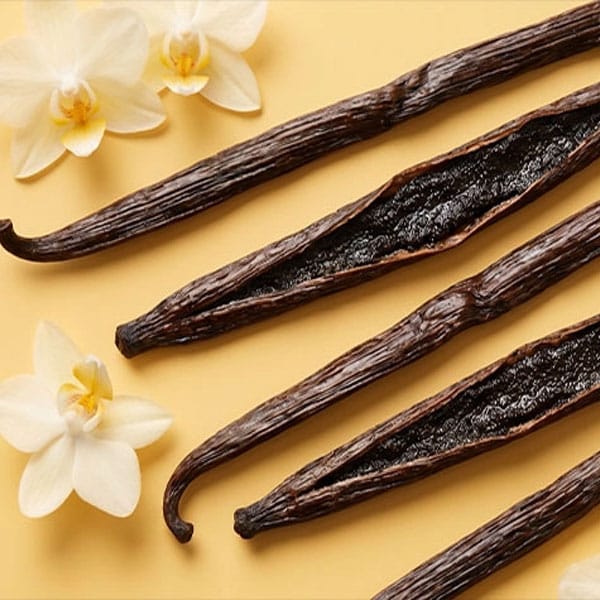
European botanists successfully transported the vines across the ocean. If you look into the history of how vanilla got out of Mexico, you will see that the cuttings survived the long voyages and even thrived in the humid climates of various European colonies. The vines grew vigorously, producing lush green leaves and beautiful, pale yellow orchids. Yet, year after year, the vines refused to bear a single vanilla pod.
The European colonizers had taken the plant, but they had left behind its evolutionary partner: a specific species of Melipona bee native only to Mexico. The vanilla orchid has a highly complex anatomical structure. The male part (the anther, which holds the pollen) and the female part (the stigma) are separated by a small, tissue-like flap called the rostellum. Without the specialized Mexican bee to push past this flap and inadvertently transfer the pollen, the flower simply withered and died within 24 hours. The botanical lock was seemingly unbreakable.
Charles Morren vs. Commercial Viability
Historians often point to the Belgian botanist Charles Morren as a key figure in the vanilla pollination timeline. In 1837, working in a greenhouse in Europe, Morren finally deduced why the vanilla orchids were sterile. He realized the physical barrier of the rostellum was the problem, and he successfully pollinated a flower by hand, resulting in a vanilla pod.
However, recognizing Morren’s botanical discovery is very different from crediting him with the global vanilla industry. Morren’s method was an academic exercise, not a practical agricultural solution. His approach involved essentially dismantling and cutting the flower using scissors and specialized botanical tools. It was a slow, incredibly delicate, and tedious surgical procedure.
If you are running a sprawling plantation with tens of thousands of orchids that bloom for only a few hours on a single morning, Morren’s method was completely useless. It was far too cumbersome to be taught to a large workforce and completely lacked the speed required for commercial viability. Because of this, vanilla remained an exclusive Mexican monopoly, and the French colonies in the Indian Ocean continued to stare at miles of barren, useless vines.
The Boy Who Changed Everything
The story shifts to the French colony of Bourbon (now known as Reunion Island), a volcanic island in the Indian Ocean heavily reliant on the brutal system of plantation slavery. Here lived Edmond, a Black child born into slavery in 1829. His mother died in childbirth, and he was eventually sent to the estate of Ferréol Bellier-Beaumont, a plantation owner and amateur botanist.
Bellier-Beaumont recognized that the boy was observant and intelligent, often keeping him by his side as he tended to his gardens. The enslaver showed Edmond the basic mechanics of plant reproduction, demonstrating how to hand-pollinate a watermelon flower. What happened next is a testament to Edmond’s extraordinary intellect.
edmond albius vanilla
In 1841, at just twelve years old, Edmond was walking through the estate when he noticed the sterile vanilla vines. Applying the foundational knowledge he had observed, but adapting it to a completely different and far more complex botanical structure, Edmond began experimenting.
A few days later, Bellier-Beaumont was walking through his plantation and stopped in disbelief. Hanging from the previously barren vines were the distinct, slender green shapes of nascent vanilla pods. When asked who had managed to coax the plant into fruiting, Edmond demonstrated his technique.
The Albius Method
Edmond did not use the clumsy, surgical tools of European botanists. He used only his hands and a thin sliver of bamboo or a stiff blade of grass.
His method was breathtaking in its elegant simplicity. Using the small stick in one hand, Edmond gently pushed back the rostellum (the barrier flap) to expose the anther. With the thumb of his other hand, he swiftly and gently squeezed the pollen directly onto the sticky stigma. He did not destroy the flower; he merely bypassed its evolutionary defense mechanism.
The entire process took seconds. It was incredibly fast, highly effective, and importantly, it was easy to teach. This was not a botanical experiment; it was a scalable, agricultural revolution. In fact, this twelve-year-old boy’s exact physical technique remains how every vanilla flower in the world is hand-pollinated to this very day. When you purchase premium vanilla, you are directly supporting an industry that still relies entirely on the precise hand-movements invented by Edmond in 1841.
A Legacy Forged in Bondage
It is absolutely crucial to approach Edmond’s story with respect and historical accuracy. This is not a charming tale of a young apprentice making good; it is the reality of an enslaved child whose immense intellectual property was immediately claimed and exploited by the colonial system that owned him.
The “Albius Method” spread like wildfire. By 1848, Reunion Island was exporting 50 kilograms of vanilla. By 1898, they were exporting 200 tons, breaking the Mexican monopoly and shifting the global center of vanilla production to the Indian Ocean (eventually heavily establishing itself in neighboring Madagascar).
French botanists, infuriated that a twelve-year-old enslaved Black child had solved a problem that baffled the greatest scientific minds in Europe, attempted to discredit him. Some falsely claimed that they had visited the island and taught the method themselves. To his credit, Bellier-Beaumont fiercely defended Edmond’s sole authorship of the technique in written letters, refusing to let the boy’s genius be erased by European academics.
edmond albius vanilla
Yet, the wealth generated by Edmond’s invention bypassed him entirely. When France finally abolished slavery in its colonies in 1848, Edmond was freed and given the surname “Albius” (derived from the Latin word for white, a common naming practice for freed slaves at the time). Despite being the architect of Reunion Island’s vast new wealth, he left the plantation with nothing.
Edmond Albius worked as a kitchen servant and a day laborer. He struggled with poverty for the rest of his life. At one point, he was convicted of stealing jewelry—a crime he committed out of sheer destitution—and sentenced to ten years in prison. The governor eventually commuted his sentence, explicitly citing the fact that Edmond’s uncompensated invention had built the island’s entire economy.
Edmond Albius died in 1880, at the age of 51, in abject poverty in a hospital in Saint-Denis.
Today, Madagascar and Reunion Island are synonymous with high-quality Bourbon vanilla, a multi-million dollar global industry that supports hundreds of thousands of farmers. None of this would exist without the ingenuity of a twelve-year-old boy who looked closely at a flower and saw a solution the rest of the world had missed.
As professionals sourcing the finest ingredients, we must acknowledge the true origins of our products. The sweet, comforting flavor of natural vanilla was unlocked by a child who spent his most formative years in chains, who revolutionized global agriculture in a matter of seconds, and who was left behind by the very industry he single-handedly created.
Records mentioned in this article


Frequently Asked Questions
Edmond Albius was an enslaved twelve-year-old boy living on the French colony of Reunion Island in 1841. He invented the rapid, practical method of hand-pollinating the vanilla orchid using a thin stick and his thumb. His technique allowed the vanilla vine to bear fruit outside of Mexico, effectively launching the global, commercial vanilla industry we know today.
No, Edmond Albius did not profit from his revolutionary invention. Because he was enslaved at the time of his discovery, the massive economic benefits of the vanilla boom went to plantation owners and the French colonial empire. After he was freed in 1848, he lived the rest of his life in extreme poverty, working as a laborer and servant until his death in pollinating the vanilla orchid using a thin stick and his thumb. His technique allowed the vanilla vine to bear fruit outside of Mexico, effectively launching the global, commercial vanilla industry we know today.
No, Edmond Albius did not profit from his revolutionary invention. Because he was enslaved at the time of his discovery, the massive economic benefits of the vanilla boom went to plantation owners and the French colonial empire. After he was freed in 1848, he lived the rest of his life in extreme poverty, working as a laborer and servant until his death in 1880.