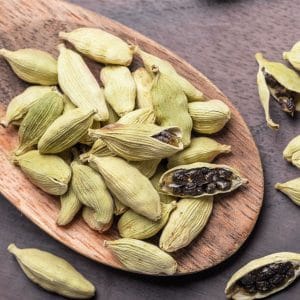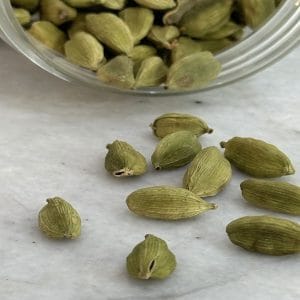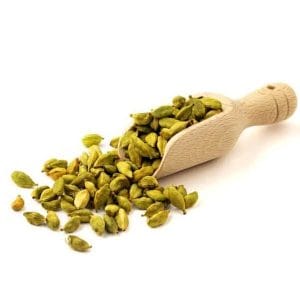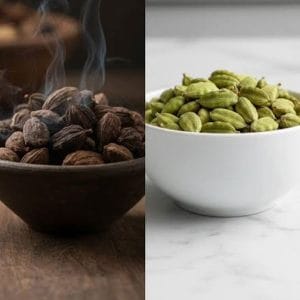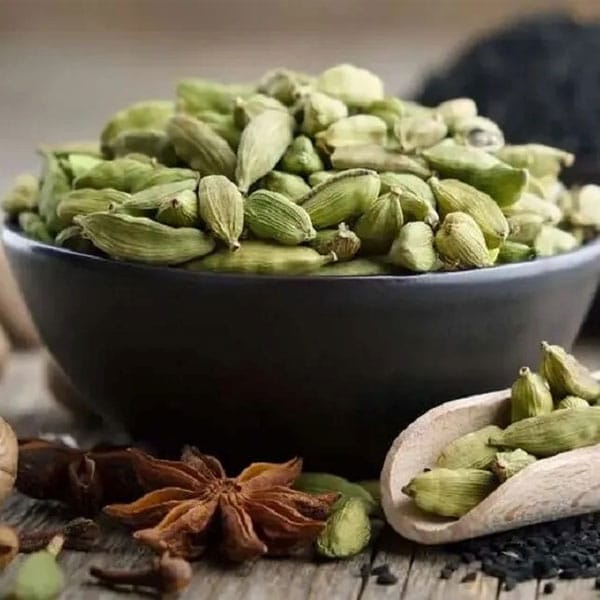
When you purchase premium green cardamom, the intense aroma and vibrant color are the results of meticulous post-harvest processing and commercial storage. Unlike household pantries, the journey of this “Queen of Spices” from the plantation to global markets requires strict industrial protocols. In this article, we explore the science and logistics behind commercial cardamom storage, ensuring maximum volatile oil retention.
For a complete overview of this spice’s origins and botanical profile, refer to our comprehensive cardamom guide.
1. Post-Harvest Curing: The Crucial First Step
Before any spice reaches a warehouse, moisture control is paramount. Freshly harvested cardamom capsules contain about 70-80% moisture. To prevent mold and enzymatic degradation, they are immediately cured (dried) in specialized chambers. The moisture level is carefully brought down to a stable 8-10%. This precise drying process locks in the signature green color and volatile oils (like cineole and terpinyl acetate).
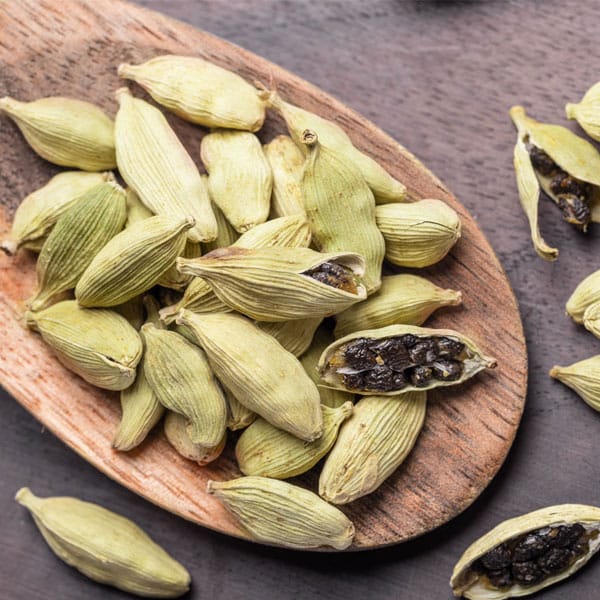
cardamom cold storage
2. Industrial Cardamom Cold Storage Protocols
At the commercial level, standard warehouse conditions are not enough. High temperatures cause the rapid evaporation of essential oils, while high humidity invites fungal growth.
Cardamom cold storage facilities maintain the following strict parameters:
Temperature: Kept consistently between 10°C and 15°C (50°F – 59°F).
Relative Humidity (RH): Maintained at 50% to 60%.
Lighting: Absolute darkness. UV light degrades both the chlorophyll (causing yellowing) and the delicate flavor compounds.
To achieve this, exporters pack the cured pods in high-density polyethylene (HDPE) bags or multi-layered jute bags with moisture-proof liners.
3. Whole Pods vs. Cardamom Powder Cold Storage
The spice industry heavily favors storing and transporting whole cardamom pods over ground powder. The protective outer husk acts as a natural vault for the seeds inside.
However, when commercial operations require cardamom powder cold storage, the rules become even stricter. Ground cardamom has a vastly increased surface area, making it highly susceptible to oxidation. It must be vacuum-sealed in foil-lined pouches and kept at lower temperatures (often below 10°C) to prevent the immediate loss of its aromatic profile.
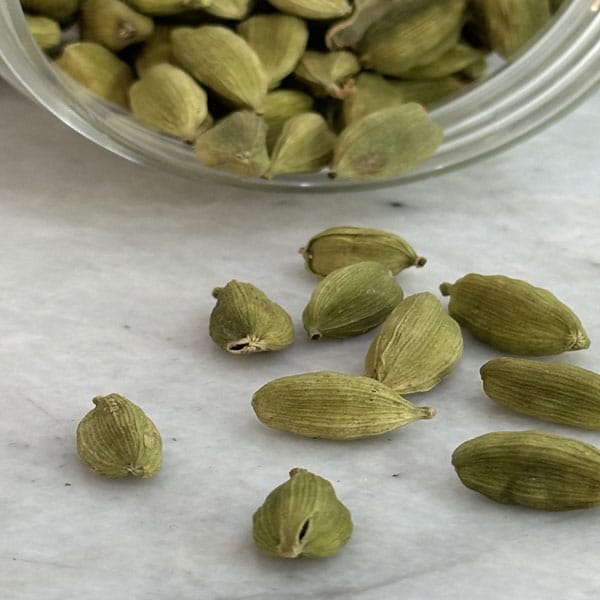
cardamom cold storage
4. Commercial Shelf Life and Cross-Contamination
Understanding cardamom shelf life in a commercial setting dictates supply chain logistics. Under optimal cold storage conditions, whole green cardamom pods can retain their premium grade for up to 2 years. Once removed from cold storage and exposed to retail environments, this timeline shortens significantly.
If you are looking for practical advice on maintaining this quality in your own kitchen after purchase, check out our guide on how long cardamom keeps at home
Furthermore, warehouses must practice strict segregation. Cardamom easily absorbs foreign odors. It is never stored alongside pungent spices like cloves or cumin. This principle of chemical fragility in storage is common among high-value spices; for instance, you can see similar strict requirements when asking does saffron go bad?
Records mentioned in this article