Buying cheap saffron is a false economy; you are usually paying for dyed corn silk or safflower that ruins the flavor profile of your products. Investing in authentic, lab-tested saffron ensures you get the vibrant color, unmistakable aroma, and true value that this remarkable spice commands. If you are looking to secure a reliable, high-grade supply chain for your business, contact us to discuss wholesale sourcing and verifiable quality standards.
If you’ve spent any time sourcing ingredients for high-end culinary projects or retail, you’ve likely stumbled across deals that seem too good to be true. A beautifully packaged jar of “premium saffron” listed for a fraction of the market price. In my years navigating the agricultural trade and wholesale markets, I’ve seen countless buyers fall for the trap of cheap saffron.
Let me be direct: buying cheap saffron isn’t a bargain; it’s a gamble where you almost always lose. When you understand the sheer physical labor and botanical reality behind harvesting Crocus sativus, the math behind “discounted” saffron quickly falls apart.
Here is exactly why buying cheap saffron is a bad investment, what you are actually paying for, and how to make the right sourcing decisions.
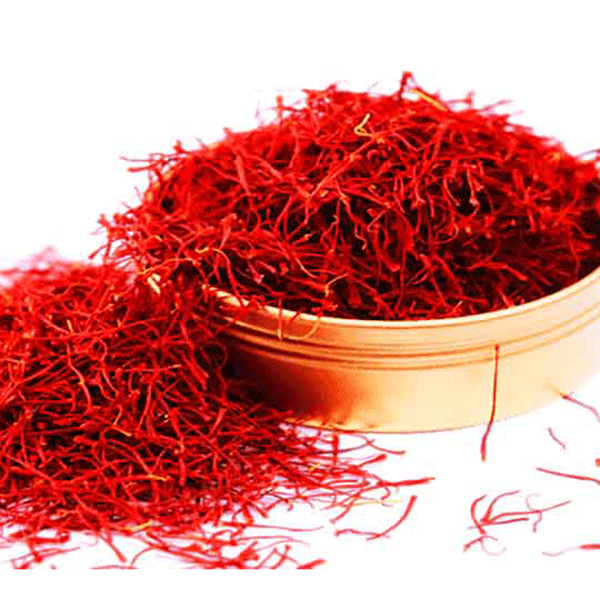
How to spot fake saffron vs real
The Botanical Reality: Why Real Saffron Holds Its Value
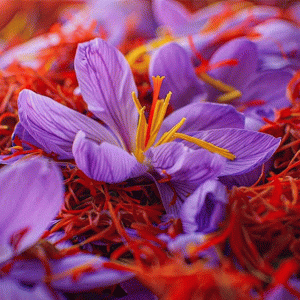
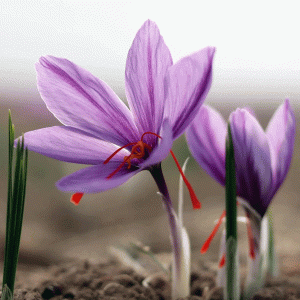
To understand why cheap saffron is a red flag, we have to look at the source. Saffron isn’t grown in a lab or harvested by massive combine tractors. Every single thread is the stigma of a crocus flower.
Yields are incredibly low. It takes roughly 75,000 to 150,000 individual blossoms—all hand-picked during a very short harvesting window at dawn—to produce just one pound of dried saffron. The labor costs alone set a hard floor on the price. If a supplier is offering you a price that undercuts the fundamental cost of agricultural labor and logistics, they are cutting corners somewhere else.
What Are You Actually Buying When You Buy “Cheap Saffron”?
When the price drops suspiciously low, you are rarely buying pure Crocus sativus. The global spice trade is unfortunately rife with adulteration. If you buy cheap saffron, you are likely getting one of the following:
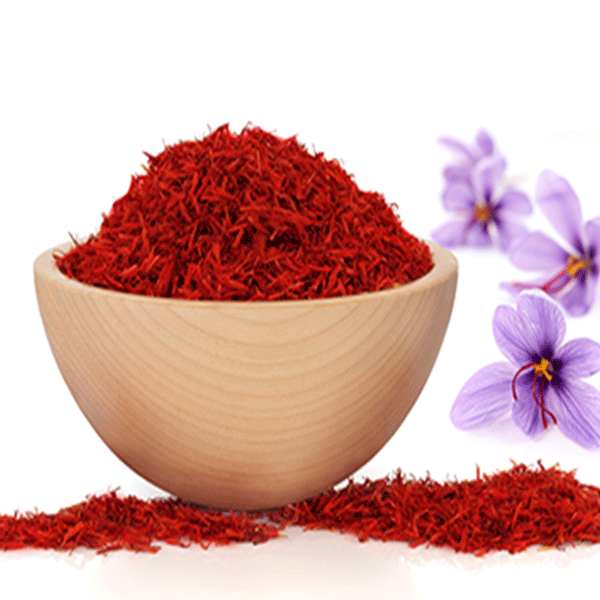
How to spot fake saffron vs real
Safflower (The “Bastard Saffron”): This is the most common substitute. It looks somewhat similar but imparts zero of the complex, earthy, honey-like aroma of true saffron. It will color your water yellow, but your dish will taste flat.
Corn Silk or Dyed Paper: Scammers often take dried corn silk, dye it with synthetic red food coloring (like Red 40), and spray it with artificial floral scents.
Low-Grade, Stale Saffron: Sometimes it is saffron, but it’s dust, heavily mixed with the yellow styles of the flower (which hold no culinary value), or it is several years old and completely devoid of its essential oils (safranal and crocin).
Saffron Culture & Facts: Cheap saffron
Authentic vs. Cheap Saffron: A Buying Decision Guide
| Feature | Authentic Saffron | Cheap/Fake Saffron |
|---|---|---|
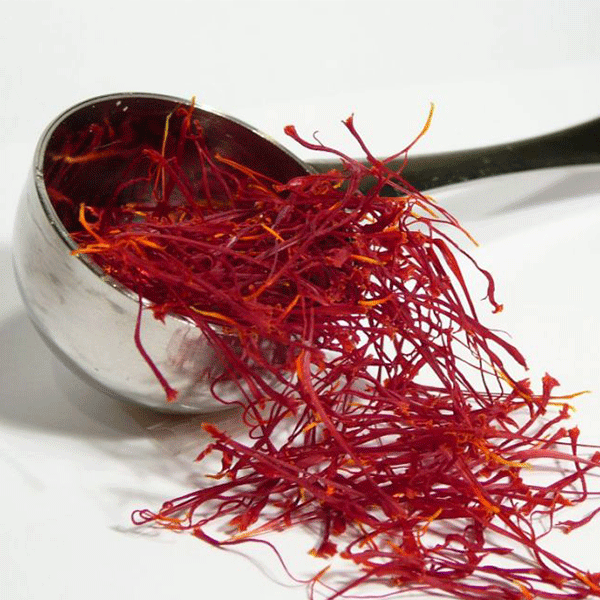
| Appearance | Trumpet-shaped threads, slightly bulbous at one end. Deep red color. | Uniformly straight threads, often jagged. May look unnaturally glossy or dull. |
| Aroma & Taste | Sweet, floral, honey-like aroma, but a slightly bitter, complex taste. | Smells like chemicals, nothing, or overly sweet. Tastes like plain paper or metallic. |
| The Water Test | Releases a vibrant golden-yellow color slowly over 10-15 minutes. Threads stay red. | Releases a dark red/orange color instantly. Threads turn white as dye washes off. |
| Price Point | Reflects global agricultural labor rates; premium but offers high ROI per gram. | Suspiciously low; often heavily discounted to move volume quickly. |
How to Protect Your Supply Chain
If you are sourcing saffron for a business, you cannot afford the reputational damage of using adulterated spices. Always ask your supplier for ISO 3632 certification, which is the international standard grading the purity, aroma, and color strength of saffron. If a supplier offering “cheap saffron” cannot provide up-to-date lab results, walk away.
Records mentioned in this article
Frequently Asked Questions
Tourist markets frequently sell safflower or dyed corn silk labeled as saffron because tourists are usually one-time buyers. Scammers rely on the fact that buyers won’t test the product until they are thousands of miles away.
The most reliable method is the cold water test. Drop a few threads into a small glass of cold water. Real saffron will slowly release a golden-yellow hue over 15 minutes while the threads remain dark red. Fake saffron will instantly dump a red dye into the water, and the threads will quickly turn white or pale.
Rarely. The only time prices dip slightly is immediately after a highly successful harvest season in major producing regions, or if you are buying in massive wholesale bulk. However, even wholesale “bulk” prices will never drop to the level of cheap supermarket fakes due to the unyielding cost of manual harvesting.