Saffron is far more than an expensive spice; it is a cultural artifact, a medicinal powerhouse, and an intricate agricultural commodity. This guide explores its rich history, practical grading secrets, culinary techniques, and market realities to help you source and use "red gold" effectively
Whenever I hold a few threads of premium saffron in the palm of my hand, I am reminded that I am not just looking at a culinary ingredient; I am holding history, immense human labor, and a biochemical marvel. Known globally as “Red Gold,” saffron (Crocus sativus) commands prices that rival precious metals. But beyond the staggering price tag lies a world of tradition, agricultural precision, and culinary secrets that most consumers—and even many chefs—never fully grasp.
The Deep Roots: A History Woven in Crimson
To understand saffron, you must understand its journey. Saffron cultivation spans over 3,000 years, traversing empires, religions, and continents. While debates continue about its exact origins (with evidence pointing to ancient Greece, Mesopotamia, and Iran), it was in the Iranian plateau where saffron cultivation truly evolved into an agricultural art form.
Historically, saffron was not just for eating. Alexander the Great used Persian saffron in his bathwater to heal battle wounds. Cleopatra reportedly used it in her cosmetics and milk baths for its aromatic and skin-enhancing properties. Buddhist monks adopted saffron-colored robes as a symbol of enlightenment, relying on the stigma’s potent dye.
The spice traveled along the Silk Road, finding its way into traditional Chinese medicine, Indian Ayurvedic practices, and eventually European trade hubs like Venice. In medieval Europe, saffron was so highly valued that the *Safranschou* code was established in Nuremberg, Germany, dictating that anyone caught adulterating saffron would be fined, imprisoned, or even executed.
Today, Iran produces over 90% of the world’s saffron supply. The culture surrounding its harvest is deeply communal, relying on generational knowledge passed down through families who understand the subtle rhythms of the earth and the delicate nature of the flower.
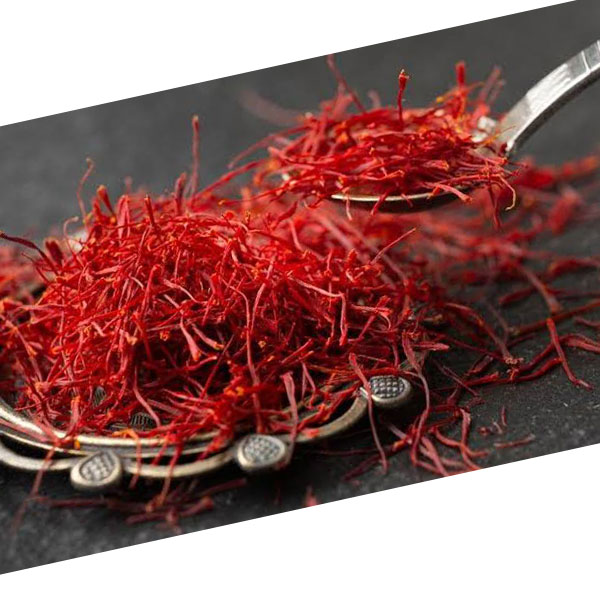
Any specifications about saffron
The Secrets of the Crocus Sativus: Why is it so Expensive?
The question I hear most often is: Why does saffron cost so much? The answer lies entirely in the biology of the plant and the manual labor required to harvest it.
Saffron comes from the Crocus sativus flower. Each flower blooms for only a few weeks in late autumn. Inside each beautiful purple blossom are three tiny, crimson stigmas—this is the saffron.
The Harvesting Reality:
Manual Labor: There is no machine capable of delicately plucking the stigmas from the crocus flower. Every single thread of saffron in the world is harvested by hand.
The Yield: It takes approximately 150,000 to 170,000 individual flowers to produce just one kilogram (2.2 pounds) of dried saffron.
Time Sensitivity: The flowers must be picked at dawn, before the sun rises too high. If the flower opens fully and is exposed to intense sunlight, the chemical compounds within the stigmas begin to degrade, ruining the quality of the spice.
This extreme labor intensity, combined with a highly specific climate requirement (cold winters and hot, dry summers), creates a bottleneck in supply that justifies the premium price.
Grading and Quality of saffron: The Buyer’s Guide to Authenticity
The saffron market is unfortunately fraught with fraud. Safflower, corn silk dyed with food coloring, and even shredded paper have been sold to unsuspecting buyers. To truly master saffron, you must understand how it is graded and how to test it.
The quality of saffron is determined by three main chemical compounds:
1. Crocin: Responsible for the vibrant golden-yellow color.
2. Picrocrocin: Responsible for the slightly bitter, earthy taste.
3. Safranal: Responsible for the unique, floral, and hay-like aroma.
The Major Grades of Saffron
Different markets use different terminologies, but the Persian grading system is the global standard in B2B trade. Here is a breakdown:
| Saffron Grade | Description | Coloring Strength | Best Use Case |
|---|---|---|---|
| Super Negin | The absolute highest quality. Only the thickest, longest, perfectly red tips of the stigma. No yellow or white parts. | 260 – 280+ (Exceptional) | Luxury culinary, high-end gifting, pharmaceutical extracts. |
| Negin | Similar to Super Negin but threads may be slightly shorter. All red, symmetrical, and highly aromatic. | 240 – 260 (Very High) | Premium restaurants, premium retail packaging. |
| Sargol | Translates to “top of the flower.” All red threads, but often contains broken pieces compared to Negin. | 220 – 240 (High) | Everyday gourmet cooking, high-volume culinary use. |
| Pushal | Red stigmas with 2-3mm of the yellow style attached. Shows authenticity as it’s hard to fake the color transition. | 170 – 200 (Medium) | Traditional home cooking, verifiable authenticity. |
| Dasteh (Bunch) | The entire thread intact (red, yellow, and white base), bunched together with a string. | 120 – 150 (Lower overall) | Traditional local markets, personal verification of pure origin. |
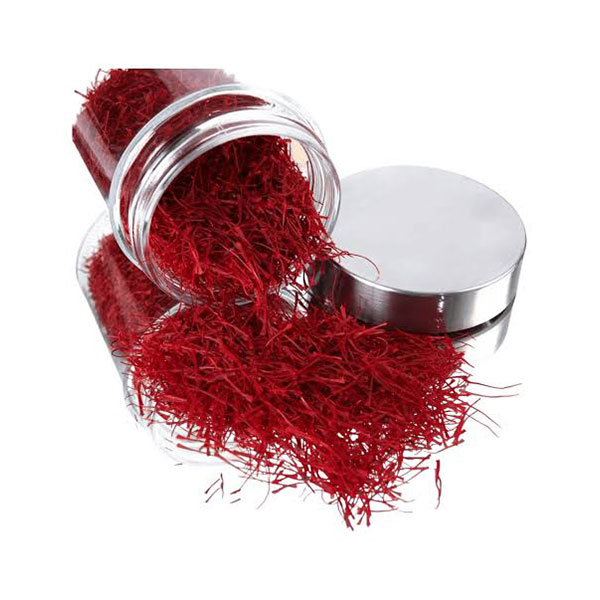
saffron
How to Spot Fake Saffron (Practical Tests)
Never buy ground saffron unless you intimately know the supplier; always buy whole threads. If you have threads in hand, use these practical tests:
1. The Water Test (The Gold Standard): Drop 3-4 threads into a small glass of warm water. Real saffron will slowly release a golden-yellow hue over 10-15 minutes. The water will turn yellow, but the thread itself will remain red. Fake saffron will release dye instantly, turning the water a dark red or orange, and the fake thread will turn white.
2. The Taste Test: Place a thread on your tongue. Real saffron tastes bitter and earthy. If it tastes sweet, it has been coated in sugar to increase its weight (a common scam).
3. The Baking Soda Test: Mix a little baking soda in water, then add the saffron. Authentic saffron will turn the mixture yellow. Adulterated saffron will often turn it a murky red or brown.
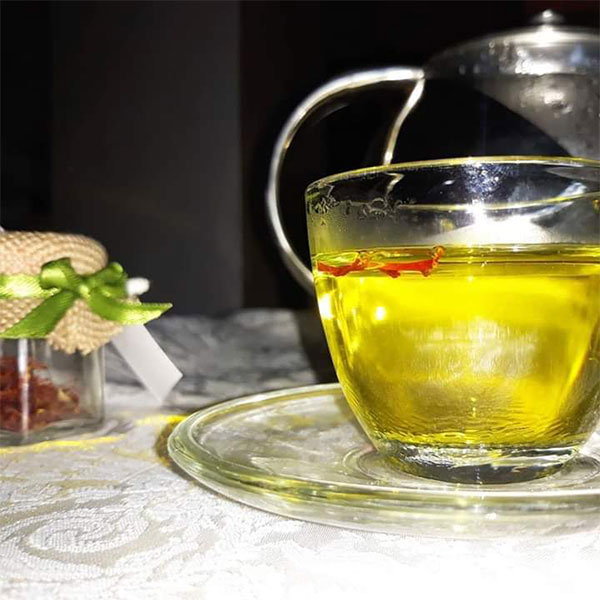
orginal saffron
Culinary Magic: How to Truly Extract the Soul of Saffron
One of the biggest mistakes chefs and home cooks make is taking whole saffron threads and simply tossing them into a hot pan or a pot of rice. This wastes up to 70% of the spice’s potential flavor, color, and aroma.
Saffron must be “bloomed” or brewed, much like tea or coffee, to unlock its chemical compounds.
Method 1: The Traditional Hot Water Brew
1. Take a small pinch of saffron threads (about 10-15 threads).
2. Place them in a small mortar and pestle. Add a tiny pinch of coarse sugar or coarse sea salt (this acts as an abrasive).
3. Grind gently into a fine powder.
4. Transfer the powder to a small glass. Add 3 tablespoons of hot (not boiling) water.
5. Cover and let it steep for 15-20 minutes. You now have a liquid “red gold” extract ready to be poured over rice, added to stews, or folded into risottos.
Method 2: The Modern Ice Brewing Technique (Highly Recommended)
In recent years, high-end culinary circles have adopted the ice method, which I have found preserves the delicate safranal (aroma) molecules far better than heat.
1. Grind the saffron into a powder as described above.
2. Place the powder in a small glass.
3. Instead of hot water, drop 2 or 3 ice cubes directly onto the powder.
4. Leave it at room temperature. As the ice slowly melts, the shock of the cold water gently extracts the color and flavor over 30-40 minutes. The resulting liquid is vibrantly clear, incredibly aromatic, and deeply flavorful.
Flavor Pairings: Saffron pairs exceptionally well with dairy (cream, butter, milk), white meats (chicken, fish), citrus (lemon, orange), and warm spices (cardamom, cinnamon). It is the soul of Spanish Paella, Italian Risotto alla Milanese, French Bouillabaisse, and Persian Tahchin.
Beyond the Kitchen: Medicinal and Cultural Significance
For centuries, ancient texts touted saffron as a cure-all. Today, modern science is catching up, isolating the active compounds in Crocus sativus and running double-blind clinical trials.
Practical Health Applications
Mood Elevation and Depression: Multiple clinical studies have shown that saffron extract (specifically crocin and safranal) is as effective as certain mild prescription antidepressants (like Fluoxetine) in treating mild to moderate depression. It naturally boosts serotonin and dopamine levels.
Antioxidant Powerhouse: Crocin is a powerful antioxidant that neutralizes free radicals. This has made saffron a subject of research in neuroprotective therapies, including Alzheimer’s and Parkinson’s disease.
PMS and Hormonal Balance: Saffron has been widely used to reduce the symptoms of Premenstrual Syndrome (PMS). Simply smelling saffron for 20 minutes a day during a menstrual cycle has been shown to significantly lower cortisol (stress hormone) levels.
The Culture of Saffron
In Iranian and Middle Eastern cultures, saffron is synonymous with hospitality and celebration. You do not serve saffron tea or saffron rice on a normal Tuesday to just anyone; you serve it at weddings, during Nowruz (the Persian New Year), and to honored guests. The aroma of saffron wafting from a kitchen is a universal signal of respect and joy.
The Business of Saffron: Sourcing and Storage
If you are treating saffron as a business, or simply want to protect your expensive investment, you must understand storage.
Saffron is highly volatile. Its worst enemies are light, heat, moisture, and oxygen.
Never keep saffron in the refrigerator. The moisture and temperature fluctuations when you take it in and out will ruin it.
Store it in an airtight glass jar (preferably dark glass) or a metal tin.
Keep it in a cool, dark cupboard away from the stove or oven.
Properly stored, high-quality saffron can retain its potency for 2 to 3 years.
From a B2B perspective, sourcing saffron requires building trust. The agricultural supply chain is fragmented, heavily reliant on small-scale farmers before it reaches aggregators. When sourcing for commercial use, demand lab reports (ISO 3632 standard) which scientifically quantify the levels of crocin (color), picrocrocin (flavor), and safranal (aroma). A minimum crocin reading of 220 is required for a premium label.
Saffron is a testament to human patience and the wonders of agriculture. Every time you steep those delicate crimson threads, you are participating in a tradition that spans thousands of years and relying on the dawn-lit labor of farmers who understand the fragile nature of the Crocus sativus.
By understanding its history, knowing how to grade and test it, and mastering the culinary art of blooming, you elevate saffron from a mere ingredient into an experience. Treat it with respect, store it properly, and it will reward you with flavor, color, and health benefits unmatched by any other spice on earth.
Frequently Asked Questions
The primary reason for saffron’s high price is its extremely labor-intensive harvesting process. There is no machinery for harvesting; it requires hand-picking the delicate stigmas of 150,000 to 170,000 Crocus sativus flowers—usually before dawn—to produce just one kilogram of dried saffron.
The most reliable method is the “Water Test.” Place a few threads in cold water. Authentic saffron slowly releases a golden-yellow color over 10-15 minutes, while the threads remain distinctly red. Fake saffron instantly releases a dark red or orange dye and its threads quickly turn white. Additionally, real saffron smells sweet but tastes slightly bitter.
Professional chefs recommend the “Ice Brewing” technique. Gently crush the threads into a powder, place two or three small ice cubes on top, and let them melt at room temperature. This gradual temperature shift extracts the maximum color, flavor, and delicate aroma (Safranal) without destroying the sensitive compounds, which often happens when using boiling water