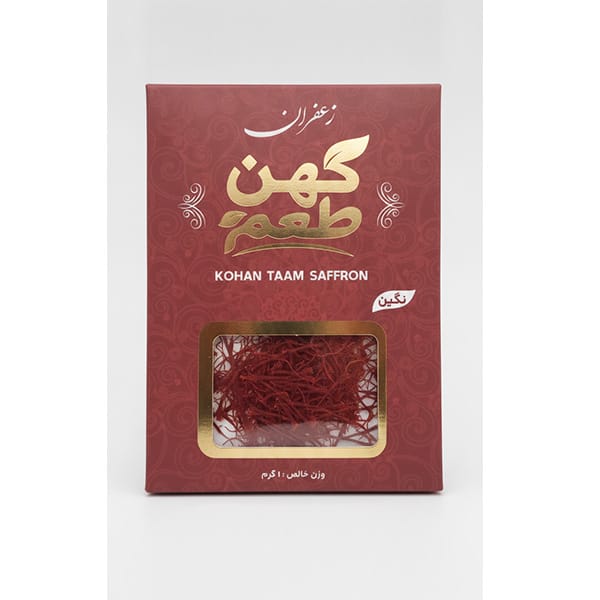
The dried stigmas of a sterile autumn crocus, hand-picked at roughly 440,000 threads to the kilogram.
Iran food Verified origin
Export unit value per kilogram, 2016 to 2022. Most recent: $934. Derived from official trade statistics — a trade-weighted average, not a retail price.
| Botanical name | Crocus sativus L. |
|---|---|
| Family | Iridaceae |
| Order | Asparagales |
| Part used | Dried stigma |
| Stigmas per flower | 3 |
| Stigmas per kilogram | Approximately 440,000 |
| Flowers per kilogram | Approximately 150,000 |
| Harvest season | Autumn, gathered in the early morning |
| Propagation | Corm division; the plant is a sterile triploid with 24 chromosomes |
| Grading standard | ISO 3632, measuring crocin, picrocrocin and safranal |
| Colour compound | Crocin |
| Taste compound | Picrocrocin |
| Aroma compound | Safranal |
| EU food additive code | E164 |
| Principal producer | Iran, around 90 per cent of world output |
| Second producer | Afghanistan, grown in 26 of 34 provinces |
What saffron actually is Saffron is not a seed, a bark or a root. It is the stigma of a flower: three crimson threads at the centre of Crocus sativus, cut out by hand and dried. Everything else about the plant is discarded.
The plant is a sterile triploid. It carries three matching sets of chromosomes, eight to a set and twenty-four in total, and that odd number leaves it unable to produce viable seed. It does not occur in the wild and Kew's Plants of the World Online records no native distribution for it at all. Every saffron crocus alive today was propagated by someone dividing a corm and planting the pieces, in an unbroken chain reaching back thousands of years. A crop that cannot survive a single season of human neglect is an unusual thing to build a trade on. Why it costs what it costs The price is not scarcity of land. It is the harvest.
Each flower carries exactly three stigmas. A kilogram of dried saffron takes roughly 440,000 of them, which is about 150,000 flowers, and about forty hours of picking. The flowers open only in autumn, and they have to be gathered in the early morning before the sun opens them fully and degrades the threads. Britannica puts it in imperial terms that make the same point: a pound of saffron represents 75,000 blossoms.
No machine has replaced this. The stigma has to be separated from the style without crushing it, on a flower that lasts a day. That is the whole explanation for a spice that regularly trades above US$5,000 per kilogram. How quality is measured Saffron is one of the few spices with a laboratory definition of quality. ISO 3632 grades it by spectrophotometric measurement of three compounds, each responsible for one of its properties: crocin for colour, picrocrocin for taste, and safranal for aroma. Higher crocin means a deeper colouring power, and that is the number the trade pays for.
This matters commercially because saffron is among the most adulterated foods in the world. Safflower, turmeric, dyed corn silk and marigold petals have all been sold as saffron. The problem is old enough to have its own criminal code: in fifteenth-century Nuremberg, the Safranschou statute prescribed punishments including burning for merchants caught adulterating it. Where it comes from Almost all saffron is grown in a belt running from Spain in the west to India in the east. Iran accounts for around 90 per cent of world production and was the largest producer in 2024, with Afghanistan second, where the crop is grown in 26 of the country's 34 provinces.
Within Iran the centre of gravity is Khorasan, in the north-east, where the climate gives the crocus the hot dry summer and cool wet winter it needs. Saffron is believed to have originated in this region, descended from wild relatives in the eastern Mediterranean, before spreading to Kashmir, the Mediterranean and Asia Minor. A long paper trail Saffron has one of the longest documented histories of any traded good. It appears in a seventh-century-BC Assyrian botanical treatise. Cilicia, in Asia Minor, was the chief early centre of cultivation. The Arabs were growing it in Spain by around 961, and it appears in an English healing manual of the tenth century. It reached China late enough to be recorded in the Bencao gangmu, compiled between 1552 and 1578.
In the European food additive system it carries the code E164. Buying it Three things are worth checking before paying a premium price. Whole threads rather than powder, because powder is where adulteration hides. A stated ISO 3632 category or crocin value, because a seller who has tested the batch will say so. And a named growing region, because "product of" on a package often records where it was packed, not where it was picked.
| 7th century BC | Saffron is recorded in an Assyrian botanical treatise, one of the earliest written references to the spice. |
|---|---|
| 961 | The Arabs are cultivating saffron in Spain. |
| 10th century | Saffron appears in an English leechbook, a manual of healing. |
| 15th century | Nuremberg enacts the Safranschou code against adulteration, with punishments including burning. |
| 1552 | Saffron is recorded in the Chinese materia medica Bencao gangmu, compiled between 1552 and 1578. |
| 2024 | Iran is the largest producer, followed by Afghanistan. |
Full record: https://originandsource.com/origin/saffron/
Printed from origin and source. Figures and availability were correct on the date shown above.